Skip to content

Posts from the ‘Lydian International (LYD)’ Category

Gold Stocks: Am I Wrong?

Last week was playing out just dandy until about 7:30 am on thursday.  That’s when the stock market opened and the gold stocks I owned fell along with the rest of the market.

Since the peak on Wednesday afternoon Jaguar Mining is down $1.10, or 16.4%.  OceanaGold is down 0.65, or 23%.  Argonaut Gold is down 14%.  Lydian International is also down 14%.

Now I could write a post about how unjustified this is.  How these 4 stocks, and gold stocks in general, never began to price in a gold price of $1500/oz, let alone $1800/oz.  And about how in the case of OceanaGold and Jaguar Mining, the stock price is significantly lower then it was when the gold price was $1000/oz.

All of this is true, but its not necessarily helpful going forward.  What is helpful is to assess the situation and determine if I am best to stick it out, or admit that maybe I am wrong about the direction of gold stocks.

I’ve spent most of the weekend pondering the reasons for gold stocks to go up and the reasons for gold stocks to go down.

I think that the basis of all the arguments for and against come down to the causation of the rise in the price of gold.  Now maybe I am simplifying the situation too much, but think you can narrow it down to two contrasting views of why gold is going up.  Each view leads to a drastically different opinion of what will happen to the price of gold (and the price of gold stocks) going forward.

These views are:

  1. Gold has gone up on the expectation of Federal Reserve balance sheet expansion
  2. Gold has gone up on fear of the disintegration of the Euro and the EU

The first argument is what is being bandied about the most over the weekend.  Gold, and thus gold mining stocks, were pricing in QE3 and that didn’t happen.  Operation twist is not quantitative easing.  There is no expansion of the Federal Reserve balance sheet and there is none on the immediate horizon.  So if the price of gold is a function of the Federal Reserve balance sheet, then gold must return to pre-QE3-anticipation levels.  A good starting point would be $1400-$1500/oz.  Or perhaps gold goes lower if it overshoots to the downside or if the Fed begins to gain credibility in its balance sheet management.

The second view was invoked quite often over the last month, but it seems to have fallen on deaf ears in the last couple of days.  That’s because it doesn’t fit the evidence.  the EU is still a mess.  The price of gold is falling precipitously.

So does the move of the last two days mean that the Fed watchers are right and that the run in gold is over until there is at least some evidence of QE3 on the horizon?  I’m not willing to say that yet.  I’m going to re-quote what I paraphrased from Donald Coxe a couple days ago:

The investment case for gold lies in the 500 million people living within 17 different countries that have their savings, pay cheques, and pensions tied to a currency that was based on a theory and seems by the day to have less of a tie to reality.

This argument still holds a lot of water in my mind.  There is still no good way to resolve the situation in Europe.  As long as this is the case, gold should continue to have a bid.  And I can’t see how this will stop being the case.  There simply isn’t the money available to resolve the debt issues of the PIIGS.  The only solution seems to be the extradition of at least some of the PIIGS from the EU.  That is going to be such a messy process, with so many potential pitfalls for both the sovereigns and the banks, that I can’t see how gold would fall in such an environment.

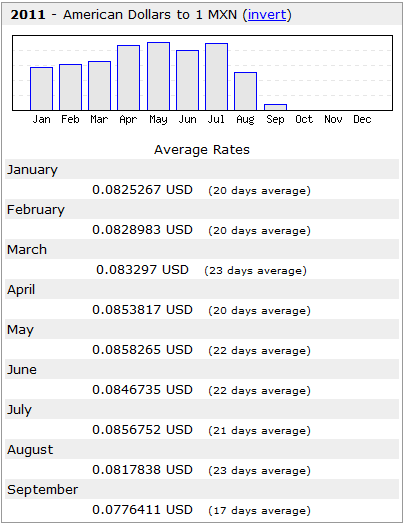
But I remain open to the possibility that I am wrong.  I will be watching the price of gold over the next few days and if the weakness continues I will have no choice but to cut my positions.  In that regard, I will likely lighten up on OceanaGold first.  Both Jaguar Mining and Argonaut Gold are in somewhat envious positions right now.  Jaguars mines are in Brazil, while Argonaut Gold has its mines in Mexico.  Both the Real and the Peso have been falling lately.  This will help bring down Q3 costs and even more bring down Q4 costs.
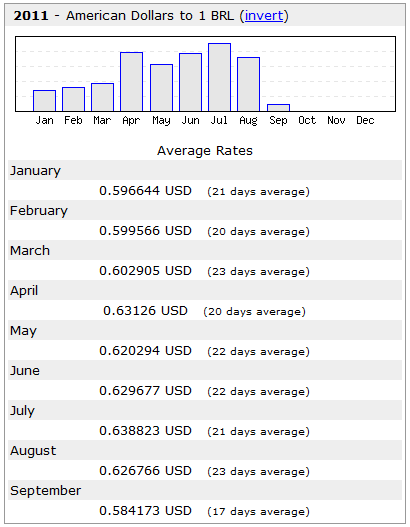
OceanaGold operates in New Zealand, and while the currency there has began to weaken, it is still above the average levels of Q2.

Lydian I will continue to hold because the story there is really less attached to the price of gold then in the other cases.  Lydian is moving forward an exploration project that will be profitable at much lower gold prices.  At some point the company will be taken out.  So that one I will hold as well.

We’ll just have to see how this next week plays out.
Lydian International

Its honestly not my intention to write exclusively about gold stocks on this blog.  But they do make up a significant fraction of my portfolio right now, and I think the gold stocks hold the most chance of significant upside in the short term.  Yesterday is evidence to that.  Gold stocks jumped to the upside.  Now one never knows is such moves are breakouts or fakeouts, but we can only hope for the former.

As for Lydian International., its too bad I didn’t start my blog a few months ago.  This post on Lydian would have been writing about the stock near its lows.  Since then the stock has moved up 25%, including almost 10% yesterday alone.  I still think its going to go much higher, but its always nice to catch the low end of the trading range before the breakout.

Recommended by Trusted Folks

At any rate, I’ve held Lydian International since late last year, when I was first introduced to the stock during a BNN interview with Rick Rule.  Since that time it has been recommended here and here by Brent Cook, a geologist that writes a newsletter I used to subscribe to.  I’ve gotten a lot of stock ideas by searching for and listening to interviews with Rick Rule and Brent Cook.  That they both own Lydian is encouraging.

Looking at Lydian’s Deposit

As Rule describes in the interview, Lydian is a little gold company with a decent sized gold deposit called Amulsar, located in Armenia.  The deposit is about 2.5Moz, its low grade, near surface, and will be surface mined using bulk tonnage techniques.  The deposit that Lydian has have a number of things going for it:

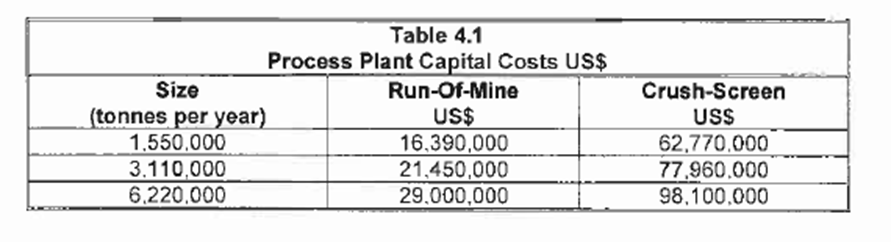
1. Its a oxide gold deposit – oxide gold can be extracted from the rock using a heap leach process that requires very little in the way of capital costs.  You don’t need to build a complicated mill circuit.  To put this in perspective, if the deposit was not oxide the CAPEX to build a mill would probably be around $300M to $400M.  In the 2008 scoping study it was determined by Golder that Lydian would have to spend less than $30M CAPEX to bring on a large enough  run of mill heap leach operation to process a 3Moz deposit (see figure below).

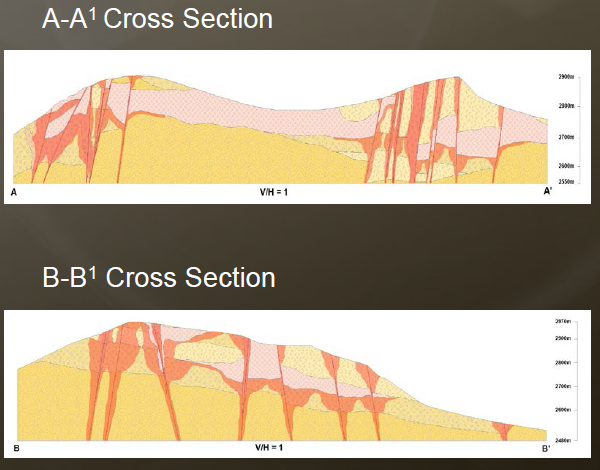
2. The strip ratio looks like it should be quite low.  The deposit sits right on top of a hill (see cross sections below).

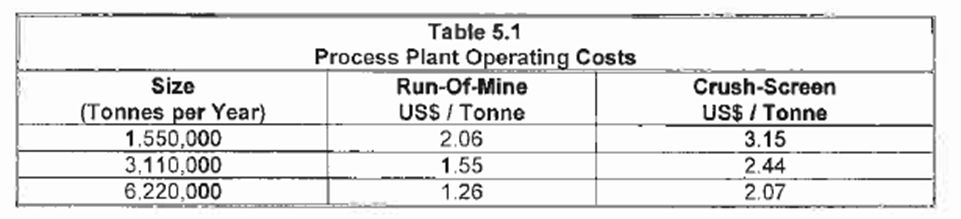
This will make it much easier to get at the ore without having to dig through a lot of overburden first.   That means lower cash costs.  Below are the operating costs assumed by Golder in the scoping study.

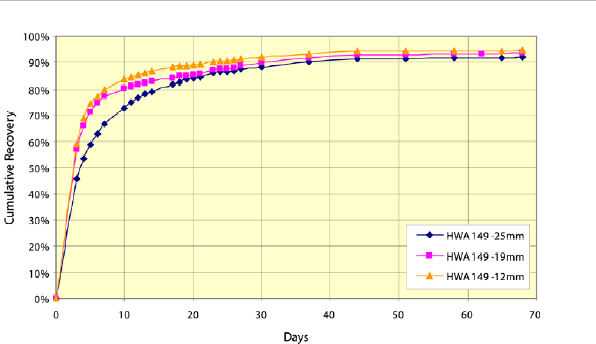
3. The metallurgy looks favorable.  I already mentioned the oxide nature of the gold.  That’s great.  But sometimes its difficult to get a large percentage of the gold out.  Take a look at Aura Minerals as a contrasting example.  Aura has struggled on and off with recoveries with each of their deposits.  Albeit part of those problems has been the mix of oxide and sulphide ore, but it just goes to show how metallurgical complexity can ruin an otherwise good deposit.  Lydian shouldn’t have that problem.

4. Permitting should be in hand by the end of the year.

What’s Amulsar Worth?

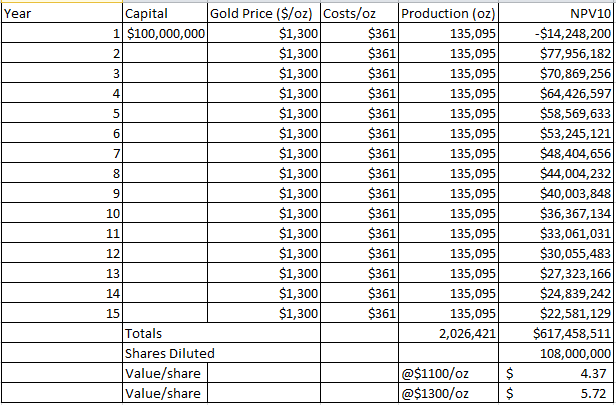
Using the numbers from the scoping study that the company performed, I worked out a spreadsheet of what the net present value of Amulsar is.  Here is a list of the assumptions I used, followed by the results of the spreadsheet.

  • Total production is expected be 135,000oz per year to occur over a 15 year period
  • Strip ratio is 0.5 each year
  • Recovery is 92% each year
  • Mill grade is 0.9g/t each year
  • Operating costs are $4/t mining and $2.5/t milling (I checked these against some other heap leach ops to make sure they were reasonable).
  • The capex is $100M.  This is conservative but it also includes $15M that they have to pay to Newmont and another $15M contingency I added on.
  • Taxes of 20% base plus 12.5% excess profit are included.

I looked at two scenarios.  One with gold at $1100/oz and the other with gold at $1300/oz (I’ve attached the original spreadsheet to the end of the post).

You can see that the upside to the stock, even at $1100/oz long term gold price, is still fairly substantial.  Also note that cash costs should be less than $400/oz.  This would put Amulsar on the map as a very low cost producing mine.

A lot of brokerages seem to be using NPV with a 7.5% discount these days.  If you use that discount rate the NPV rises to $6.82.

An Eventual Takeover?

Honestly, I think what will happen with Lydian is that they will be taken on before they get the mine into production.  I think this will occur at a substantially higher price than what its currently at (even after the run up yesterday).

One possible candidate for a takeover is Newmont.  They own 9% of Lydian shares.  There are probably also a number of mid-tier producers that would be happy to take on 150Koz per year production with cash costs of less than $400/oz.

The company should have an updated Preliminary Economic Assessment out any day now.  It was scheduled for June but these things are inevitably late.  The PEA will (hopefully) go a long ways to confirming some of the numbers I have put forth here.

Appendix

This is the original spreadsheet that I used to calculate the NPV.  Also included is a low case sheet.  This was done when the resource Lydian had was only 1.4Moz, so the low case incorporates that smaller resource.  Now that more gold has been found, the low case is not realistic.