Skip to content

Posts from the ‘Granite Oil (GXO)’ Category

Week 254: Just a Bunch of Company Updates

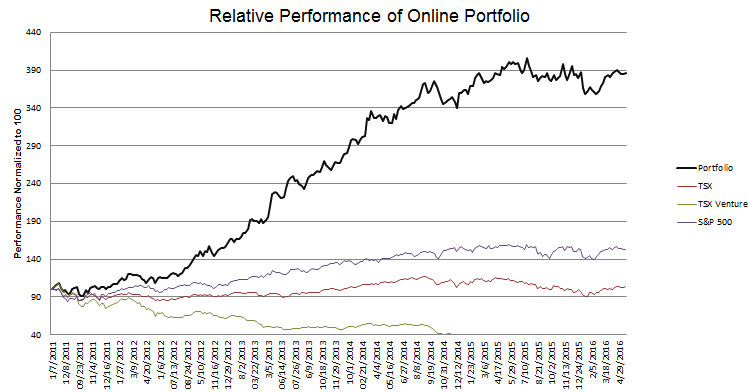
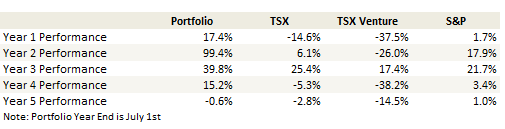
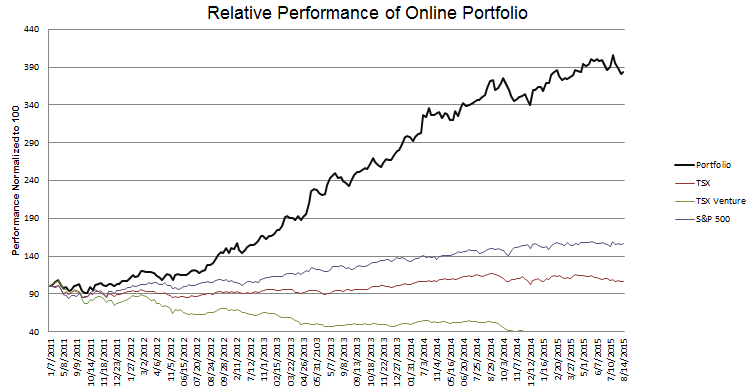
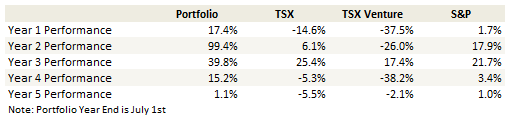
Portfolio Performance

week-254-yoyperformance

week-254-Performance

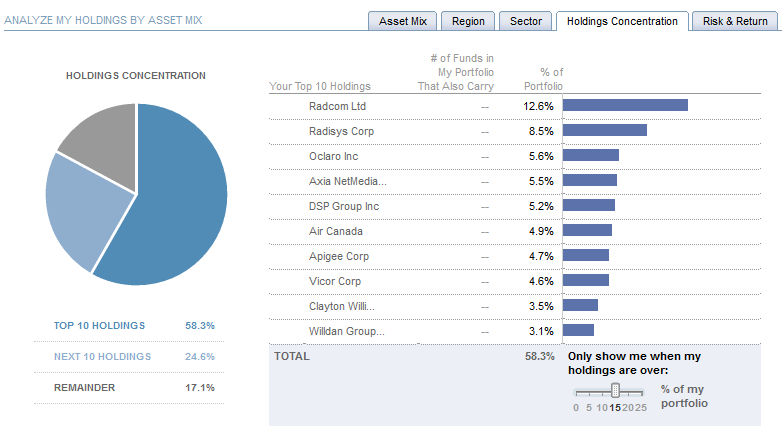
Top 10 Holdings

week-254-holding-concentration

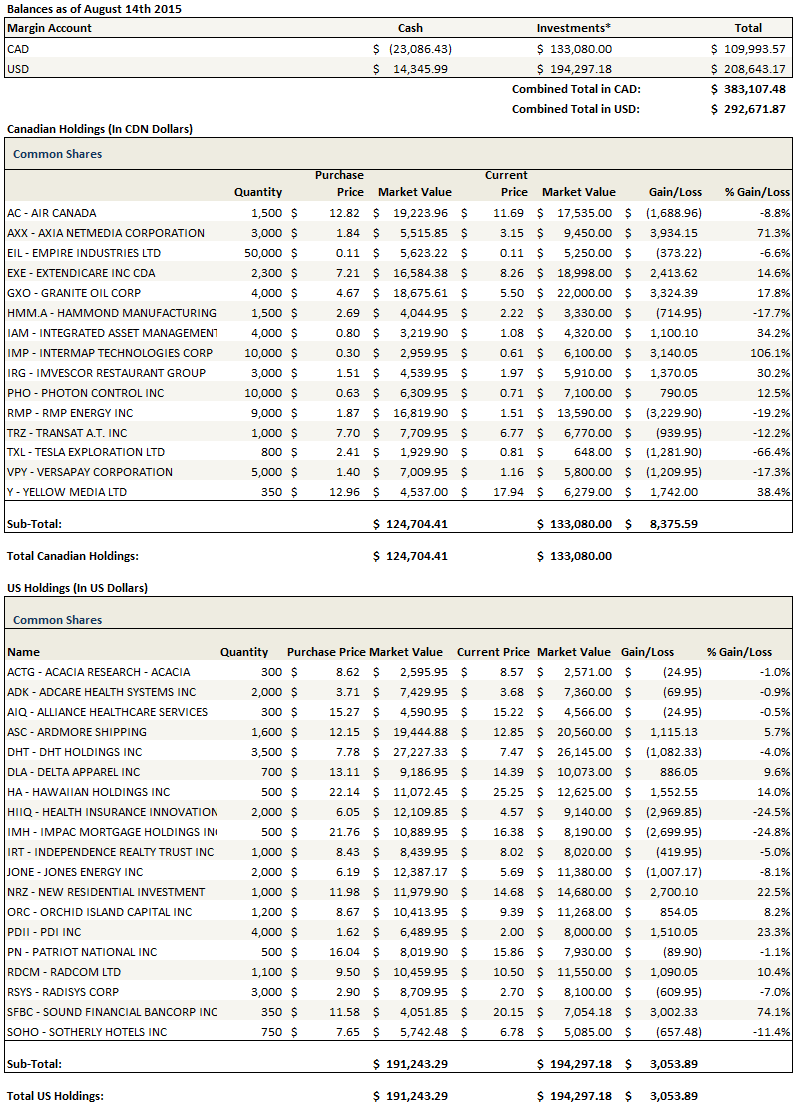
See the end of the post for my full portfolio breakdown and the last four weeks of trades

Thoughts and Review

First some house keeping.  RBC’s has added new tools to make it easier to show performance for practice accounts.  I’ve maintained my portfolio manually through an excel spreadsheet for the last couple of years because RBC screws up the purchase values on their portfolio holding page and the gain/loss on individual stocks are, at times, ridiculous (my average cost is sometimes negative).

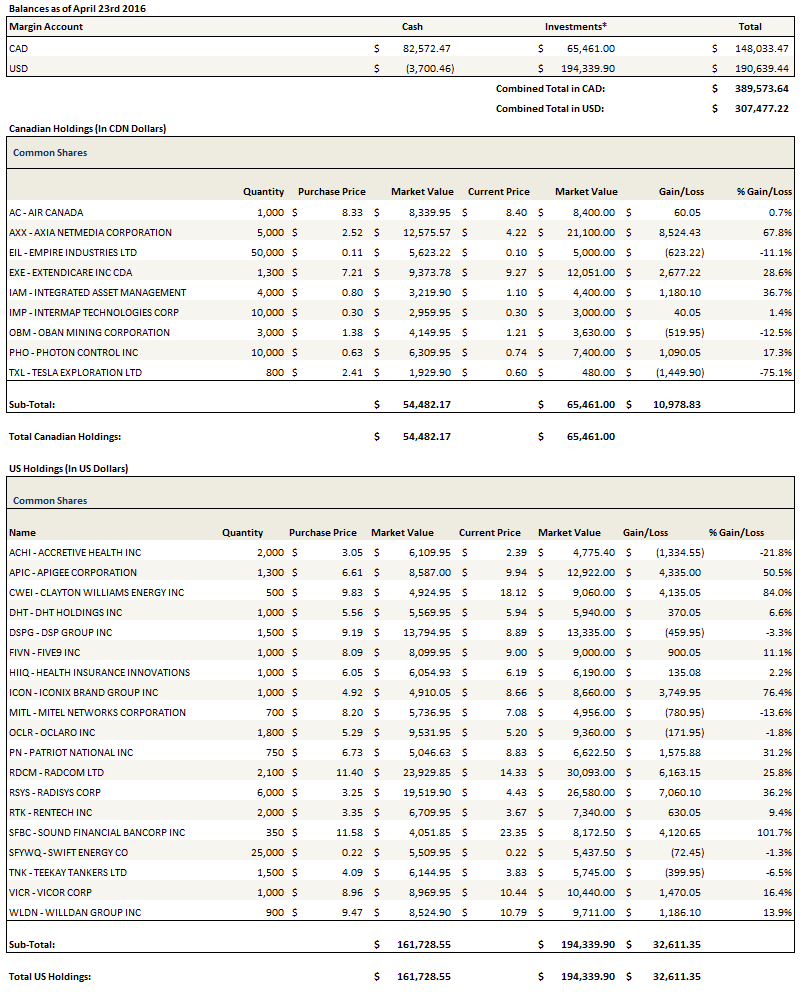
Recreating the results, even after building a visual basic routine to update the month of trades, was quite cumbersome, so I welcome these new tools.   At the beginning of the post I showed a list of my top ten holdings and below are all my positions, both are from the new tools.

The only information that is lost in this new format are the position by position gains and losses. While this is unfortunate, its so much less work compared to the process I had to go through before that this is how its going to be.

With that said…

I didn’t purchase any new stock in the last month so this is going to be a bit of a boring update.  I’ve be dedicated the space below to a discussion of a few of my larger and/or more interesting positions.

With April/May being an earnings period, there is a lot of information to consume.  I had mostly good news from the companies in my portfolio. I’ve tried to stick to names with solid operating momentum, staying away from those that might be turning it around but where good news has yet to trickle out.  And that has served me well.

As I have remarked before, my portfolio has been sitting in a holding pattern for the better part of a year.  While I am still waiting on a break out from the range, I feel better about the stocks I own than I have for a while.  Not all of them will pan out of course, but a few will, and hopefully 1 or 2 will be the multi-baggers that I depend on for out-performance.

Radcom

There is a lot to write about Radcom.

Radcom’s first quarter results were fine.  The company had revenue of $6.5 million and generated non-GAAP income of 15 cents per share. Perhaps the only negative about the quarter came out in a subsequent filing, that over $5 million came from their Tier 1 client, AT&T.

For the first time the company provided revenue guidance for the full year, a range of $28-$29.5 million.  They said that they were very confident in their ability to achieve this guidance as 80% of it was already secured with contracts.  In a later filing they said that 50% of their revenue in 2016 would come from North America.

Putting that together, Radcom is saying that they will generate about $14-$15 million from AT&T, and another $14 million from their existing non-NFV deployment.

Overall this is all as expected to slightly positive.   But the quarterly results and guidance don’t begin to tell the whole story here.  In fact what is most telling about guidance is what is left out; it does not include any contribution from additional Tier 1 service providers.

The company is actively pursuing additional Tier 1 customers for their virtual probe solution (MaveriQ).  They said they are in discussions with carriers from North America, Western Europe and APAC.  I’ve heard that the number of Tier 1’s is in the range of a handful.

It was reiterated on the conference call that MaveriQ is well ahead of its peers. Competitors either haven’t rolled out an NFV product, or if they have they don’t have real world implementation on it, and it is still tied to hardware.

We have competitors in the market but to our best understanding and everything that I am hearing from the CSPs and say they enrolled out an NFV product, some are saying that they have – they don’t have real world implementation on it. Some seem to be still in the hardware area and you cannot monitor an NFV network with the equipment, that’s why we believe they were the first mover and we were widening the gap with our competition.

This is inline of what I have gathered from one of the leaders in physical probes, Netscout, who recently said that their first virtual device would not be released until May.  I listened to Netscout’s webinar dedicated to NFV where they talked about their virtual probe technology and I was not impressed.  It felt like the event was put together to prove that they were in the game.

I note that Mark Gomes wrote the following on Friday, which corroborates with scuttle I had picked up from a different source:

In fact, word is spreading that RDCM’s product (MaveriQ) scored a perfect 100/100 in its lab trials, while the nearest competitor could only manage a 70/100. In other words, RDCM’s technology lead is wide, making them the de facto leader for NFV Service Assurance.

Amdocs provided some color around the cost advantage of virtual probes in this interview.  Justin Paul, head of OSS marketing at Amdocs, said the following:

The fixed video network model uses virtual probes instead of physical probes. This is because traditional, physical probes can’t probe a virtual network and the cost of a virtual probe is significantly lower than a physical one. We’re working with Radcom to implement a vProbe solution with a North American CSP and we’re seeing from the work we’ve done there that physical probe is 20-25% less costly than a physical probe. In addition, you can throw up a ring of probes around a specific area to address a specific peak in demand and redeploy those licences elsewhere when the peak has passed. They’re cheaper to buy and they offer greater flexibility and agility to operators because of that redeployment capability.

Since the results of the first quarter Radcom announced a share offering.  What has followed is an ensuing sell-off in the shares ha culminated Friday when the pricing of the shares came in at a disappointing $11.

Maybe I am too sanguine but I am not worried about the sell-off and while the dilution is unfortunate it is not overly material compared to the eventual upside.

Whether Radcom did a poor job selling their story, were poor negotiators, or just deemed the institutional backing and analyst coverage as being worth the cost of dilution at a somewhat low-ball price is unclear to me.

In the same article I quote above Gomes commented about over-subscription.  I have heard similar comments from another source.  The price action on Friday where the stock traded enormous volume and did not dip below the offer price suggests significant demand even as some shareholders throw in their cards in frustration after what could be perceived as a poor deal.

So the evidence is that the offer price is not a function of lack of interest and not a reflection on investor enthusiasm for their business prospects or for the strength of their MaveriQ solution.  And that was the real negative here; does $11 reflect poorly on Radcom’s business?  If it does not, and is a function of their willingness to concede in order to improve their balance sheet and get institutional support then really its not very negative at all.

I added to my position in the days leading up to the pricing.  That’s unfortunate.  I could have gotten those shares lower on Friday. But I do not see any reason to back track on those purchases.

I sat on a 1-2% position with Radcom for a couple years, all along thinking that this was an interesting little company with a promising technology that was worth keeping close tabs on in case they were able to step into the big time.  That is exactly what they’ve done with AT&T and are on the cusp of doing with other Tier 1’s.  I would be want not to do exactly what I anticipated doing in the event of such a progression.   And in the long-run I don’t think I will care too much that I bought the stock a day or two too soon.

Radisys

The first quarter results marked another step along the trajectory towards transforming Radisys’s business. The company continues to add to its suite products and services designed to facilitate the migration of service providers towards virtualizing their networks.

The company hit the high end of their guidance and then raised their guidance for the rest of the year.  They raised revenue to the range of $195-$215 million from $180-$200 million previously.  They left earnings per share guidance with the range of 22-28 cents on the expectation that additional costs would be incurred to support the expected revenue ramp.

he guidance raise was in large part due to the new DCEngine product.

DCEngine is a rack frame pre-installed with open-architecture software and white box hardware.  Its designed to be an alternative to the “locked in architecture” sold by the incumbent providers, and is consistent with the move to virtualize network functions (as opposed to tying them to hardware) so that upgrades, additional capacity and new functionality can be installed via software installs rather than hardware swaps.

DCEngine had its first order from Verizon, a $19 million order, at the end of the fourth quarter and this order was fulfilled in Q1.  On the first quarter call the company said the order from this service provider was expanded to $50 million, with the rest of the order expected to occur in the second quarter.

While this a large order for a company Radisys size, what is most interesting is that Brian Bronson, the CEO, referred to it as a “rounding error” in comparison to what Verizon needs to build out.

DCEngine is a low margin product, somewhere south of 20% gross margins.  But volumes could be significant, and management said that once the product gains traction that DCEngine orders “should be in the hundreds of millions.”

In addition, there is ancillary revenue to be gained from DCEngine sales.  Right now Radisys populates each rack with two white box switches.  In the second half of 2016 the company’s FlowEngine product will be upgraded and allow Radisys to replace those switches with it.  FlowEngine is a 60%+ gross margin product.

Second, the move from central office to data center is complicated and often requires support services from Radisys.  Providing the rack positions Radisys as the natural support resource, which on the call the company said can add another 10 points of operating income.

The company painted a positive picture of growth going forward.

They said that in addition to the Verizon order they were in discussions with a dozen service providers for DCEngine and expect to have 4 to 6 in trials by the end of the year.

With MediaEngine Radisys continues to ship product to their Asian servicer provider customer and said they are  “increasingly confident in our ability to secure further orders.”

They also see strong orders for FlowEngine in the first half from their Tier 1 carrier and while that might taper off somewhat in the second half they are still expecting revenues for FlowEngine to double year over year and there is the opportunity that more orders will materialize in the second half.

There are a lot of evolving parts with Radisys which make it difficult to pinpoint a forecast.  If I assume that revenue can grow 10% in 2017 on top of midpoint of guidance growth in 2016, that gross margins stay constant and SG&A and R&D costs increase modestly, I easily get to an EPS above 40c in 2017.  This seems like pretty conservative projections and yet it should easily support a stock price that is 50% higher.
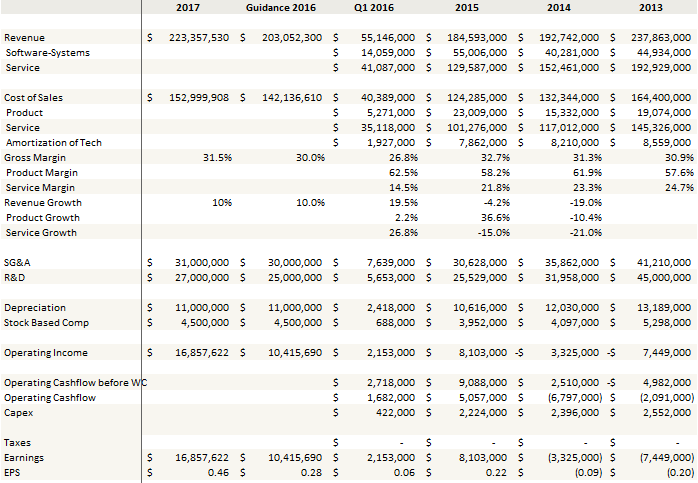
guidanceWhat is interesting is how sensitive the numbers are to incremental revenue growth.  15% revenue growth produces and EPS above 50c while 20% revenue growth in about 60c.

What this makes clear is that there is real upside if the product suite begins to gain traction and realizes some of the expectations management alluded to one the conference call.  The speed of the move up above $4 makes it difficult to pinpoint exactly where one should add to their position, but I feel like somewhere in the low $4’s, high $3’s will look like a good price in the long run.

Medicure

I was pleased with the first quarter results announced by Medicure.  Sales were down to $6 million from $9.5 million in the fourth quarter.  Earnings per share were 5c again down from the fourth quarter.  None of this was unexpected after the run-up in earnings in Q4 due to Integrillin shortages.

Earnings as reported by the company are also being depressed by higher intangible amortization due to Medicure reversing some of the write-down of intangibles related to Aggrastat in the fourth quarter of last year.  These intangibles show up in the cost of goods sold (which is why margins were down to 86% in the quarter) and most drug companies exclude them from their adjusted earnings.  Without the intangible earnings would have been 8c per share.

As the slide below, from their first quarter presentation, demonstrates, first quarter sales of Aggrastat were down sequentially as wholesalers that had stocked in the fourth quarter due to shortages of Integrillin purchased less but still up from the third quarter.
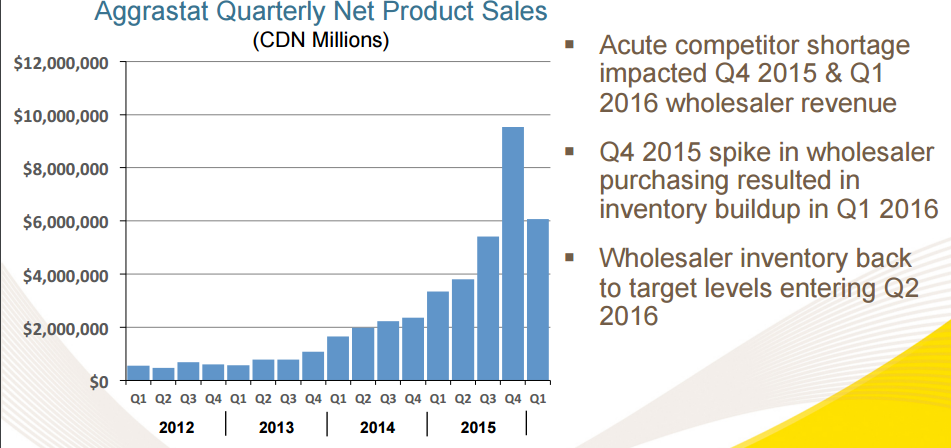
q1salesThe company also provided data for hospital bag demand, which was down again from the fourth quarter but to a lessor extent than sales, and up significantly from Q3.
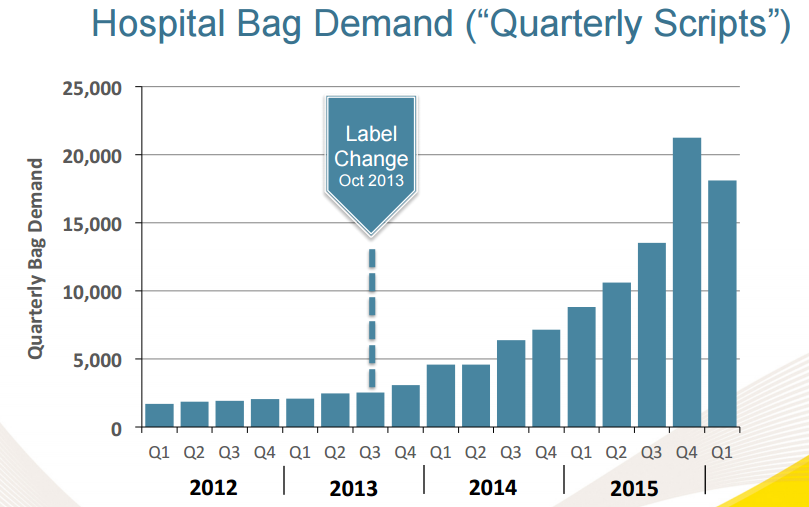
q1bagdemandInterestingly, the company gave a couple data points to help investors normalize their sales data.  They said that first quarter sales understated demand by “a couple million dollars” because of the destocking.  They also said that they are currently shipping 1,700 bags per week, which works out to 20,000 per quarter and means that bag demand has continued to ramp subsequent to the first quarter.

The day before earnings Medicure announced that they are in the process of filing for bolus vial format approval – this will make it easier for hospitals to use Aggrastat. Some hospitals struggle with delivering high dose bolus via intravenous pump instead of syringe. The company provided the following clarification on the conference call:

Although the current bag format can be used to deliver the HDB as well as the maintenance infusion, some physicians and hospital catheterization labs prefer to administer the initial bolus dose with a smaller volume of drug product.  Moreover, the availability of a ready-to-use bolus vial will provide greater operational similarities and efficiencies for hospitals transitioning to AGGRASTAT.

Finally, although there is nothing concrete yet, the company reiterated its interest in purchasing Apicore, the generic supplier that they own 5% of, have a purchase option on the remaining interest, and are in partnership with for the production of a as of yet unnamed generic later this year.

There were a couple of questions in my last post about Medicure.  In particular what generic Integrillin meant to Aggrastat and second, whether Aggrastat itself would have a generic equivalent soon.

The second question came up because when you look at the patents that Aggrastat has, some of them run out as soon as 2016.  While its still not totally clear to me everything I have read suggests that when a drug is approved for a new indication it extends the exclusivity of the drug.   Medicure was granted patent until 2023 on the high dose bolus.

I still haven’t found the smoking gun that addresses this type of situation specifically but I did find a number of resources that indicate that generics will not be allowed until the high-bolus patent expires. This link to the FDA describes the periods of exclusivity for various NDAs. This slide show describes how a new drug is patented and how the exclusivity period is determined.  This q&a describes how a patent is extended with a label change for a new indication and how that will keep a generic off the market. In the book “Cracking the Code” authors Jim Mellon and Al Chalabi write:

Quite often, drug companies therefore try and extend patent life by tweaking the molecular structure of their drugs, changing the dosages or combining their drugs with other therapies to try and create a novel but similar product that allows the patent life to be extended.

Also worth noting is that Medicure does not refer to generic tirofiban (the drugs name) competition as a risk factor in their AIF.

As for the generic competition from Integrillin, it is real and occurring but Medicure allyed concerns by updating their price competition slide to include the cost of the generic.
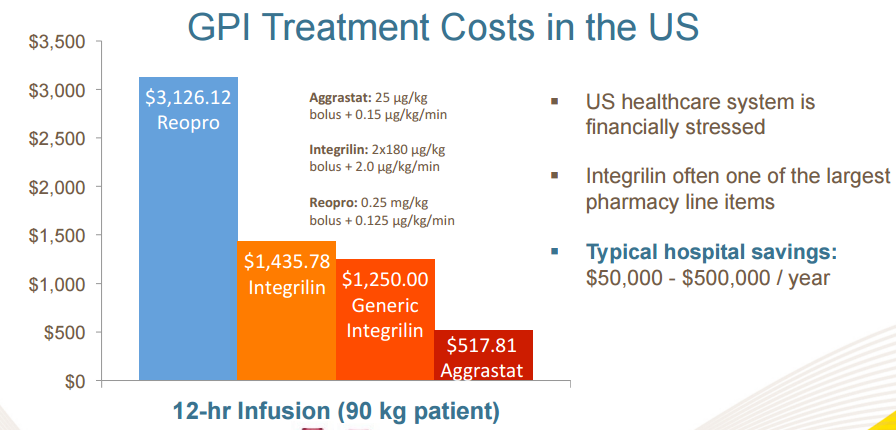
pricecomp

Aggrastat remains the cheapest of the bunch.

I have added to my position around the $5 range and even caught a couple purchases in the $4’s.  Unless I am wrong about the direct generic competition being years away I think the stock is too cheap and should trade up to a high single digit number on the current level of Aggrastat sales alone.  If there is a positive event with Apicore, the new generic introduction, or additional sales from new indications for Aggrastat, then all the better.

Air Canada

I continue to believe that Air Canada is misunderstood.  Maybe some day I will be proven right.

The stock trades at a significant discount to all of its peers.  The justification behind the discount amounts to:

  1. Air Canada has a lower operating margin
  2. Air Canada has a comparatively higher debt load
  3. Air Canada’s strategy of capacity additions is bound to end in tears

I get that (1) and (2) validate a somewhat lower multiple than a debt free, high margin peer.  But the current discount is too much.  As for the third justification, I think it fails to recognize what Air Canada is trying to accomplish.

Air Canada is adding capacity, but it is not to serve a slow Canadian economy. Capacity is being added to international flights in what they see as under-utilized Canadian/international hubs in Toronto, Montreal and Vancouver.  The strategy is to pin-point international demand where the location of the hub and cost structure puts them at an advantage against the competition.

Air Canada is also taking advantage of what is actually a lower cost structure on some routes (due to Canadian dollar based expenses and new airplanes with better efficiency) to claw back trans-border traffic that they lost to US carriers during the dark period of their bankruptcy and near-bankruptcy.

Finally Air Canada has added new planes and routes that increase their flexibility to redistribute the fleet during slowdowns like the one that we have seen in Alberta.  It didn’t seem to get a lot of focus in the first quarter follow-up but the Alberta slowdown barely blemished their results.

I think its instructive that with few exceptions when Air Canada comes up on BNN’s Market Call, the pat responses is:

  1. The Airline industry is always terrible
  2. Air Canada has gone through bankruptcy before
  3. It can’t be different this time

What is unfortunate is that there is no quick fix to this perception.  The past couple of years of mostly excellent results are proof that it is going to take time, maybe a full cycle, before portfolio managers become comfortable with the idea that Air Canada has positioned themselves to withstand economic weakness and grow the business in good times. Perhaps when oil prices recover and we see the Canadian economy turn up investors will start to conclude that hey, that was the downturn, and look, Air Canada is still standing.  I’m willing to wait that out as long as the company continues to perform.

Health Insurance Innovations

Health Insurance Innovations turned in a very good first quarter but they haven’t gotten a lot of credit for it.  Revenue was up 88% to $42.5 million. EBITDA grew from a negligible amount in the first quarter of 2015 to $4.2 million in 2016.   Policies in force grew from 195,100 to 258,000 sequentially while submitted applications grew from 153,300 to 192,200.  They saw growth from all their sales channels but in particular Agilehealthinsurance.com, their online sales channel, doubled from 11,000 policies submitted in the fourth quarter to 23,000 policies submitted in the first quarter.  Both revenue and EPS guidance were increased for the year.

I’m not sure why the stock hasn’t responded better.  There is a large short interest, which I don’t really understand, so maybe those players have been doubling down on their bet.  The mid point of EPS guidance is 40c, so the stock trades at 15x this years earnings which does not seem expensive given the growth they are beginning to experience.  I suspect that comments on the conference call are partially responsible for the muted response.  They said their baseline assumption is that growth will level out at Agile until the next open enrollment:

we’re taking a view that says a lot of people bought it during open enrollment that’s why we’re still strong and things are going to level off until the fourth quarter when open enrollment comes in.

Hopefully, we’re wrong and we have dramatic sales in between these open enrollment periods, but frankly given the dynamism of this market, we’re not sure and so we’ve done our best to forecast sales at Agile and the rest of the company over the next six months and that take place in our guidance.

I think this might be conservative.  The story seems to be getting better.  At the current price the growth trajectory that has began to emerge over the last couple of quarters is not priced in. While something has held the stock down since the release of the first quarter results, I doubt that can continue with the release of another strong quarter.

Shorter thoughts on a few other names

Granite Oil

Granite Oil had their credit line reduced from $80 million to $60 million.  While I expected some reduction, this was a bit larger than I had anticipated given that the company has such modest debt levels compared to its peers.  Fortunately the company only has $40 million drawn so the reduction is not really an impediment.

Intermap

Intermap still hasn’t received initial payment to allow it to start its SDI contract in the Congo.  I never expected this to be easy and I acknowledge that the stock is a flyer so I have it sized accordingly.   The bottom line is that the risk reward remains attractive if you treat the position like an option that could expire worthless (or close to it anyways) but also could be a ten bagger.  I note that Mark Gomes, who I quoted above, is involved in Intermap as well and has written a number of good posts on the name.

Rentech

Rentech had a not unexpectedly terrible quarter.  In the fourth quarter the company was pretty clear that the ramp at Atikokan and Wawa wasn’t going smoothly, needed more equipment, that they were still tweaking operation plan, and that they were not even sure Wawa would reach original capacity.  In the first quarter they appeared to get Atikokan on-track which leaves Wawa.  Here is what they said about Wawa on the conference call:

Our production shortcomings appear to be the product of limited experience operating the plant at higher levels of throughput and sustained operations as a result of our past conveyor problems. We are now experiencing the operational and production issues that we should have witnessed last year, but for the conveyor problems.

Even with these recent challenges, we’re still learning how to respond to or prevent these causes of production disruption that are typical of ramp-up of new pellet mills, such as sparks, jams, plugging, dust, moisture content, silica content, truck dump outages, hammer mill clogging, et cetera.

On top of that they experienced weather related weakness at NEWP.  The warm winter in the North East reduced demand for wood pellets.

I have only taken a small position in the stock and I don’t plan to add more until we see positive momentum from the Canadian operations.  But I look at these plants like a mine, which I have quite a bit of experience investing in, and the two things I have learned about starting a new mine is that A. it never goes smoothly and B. the initial start-up problems are typically figured out after some time.  So I think Rentech will get their hands around this, and I want to be ready when they do.

Mitel

I sold out of Mitel, at least for now.  The acquisition/merger with Polycom takes the company further down the path of being a hardware provider for enterprise telecom solutions, which is not really why I found the stock interesting.  The justification around the deal is mostly about cost reductions and synergies, not growth, which again is not inline with my original thesis.  And the combined entity still has to compete against Cisco which is significantly larger and has been taking market share from Polycom.  Until I get a better understanding of where Mitel is going from here, I thought it best to exit my position.

TG Therapeutics

I bought back into TG Therapeutics at $7 last week.  There hasn’t been any negative data to justify the fall in the stock of late.  My original investment thesis still stands, just at a price now that is about 2/3 of what it was at the time.  Really, if anything we are getting closer to the conclusion of their Phase II and Phase II studies.

By the way, if anyone can recommend any good books for understanding biotechnology please send me an email liverless@hotmail.ca.  Thanks!

Portfolio Composition

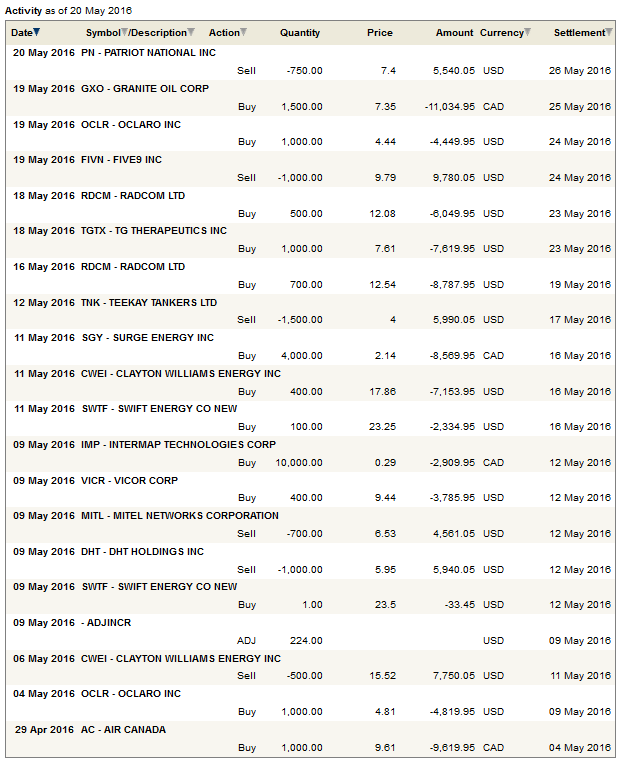
Click here for the last four weeks of trades.  Note that the 224 share AdjIncr transaction is because when Swift pink sheet equity converted to new equity I lost my shares in the practice account and so I had to restore those manually.

week-254

Week 250: Getting back to even

Portfolio Performanceweek-250-yoyperformance


week-250-Performance

See the end of the post for the current make up of my portfolio and the last four weeks of trades

Thoughts and Review

I’ve been trying to stick to core ideas over the last four weeks, not taking fliers and taking a very close look before I purchase anything.  If you remember, last month I reflected back on the last year, where I really didn’t do all that well, and concluded that my so-so performance could be attributed to too many mistakes with peripheral ideas that I either held too long or should not have gotten into in the first place.

At the same time I’ve been willing to tweak my exposure to stocks up a notch because my two main worries have abated.  As I wrote in my February post what worried me was:

  1. The collapse of oil bringing about energy company bankruptcies that a. lead to investor losses that start to domino into broad based selling, and b. lead to bank losses and bond losses that cause overall credit contraction
  2. The collapse of China’s banking system leads to currency devaluation and god knows what else.  Kyle Bass wrote a terrifying piece (which I would recommend reading here) about how levered China’s banking system is, how their shadow banking system is hiding the losses, and about how government reserves are not large enough to pacify the situation without a significant currency devaluation.

Both of these events seem off the table, with the first maybe completely eliminated and the second at least postponed.

Still the market is back to that 2,100 level and it is difficult for me to get excited about another move higher.  Where I can I have added some index shorts and also some individual tech name shorts to balance in case of a pullback.

Still finding new ideas

Even as I try to be cautious, I still have found a lot of new stocks this month.  I added positions in Swift Energy, Clayton Williams Energy, Granite Oil, Medicure, Rentech and Oclaro.  It was a busy month and there are lots of stocks written up below.  I feel pretty good about all the ideas, with the usual caveat that if oil starts to go south my oil stock positions will be reduced quickly (not Swift though, which is a special situation as I will describe).

Canadian Dollar Doldrums

I’ve had some decent gains in the last month and am back within a a few percent of my highs.  But quite honestly my portfolio would be back to its high already if this damn Canadian dollar wasn’t killing me.

About half of my portfolio is in US stocks but as a Canadian I report my gains and losses in Canadian dollars.  Lately, every day the market is up the Canadian dollar is up (usually a lot) and because of that a chunk of my gains disappear.  To give it perspective: since the beginning of the year the Canadian dollar has gone from about 1.38 US to 1.27.  Every $100,000 I had in US dollars was worth $138,000 at the beginning of the year; today its worth $127,000.  Its been a headwind.

I’ve been saved by picking some US stocks that have done very well.  Radisys continues to be huge.  Apigee is a big winner off its lows.  Clayton Williams has doubled in a few weeks.  Both Iconix Brands and Patriot National have had big runs off their lows.  Things would really be rolling if I didn’t have to deduct 10% from the aggregate sums.

Oh well.  The Canadian dollar going up means that oil is going up, and living here in Calgary I can tell you that is a good thing.  Things are unquestionably slow in the city.  If you are in the oil and gas sector, its depressing.

Cowtown Slowdown

As an aside with respect to my home town; I honestly don’t see the Armageddon situation that some have described. I bike past downtown condos every day and while the sun is up so I can’t count the lights, I can count bbq’s and bicycles on the balcony in these supposedly empty apartments.  I live in one of the downtown “high-end” neighborhoods where its been said that “every second house is for sale” and yet I see only a smattering of for sale signs and a number of them sold.  The restaurants I walk by still seem busy.  To be sure, things are slow and if you work downtown in the patch they are miserable, but overall it seems not very different than a year ago.  Is this what depression looks like?  Or do I just not have the clear perspective of an outsider, what I see being distorted by a home town bias?

Oil move

I’ve given up trying to predict whether this is the real move in oil  and if not when that move will come.  So just like all the other head fakes, I’ve added positions on the move up with the expectation I can be nimble enough to squeeze out some profits even if this turns out to be another short term blip.

I will repeat what I wrote in September about oil, which could be paraphrased to say “I don’t think anybody really knows”:

But with all that said, I remain neutral in my actions.  I’m not going to pound my fist and say the market is wrong.  I’m just going to quietly write that I don’t think things are as certain as all the oil pundits write and continue to be ready to pounce when the skies clear enough to show that an alternate thesis is playing out.

With that let’s talk about some stocks because I have a lot to say, starting with two of the three oil stocks I bought (I’ll talk about Clayton Williams at a later date).

Swift Energy

I think this would could be a legitimate 20 bagger if it all pans out.  If only I had the confidence to make a Cornwall Capital style bet on it.  I tweeted about this last week because I wasn’t sure if I’d be able to mention it in a post before the effective date.  Unfortunately that looks to be the case as the stock was halted all day Friday.

Swift is in bankruptcy.  At the end of last year they prepackaged a plan with bondholders.  That plan has been approved by a judge and the company should be coming out of BK shortly.  In the plan existing equity actually does quite well, retaining 4% of the new company shares plus 30% of equity via warrants.  The warrants are well out of the money compared to the current pink sheet price.  But they are also very long term, with half of them expiring in 2019 and the other half in 2020.

The bankruptcy plan converts ~$900 million of bonds into equity.  The company that emerges from bankruptcy will have $325 million of bank debt and, net of cash, somewhere around $250 million of net debt.  So the balance sheet is very de-levered compared to the company pre-bankruptcy and also compared to its peers.

The pink sheet implies a market capitalization of around $240 million and an enterprise value of  just under $500 million.  That means that the market is giving Swift an EV/flowing boe valuation of $16,000.  Checking that against the RBC universe, peers trade at between $30K and $100K.  On an EV/cf basis, which I again compare off of the RBC price deck for 2016 ($40 oil and $2.50 gas), Swift gets a 5.5x multiple versus 10-20x average for the RBC coverage universe.

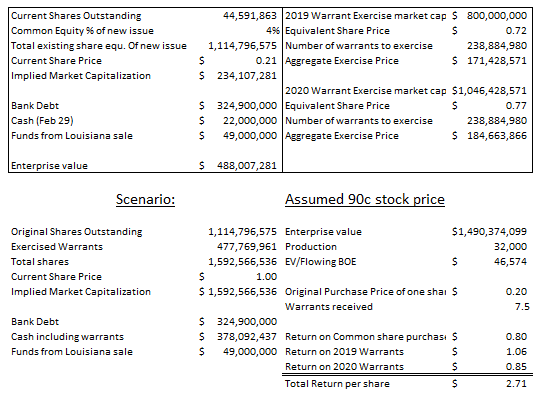
As I said the warrants are way out of the money but by my calculations they provide an extremely healthy upside scenario.  You get 7.5 warrants per share.  Half of those warrants are in the money at ~72 cents, with the other half at ~78 cents.  If you get a stock price of 90 cents by 2019 you are looking at nearly a $2 return on your ~20 cents purchase.  $1 gets you close to $3 return.  See the model below:

pinksheet-returns

Of course a lot has to go right for all this to happen but its a long runway and even at 90 cents you are looking at an EV/flowing boe of around $43K and EV/cf of 15x assuming flat production, $40 oil and $2.50 gas.

The dream scenario is that natural gas prices go up some time between now and 2019.  If we hit $4 gas again Swift is going to make a lot of money, and a $2 billion enterprise value is not impossible (would still only be $62,000 per flowing boe on current production).  That would give you a 26x return on a 20 cent stock purchase.

On the downside, obviously management is not ideal.  Went into downturn with no hedges and way too much debt.  Operationally it actually seems like they’ve done pretty well though.  And the acreage they own, particularly Fasken, looks like some of the best of the Eagleford.

Granite Oil

This is an oil stock I’ve held in the past and that I bought again after it appeared that oil was going to make a legitimate run. I have added to it in the last week as oil has stayed very firm in the face of some bad news (Doha, Kuwait).

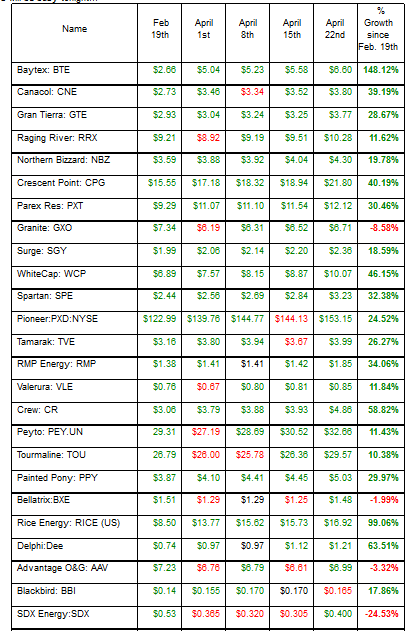
But I’m a bit worried.  Granite just doesn’t seem to be performing like it should. Below is a performance comparison I stole from this Investorvillage post:

peercompapr2016

The problem with investing in any of these Canadian juniors and intermediates is that production data comes out semi-publically through a subscription you pay for via IHS.  I of course, do not have access to this data.  So there is a chance that some are seeing declines in January and February and getting a head start selling on what will be a weak first quarter.

Granite also hasn’t put out a new presentation since February, which you can construe a few different ways, both positively and negatively.

Granite may also be in the penalty box because the same management team sold out their shareholders when they took an offer for Boulder Energy (of which Granite had split last year) at around $2.50 per share, or about one quarter of what Boulder traded at last year.  I imagine there are pre-split shareholders of both names that decided to jettison Granite in disgust after the Boulder news.

Granite currently trades at a $200 million market capitalization and has $40 million debt.  In the third quarter they produced 3,476 boe/d.  Their valuation is roughly inline with peers, though Granite’s low debt position should allow for some premium in my opinion.

They have proven themselves to be solid operators; in 2015 they “decreased capital costs by 29 percent through the year to $2.0 million per well” and operating costs from $7.50 per boe to $6.00 per boe (source).

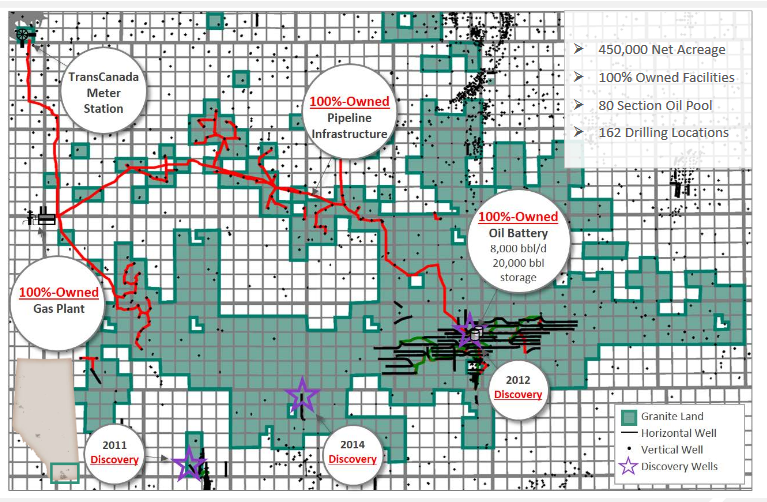
What I have always found exciting about Granite is that they have a low-decline and relatively low risk development opportunity applying a gas injection enhanced oil recovery technique on known reserves.  But they also have a very large surrounding land position, which allows for a significant expansion of the program if oil prices recover and make them attractive to a larger acquirer.  Below is a map from their presentation to give you an idea of their current drilling focus and more importantly the expansive land package that surrounds it:

landposition

So I like Granite as a reasonably safe way to play a price recovery.  I am optimistic that the poor share price activity is an opportunity and not an omen.  The company remains reasonably priced with low debt and is one of the very few oil companies in Canada that can squeak out profitability with oil prices above $40.

Medicure

I got the idea for Medicure from a radio program we have in Canada called Moneytalks.  It used to be that Moneytalks was full of gold and silver interviews and end of the world enthusiasts so for a long time I did not make time to listen.   But lately Michael Campbell has been interviewing more real managers who have been giving out the odd gem of an idea with Medicure being one that I was enticed to buy.

Medicure was recommended by a PM at Maxam Capital.  I found this excerpt on the company in one of Maxam’s recent letters to clients:

maxamposition

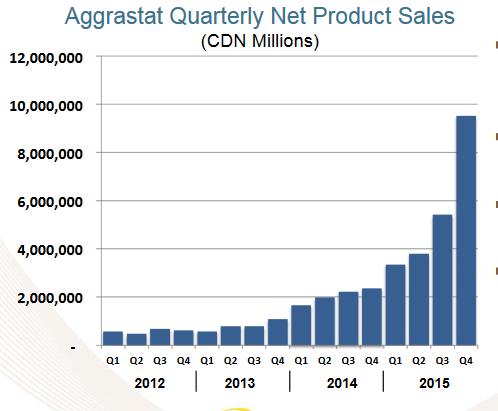
Located in Winnipeg Medicure is a small pharmaceutical company with a drug called Aggrastat that prevents thrombosis and is used intervenously in hospitals.  Sales of Aggrastat have been growing rapidly since FDA approval first of recommended dosage in 2013 and then an expanded dosage regime in April of 2015.

aggrastatsales

On top of their ownership of Aggrastat, Medicure also has an option to purchase a growing generic manufacturer in India called Apicore.  This is where things get a bit fuzzy.   As part of a financing they orchestrated for Apicore in the summer of 2014 Medicure received a 6% interest in Apicore stock and an option to acquire the remaining shares at any time before July 2017.  But in a strange twist, the purchase price of the remaining shares of Apicore is undisclosed.  I looked all over trying to find an indication of what the option price is, but to no avail.  So trying to value the option is a bit of a guessing game.

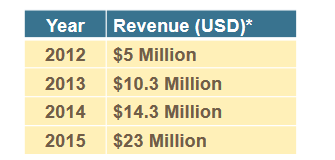
Medicure gives a small hint in their presentation that it is probably worth more today than it was in the summer of 2014.  They provide the following information with respect to Apicore’s sales each of the last 4 years:

apicoresales

Clearly there has been significant revenue growth at Apicore since Medicure was granted the option to purchase the company.

The balance sheet accounting of the Apicore interest doesn’t help much because the only changes Medicure has made to the value of their position is due to currency fluctuations.

Medicure trades at a market capitalization of a little under $90 million.  They generated operating cash flow of $7 million in 2015 and do not have significant capital expenditures.  Aggrastat is growing and so one should expect increasing cash flow going forward.  And then you have Apicore on top of that, which must be worth something, though its not clear what.  So adding it all up, it seems that the current price of the stock does not reflect the cash flow generation capacity of Aggrastate let alone the value of the purchase option for Apicore.

Rentech

I got the idea for Rentech from @alex_estebaranz on Twitter.  Up until this year Rentech has operated two businesses: the first being wood processing (wood chips and pellets) with operations in Canada and the United States, and the second being fertilizer, with two plants producing nitrogen based fertilizer.

In 2015 the company decided to get out of the fertilizer business in order to reduce debt.  In August Rentech sold their East Dubuque fertilizer plant to CVR.  They followed this up with the sale of their Pasadena facility in March of this year.

The sale of East Dubuque to CVR was the more significant of the two deals.  Rentech received 1.04 units of CVR Partner stock in addition to $2.57 cash.   The proceeds have allowed Rentech to pay off about $150 million of debt.  Even after the payoff of Rentech retains 7.2 million units of CVR (valued at about $60 million).  They have $95 million of cash.

Rentech has 23 million shares outstanding so at $3.30, it holds an $82 million market capitalization.  The remaining debt they have is about $136mm. Subtracting what’s left of the CVR units and cash on hand and the enterprise value is low, only about $60 million.

What do you get for $60 million? A wood chip business called Fulghum Fibers, a US wood pellet business and a Canadian wood pellet business.  Below was 2015 EBITDA by segment in addition to an EBITDA forecast, which I will talk about shortly.

ebitdaforecast

As you can see the Canadian business is a bit of a mess.  They are ramping up new two new facilities and having trouble doing so.  It’s costing more money than anticipated, they’ve had to replace equipment and there is some question whether one of the facility can be ramped up to the original capacity expectation.

Nevertheless, even with reduced expectations Rentech expects that these facilities can generate between $13 to $16 million of EBITDA.  They sell their pellets to Quebec and Ontario Power for power generation, so they have steady customers for their product.

Rentech has also said they are in the process of taking out $10 million to $12 million out of SG&A.

Basically with the sale of the fertilizer businesses it’s a story about turning around the Canadian business and cutting some costs.  If the cost cuts materialize and they can generate the expected EBITDA in Canada, EBITDA can probably touch a number north of $30 million.  That would make a $60 million valuation far too low and something at least double that would be more reasonable.

Oclaro

I got the idea for Oclaro from a friend who is always coming up with off the radar ideas.  Oclaro makes optical transceivers.  The optical transceiver business is not a great business; competition is high and there is always a higher speed device on the horizon to upset any market share gains that you might have scraped together.

You can witness this by taking a look at Oclaro’s gross margins, which tend to hover around the 25% range historically.  But Oclaro is on the right side of the cycle right now.  The move in the high end of the optical market is towards 100G transceivers, and Oclaro has a leg up in this segment.

In particular there is a large build of long-haul optical in China that Oclaro has been winning business from.  They have a contract with China Mobile for 21,000 plus line side 100G long-haul ports.  The China Mobile contract is going to be delivered in Q1/Q2.  There are also contracts with China Unicom and with China Telecom for 8,000-10,000 ports each so similar size to China Mobile, and these are scheduled for early second half of the year.  On top of this there is regional demand from metro China customers that is ramping.

The product wins are leading to a ramp of their 100G production lines:

We will ramp both manufacturing lines for the ACO over this calendar year and we expect to go from shipping hundreds per quarter to thousands per quarter by the end of this year. We continue to believe that the majority of the early demand will be focused on data center interconnect

On their last conference call (second quarter) management made the following interesting comment that demand is exceeding their capacity to build the transceivers:

Our growth in Q3 will not be gated by demand. We’re running very tight on capacity for most of our 100G products, as well as our tunable 10G offerings. As a result, we’re adding significant capacity in all these areas. Our ability to grow will be governed by how quickly our capacity comes online, as well as the capability of some of our piece-part vendors to respond to our increased demand.

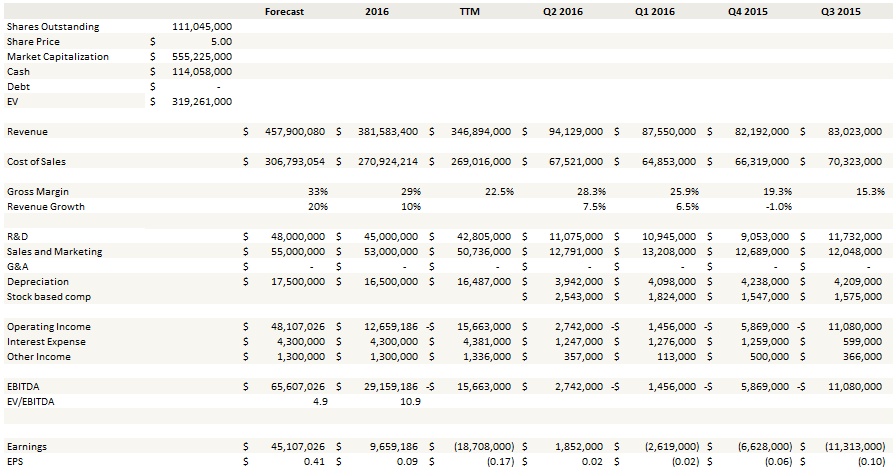
In the spreadsheet below I’ve tried to model out what I see happening to Oclaro over the next couple of years and their strong 100G position takes hold.  Their fiscal 2016 is half over, with revenues of about $180 million, so I am forecasting some growth over the next couple of quarters there.

forecast

In 2017 I am making what is probably a pretty optimistic forecast, with 20% growth in revenue and gross margins increasing to 35%.  I’m doing this to get an idea of what Oclaro might be able to generate if things go well.   I suspect that the 40 cents of EPS that I estimate would lead to a share price in the $8 range, maybe higher if growth is expected to continue to be strong.

Health Insurance Innovations

I sold some of my Health Insurance Innovations position.  Not a lot, but enough to reduce my risk if something goes wrong.  I got this across my google alerts and while I don’t know what to make of it, it doesn’t sound positive.

Arkansas News Bureau

LITTLE ROCK — State Insurance Commissioner Allen Kerr said Monday he has issued a cease-and-desist order against a Florida-based company over allegations it has used deceptive practices to try to sell short-term health insurance plans in Arkansas.

Kerr also released a list of tips for avoiding falling prey to dishonest telemarketers trying to sell health insurance plans.

The cease-and-desist order directs Health Plan Intermediaries Holdings, doing business as Health Insurance Innovations, to stop immediately the sale, solicitation or advertising of any insurance plans using unlicensed agents and to stop intentionally misrepresenting the terms of contracts or applications.

Kerr said in a news release that in a phone call with Insurance Department investigators, a Health Insurance Innovations employee offered insurance plans and gave price quotes despite admitting he was not a licensed insurance agent. Also, several company representatives falsely told investigators that two short-term plans, HealtheFlex and Principal Advantage Plan, were in compliance with the federal Affordable Care Act, according to Kerr.

I don’t really know what to make of this news.  It’s probably nothing.  Still, I felt a little better with a little less exposure to the name.

Radcom

A couple of data points occurred with Radcom in the past month.

First of all Netscout did a call on the NFV market and their service assurance offering.  The call was broken into two segments, with the first segment being the more interesting of the two.

In the first segment is an industry expert from Analysys Mason gave a pretty good overview of the NFV opportunity, its risks and why service providers are inevitably going to move towards an NFV solution. His projections for assurance seem a little light based on what I see so far from Radcom, but I guess we will see how that plays out shortly.  The call is worth listening to in full.

Second, I listened to the Amdocs fourth quarter conference call.  Amdocs gave lots of commentary around what they are doing with NFV and even provided some reference to how RDCM fits in.  Here are the comments I note (I highlighted a couple comments in particular):

When speaking about who will be the winners in this new market:

we think that actually the early adopters would come and the disruptor will come from the small companies. There is a lot of startups in this field, and we believe that some of it will go to the tradition, Cisco or Ericsson and the like but a lot of it will go to smaller companies.

Speaking of carrier advantages of NFV and their role as consolidator:

You can imagine that if you have a network that is all software devices, if you want to accelerate capacity or to change features instead of sending a technician that go to the box and do something, you just tweak it on a control plane in the data center. It’s like managing a huge data center. So the bottom line is that the trend is absolutely there. The nets are trying to fight it as much as they can, we are the disruptor, there are very few others, definitely not in our scale. We believe we could be the integrator of small companies.

And in terms of which carriers are getting a head start on their deployment:

In terms of the geographic spread that you asked, AT&T is probably by far the most advanced company with its theory and its power line under the Domain 2.0. You see some activities in Singapore Telecom, in Bell Canada, in Vodafone Group.

So in the next 12 months to 18 months, you will see the big guys making decisions, that is to say Bell Canada in Canada, AT&T and Verizon in the USA, Singapore Telecom in Asia, Telefônica probably, Vodafone, these are the guys that will make decision.

Finally, what Amdocs will and will not do:

We will not try to build a better virtualized probe than the people that I expect on this or virtualized– if you see packet core (50:39) or something like this, we would not. So we are mainly after the high-end NFV component and maybe some services and integration on the SDN.

Radcom hasn’t performed terribly well as the market has recovered.  The stock has been essentially flat.  But this isn’t unexpected.  It’s still a $100 million dollar company that reported revenue of a little over $2 million last quarter.  I don’t expect a significant move in the stock until it either reports some big numbers, announces another contract, or gets bought out.  The problem is that the last two items are game-changing events, and you can’t predict if one of them is going to happen tomorrow or next year.  So I wait patiently.

Portfolio Composition

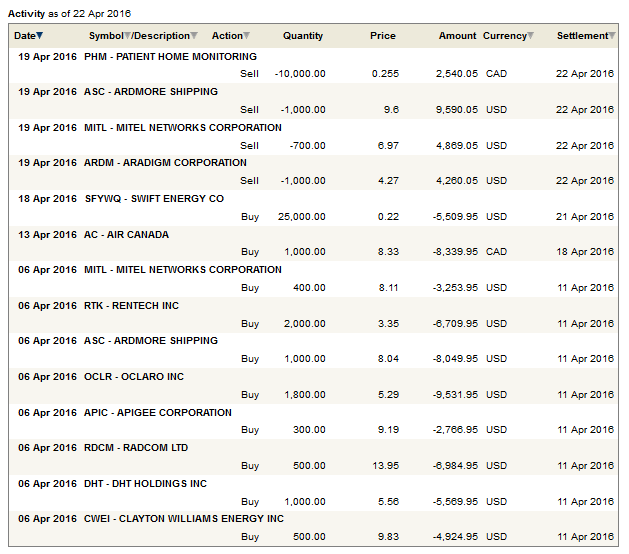
Click here for the last four weeks of trades.

week-250

Week 2015: Maybe its just a bear market

Portfolio Performance

week-215-yoyperformanceweek-215-Performance


See the end of the post for the current make up of my portfolio and the last four weeks of trades

Monthly Review and Thoughts

I don’t flash sensational headlines about bear markets for the sake of getting attention.  I get about 100-150 page views a day and given the frequency and technicality of my writing I don’t expect that to increase materially regardless of the headline I post.

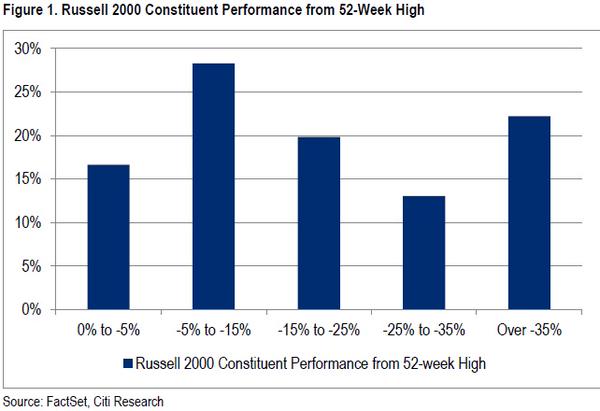
When I raise the question of whether we are in a bear market, its simply because even though the US averages hover a couple of percent below recent highs, the movement of individual stocks seems to more closely resemble what I remember from the early stages of 2008 and the summer of 2011.

A breakdown of the performance of the Russell 2000, which is where a lot of the stocks I invest in reside, was tweeted out this week by 17thStrCap and I think illustrates the pain quite well:

us market

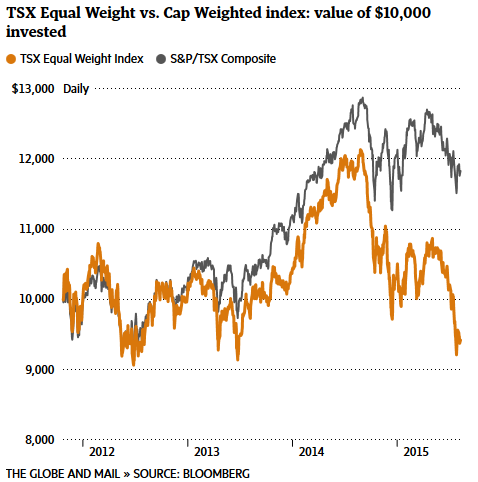
The Canadian stock averages have been made respectable by Valeant and not much else. In a Globe & Mail article appropriately capsulizing my comment here called “The market is in much worse shape than the TSX index suggests” the following comparison was made between the TSX Composite and an equal weighted version of it that dampens out the Valeant effect.

tsxperformance

When the Federal Reserve ended its quantitative easing program last year I was concerned that the market might revert back to the nature it had demonstrated after first two QE endeavors.  But for a number of months that didn’t happen.  Stocks kept moving; maybe not upwards at the speed they had previously but they also did not wilt into the night.

I am starting to think that was nothing more than the unwinding of the momentum created by such a long QE program.  Slowly momentum is being drained from the market as the bear takes hold.

A week late

I am a week late getting to this update.  We were on vacation last week, which made it tough to write.  As well I was in no mood to ruin my vacation and write with my portfolio going through significant perturbations to the downside.

It is frustrating to see my portfolio doing poorly.  My investment account is being saved by two things:

  1. Shorts
  2. US stocks in Canadian dollars

As I mentioned last month I have had a number of technology shorts, some shorts on Canadian banks and mortgage providers, and hedges on energy and small caps via the XOP and IWM.  I actually took a bunch of the tech shorts off in the last few days for the simple reason that they are up so much.  I had some decent gains from INTC, SNDK, MU, ANET AVGO, RAX, HIMX and TSM.  I also ended my multi-year short on YELP.

I am covering my shorts because with earnings season over I think there could be a counter rally resulting from the news vacuum.   The China collapse angle has been beaten up and priced in; I could see the perception shifting towards the positive outcomes of the stimulus. And I’ve read that Apple is increasing orders for the iPhone 6s and 6s+ which may or may not be warranted (I suspect not) but could lift tech results in the short term.

I would put these shorts back on if the stocks recovered.  But I don’t feel like I know enough about tech to be pressing my luck on the names.  And as I reduce my long portfolio and raise cash, I feel less need to have what feel like stretched shorts to hedge those positions.

Without the benefit of short hedging this blog’s online tracking portfolio has done worse.  I’m down about 5.6% from a brief peak I hit in mid-July (when the tankers were at their highs) and I am essentially running flat for the last 4 months.

At the center of my frustration are tankers, airlines, small caps and the REITs.  So pretty much everything.  Let’s talk about each.

The Tankers

With oil oversupplied and refiners working at record capacity producing gasoline, jet fuel and heating oil, one would expect that the market would turn to crude and product tankers as a natural beneficiary.

No such luck.

The recent moves by my favorite tanker plays: DHT Holdings, Ardmore Shipping and Capital Product Partners, have been to the downside.  There was a brief move up towards the end of July that coincided with earnings (which were outstanding) but it was quickly unwound and now we are back to levels seen a few months ago.  While I sold some along the way up, it wasn’t (and isn’t) ever enough.

Ardmore Shipping

Particularly with the product tankers (specifically Ardmore Shipping), I just don’t get why the behavior is so poor.  I found it difficult to come away from their second quarter conference call with anything but an extremely bullish take on the company’s prospects.

The product market is benefiting from extremely strong refinery utilization and strong demand for products.  It is also benefiting from the move by Middle East nations to add refining capacity with the view of exporting finished products.

Ardmore had earnings per share of 30c.  They achieved those earnings with 18.4 ships. By the end of the year, once all of their newbuild fleet is delivered, the company expects to have 24 ships.  If newbuilds had been operating in the second quarter, earnings would have been 43c for the quarter.

In the second quarter Ardmore saw spot rates of $22,400 TCE.  So far in the third quarter spot rates are up again to $23,500.  At current $23,500 spot rates and with 12 MR’s in the spot market, EPS would be $1.85.  The stock has been trading at around $13.

Yet the stock sells off.

DHT Holdings

Likewise, I couldn’t believe it when DHT Holdings traded down to below $7 on Wednesday.  At least the crude tanker market makes some sense in terms of rates.  Voyage rates have come off to $40,000 TCE for VLCC ships.  This is seasonal and if anything rates have held up extraordinarily well during the slow third quarter.

DHT stated on its conference call that they had more than 50% of their third quarter booked at $80,000 per day.  The company has a net asset value of around $8.50 per share.

While I already had a pretty full position heading into the last move down I held my nose and added more at $7.15 (i never catch the lows it seems).  I’m not holding these extra shares for long though.  In this market having an over-sized position in anything seems akin to holding an unpinned grenade.

The Airlines

While Hawaiian Airlines has been an outperforming outlier, responding well to strong earnings, Air Canada has languished.  The stock got clobbered after the company announced record earnings and great guidance.

Air Canada reported 85c EPS and $591 million EBITDAR.  In comparison, BMO had been expecting 90c EPS and $618mm EBITDAR and RBC had been expecting 77c EPS and $558mm EBITDAR.

The story here really boils down to the Canadian economy.

Both WestJet and Air Canada are increasing capacity.  The market is worried that they are going to flood a weak market and pressure yields.  On the conference call Air Canada addressed the concern by pointing out that A. the capacity they are adding is going into international routes and B. they have yet to see anything but robust demand for traffic.

What’s crazy is that while investors have responded negatively, analysts have been bullish to the results.  I read positive reports from RBC, TD and BMO.   Only Scotia, which I don’t have access to, downgraded the stock on concerns about no further upside catalysts.

Its rare to see multiple upgrades accompanied by a 7% down move in a stock.  I would love to see one of the darling sectors, tech or biotech, respond in such a manner.

So the analysts are bullish and the company is bullish but right now the market doesn’t care.  As is the case in general, the market cares about what might happen if some negative confluence of events comes to fruition.  And it continues to price in those worries.

Its just a really tough market.

Trying to find something that works

Another contributor to my poor performance has been that what has worked over the last five years is working less well now.

In particular, over the last give years I have followed a strategy of buying starter positions in companies where I see some probability of significant upside.   In some cases I will buy into companies that do not have the best track record or are not operating in the most attractive sectors.  But because the upside potential is there I will take a small position and then wait to see what happens. If the thesis begins to play out and the stock rises, I add.  If it doesn’t I either exit my position or, in the worst case, get stopped out.

This has worked well, with my usual result being something like this.  I have a number of non-performers that I end up exiting for very little gain or loss, a few big winners, and a couple of losers where I sell after hitting my stops.

I’ve had a lot of winners this way over the last few years: Mercer International, Tembec, MGIC, Radian, Nationstar, Impac Mortgage (the first time around in 2012), YRC Worldwide, Pacific Ethanol, Phillips 66, Nextstar Broadcasting, Alliance Healthcare Yellow Media and IDT Corp are some I can think of off-hand.  In each case, I wasn’t sold on the company or the thesis, but I could see the potential, and scaling into the risk was a successful strategy of realizing it.

Right now the strategy isn’t working that well.  The problem is that the muddling middle of non-performers is being skewed to the downside.  Instead of having stocks that don’t pan out and get sold out at par, I’m seeing those stocks decline from the get-go.   I am left sitting on either a 5-10% loss or getting stopped out at 20% before anything of note happens.  Recent examples are Espial Group, Hammond Manufaturing, Versapay, Higher One Education, Willdan Group, Acacia Research, Health Insurance Innovations and my recent third go round with Impac Mortgage.

All of these stocks have hair.  But none has had anything materially crippling happen since I bought them.  In the old days of 2012-2014, these positions would have done very little, while others, like Patriot National, Intermap, Photon Control, Red Lion Hotels and most recently Orchid Island would run up for big gains and overall I’d be up by 20% or so.  Instead this year the winners still win, albeit with less gusto, but its the losers that are losing with far more frequency and depth.

So the question is, if what has worked is no longer working, what do you do?

You stop doing it.

I cleaned out my portfolio of many of the above names and reduced a couple of others by half.

So let’s talk about some of what I have kept, and why.

Health Insurance Innovations

HIIQ announced results that weren’t great but the guidance was pretty good.  Revenue came in at $23 million which is similar to Q1.  In the first quarter the company had been squeezed by the ACA enrollment period, but in the second quarter this should have only impacted April.  So I had been hoping revenue would be a touch better.

The guidance was encouraging though.  The company guided to $97-$103 million revenue for the year which suggests a big uptick in the second half to around $28 million per quarter.  In my model, I estimate at the midpoint they would earn 40c EPS from this level of revenue if annualized.

Also noted was that ACA open enrollment would be 90 days shorter next year, which should mitigate the revenue drag in the first half of the year.  And they appear to be doing a major overhaul of management – bringing on people from Express Scripts (new president), someone new to evaluate the web channel and a number of new sales people.

Its been a crappy position for me but I don’t feel like there is a reason to turf it at these levels, so I will hold.

Impac Mortgage

As usual Impac’s GAAP numbers are a confluence of confusion.  The headline number was better than the actual results because of changes to accretion of contingent expense that they incurred with the acquisition of CashCall.

The CashCall acquisition had contingent revenue payout and that payout expectation has decreased leading to lower accretion via GAAP.  Ignoring accretion the operating income was around $8 million which was less than the first quarter.

The decline was mostly due to lower gain on sale margins, which had declined to 186 bps from 230 bps.

While origination volumes were up 8% sequentially (see below) I had been expecting better.  The expansion of CashCall into more states was slower than I expected.  In the second quarter CashCall was registered in 19 states.  I actually had thought that number was 29.

q2volumesBy the third quarter CashCall is expected to be compliant in 40 states.  And really that is the story here.  Volume growth through expansion.

CashCall is a retail broker dealing primarily with money-purchase mortgages (mortgages to new home owners).  Therefore Impac is not as dependent on refinancing volumes as some other originators.

While it was not a great quarter the company still earned 70c EPS.  Its lower than my expectations but in absolute terms not a bad number.  On the conference call they said that Q3 margins looked better than Q2, and while July production was only about $700mm, they expected better in August-September as the pipeline was large.

I made a mistake buying the stock at $20 on the expectation of a strong second quarter.  But I think at $16 its reasonable given earnings power that should exceed $3+ EPS once CashCall is operating nationwide.

PDI Inc

The response to the PDI quarter is indicative of the market.  The company released above consensus earnings on Thursday along with news that their molecular diagnostic products were being picked up by more insurers.  In pre-market the stock was up 20% and it looked like we were off to the races.

It closed down.

Recall that PDI operates two businesses.  They have a commercial services business where they provide outsourced sales services to pharmaceutical companies looking to market their product.  And they have the interpace diagnostics business, which consists of three diagnostic tests: one for pancreatic cysts and two for thyroid cancer.

I suspect that the market decided to focus on the one negative in the report: reduced guidance for interpace revenues from $13-$14 million to $11-$12 million.  The guidance reduction was caused by a delay in receivables from some customers.  The metric by which to judge the growth of the actual operations, molecular diagnostic tests, increased from 1,650 in the first quarter to 2,000 in the second quarter.

But in this market you gotta focus on the negative.  At least on Friday.

Patriot National

When I bought Patriot they were a new IPO whose business was a platform that allowed them to procure and aggregate workers compensation policies for insurance carriers.  They sign a contract with a carrier for a bucket of policies with particular characteristics and then distributed that to their pool of agents, collecting a fee in return.

But over the last couple of months Patriot seems to be expanding that role to something more holistic.  Among their nine acquisitions in the past six months is an insurance risk management firm, an auditing and underwriting survey agency, an insurance billing solution platform and a beneits administration company for self-funded health and welfare plans nationwide.

Patriot describes themselves in their latest presentation as follows:

whattheyarePatriot has shown solid growth since their IPO, both through their roll-up strategy of small insurance businesses and organically.  They have increased their carrier relationships from 17 to 82.  They are expanding their relationship with a few big carriers like AIG and Zurich.  They have grown their agent pool from 1,000 to 1,750.

I’m not really sure what it was about the second quarter that caused the stock to sell-off like it has.  It was down 16% at one point on Wednesday, which is about the same time I tweeted that this is crazy and pulled the trigger.  I suspect its simply another case of a bad market, a run-up pre-earnings and a release that didn’t have anything clearly “blow-outish” about it.

Nevertheless the company provided guidance along with its results and for 2016 predicts 37% revenue growth and 55% earnings growth.  These numbers make no allowances for further accretive acquisitions, which undoubtedly will occur.

The stock trades at 6.5x its 2016 EBITDA multiple.  From what I can tell its closest peers trade at around 10x, and they aren’t growing at a pace anywhere near Patriot.  As I said I added under $16 and would do so again.

Orchid Island

I have followed Orchid Island for a long time having been an investor in its asset manager, Bimini Capital, in 2013.  I never bought into Orchid though; it seemed small, it always trade around or above book value and being an mREIT it seemed that you had to have more of an opinion on the direction of rates than I have had for a while.

But when the stock got below $8, or a 30%+ discount to book value, it just seemed to me like the opportunity was too ripe to pass up.

There have been a number of good SeekingAlpha articles by ColoradoWelathManagementFund on Orchid where he describes the MBS investments and also the Eurodollar hedges.  These hedges, which require a different GAAP accounting then other more commonly used hedges, seem to be at least partially responsible for confusing the market and leading to the massive discount to book.

However I don’t plan to wait this out until book value is realized.  When the stock hits double digits again I expect to be pulling the trigger.

Higher One Education

I bought back into Higher One after it got clubbed down to $2.20, where it seemed to be basing.  Upon buying the stock was promptly clubbed down again to below $2.

Like many other names I am not sure if the clubbing is warranted.  The company’s second quarter results were better than my expectations.

Adjusted EBITDA in the second quarter came in at $8 million versus $7.2 million in Q2 2014.  While the disbursement business EBITDA was down, both payments and analytics were up (46% and 38% respectively).  EPS was 8c which again was better than last year.

They lost 6 clients representing 86,000 signed school enrollment (SSEs), signed 4 new clients with 16,000 SSEs and renewed 59 clients with 675,000 SSE’s.  Their total SSEs were 5mm at the end of Q2.  Given the headwinds in the industry, Higher One is holding their own.

The overhang in the stock is because the DOE proposed new rules that ONE and others are pushing back on, with the biggest issue being that you can’t charge fees for 30 days after deposits.  From their conference call:

The way the rule is proposed every time there is a disbursement made into the students accounts, we’d have to freeze all fees for 30 days.

This of course would severely impair Higher One’s ability to be profitable with these accounts.

On Friday after writing this summary I decided to sell Higher One.  I’m waffling here.  I like the value but don’t like the uncertainty and if the market can knock it down to $1.90 then why not $1.50?  Uncertainty reigns king.  I might buy it back but its difficult to know just how low a stock like this can go.

My Oil Stocks

I’ve done a so-so job of avoiding the oil stock carnage of the last few months.  After the first run down in the stocks I added a number of positions in March and ran them back up as oil recovered to the $60’s.  Then oil started dropping again and in May I began to sell those stocks.

oiltweetBy mid-June I was out of all my positions other than RMP Energy.  By July I had reduced RMP Energy down to about a percentage weighting in my portfolio.

So far so good.

Unfortunately I started buying back into the oil names in mid-July, which was too early.  I bought Jones Energy in the mid to high-$7s but sold as it collapsed into the $6’s.  I tried to buy RMP again at $2.20 but got pushed out as it fell to $2.  I bought Baytex and Bellatrix which was just stupid (I sold both at a loss).  I’ve probably given back half of the profits I made on the first oil ramp.

In this last week I made another attempt but I am already questioning its efficacy.  I took small positions in RMP Energy and Jones Energy and a larger position in Granite Oil.  The former two have done poorly, while the latter had an excellent day on Friday that provides some vindication to my recent endeavors.

One thing I will not do with any of these names is dig in if the trend does not turn.  I’ve learned that commodity markets can act wildly when they are not balanced, and the oil market is not balanced yet.  So its really hard to say where the dust settles.

Even as I write this I wonder if I should not have just waited for a clear turn to buy.

These positions are partially hedged in two ways.  First, I shorted XOP against about a quarter of the total value of the positions.  And second by having so much US dollar exposure (still around half my account) as a Canadian investor they act as a bit of a counter-weight to the wild moves I can see from currency changes.

Jones Energy

One of the interesting things happening right now is that natural gas production is flattening, in many basins it’s declining, and yet no one cares.  When natural gas first went to new lows in 2012 many pointed to the declining natural gas rig count, believing prices would quickly bounce back.  They didn’t, in part because of the associated gas coming from all the liquids rich plays.

With the oil collapse much of the drilling in those liquids rich plays is no longer as attractive.  You have to remember that even as oil has fallen, natural gas liquids like propane and butane have fallen even further (ethane, which is the lightest of the liquids, is now worth no more than natural gas).  Many producers that were labeled as oil producers, because they produced liquids, really produced these lighter liquids that are now trading at extremely depressed levels.  Drilling in light-liquids rich basins (the Marcellus but also the Permian and parts of the Eagleford) has declined precipitously, and with it all of the associated gas being produced.

Meanwhile much needed propane export capacity is on the horizon and expected to arrive en-masse in 2016.

Jones Energy has too much debt (around $770 million net) but they also have oil and natural gas that take them out into 2018.  I think they are a survivor.  They have reduced their drilling and completion costs in the Cleveland from $3.8 million to $2.6 million.  They actually increased their rigs in the Cleveland in June, though I have to admit that might be dialed back again with the prices declining.  I bought back into the stock for the third time this year when it was clobbered on what seemed to be pretty good earning results (a beat and guidance raise).  Its a play on oil, but also on falling natural gas production, as natural gas makes up 43% of production and much of the associated liquids are light.

RMP Energy

I think that the miserable performance of this stock is overdone, but I have thought that for some time and down it continues to go.  RMP gets punished over and over again for essentially the same concern – Ante Creek declines.  This latest pummeling seems to have been precipitated by the disclosure that August volumes at Ante Creek were around 8,500 boe/d.   This is a decline from April volumes of 12,200boe/d but similar to end of June volumes.  Below is a chart from Scotia that details Ante Creek production:

antecreekvolumes

The April increase coincided with the new gas plant.  The subsequent fall was because the company drilled no new wells in the second quarter.  That production has stabilized from June to August without any new wells being drilled is encouraging.

But the market sees it differently.

Lost in the shuffle (with nary a mention in any of the reports I read) is that RMP has reduced its drilling and completion costs by 30% and that operating expenses were down from $5.26/boe to $3.89/boe.  Also forgotten is that the company is experiencing positive results at Waskahigan with it new frac design.

RMP trades at about 2x Price/cashflow and has debt of about 1.35x expected 2015 cash flows.  Its not levered like many peers and its not expensive.  These constant concerns about Ante Creek need to be priced in at some point.

Granite Oil

Of the three names I own, this is the one I am going to stick with the longest.  Granite has a $150 million market capitalization and $50 million of debt.  Their asset is a large position in the Alberta Bakken (350,000 net acres).  They can drill 240MBBL wells that are 98% oil for $2.8 million per well.

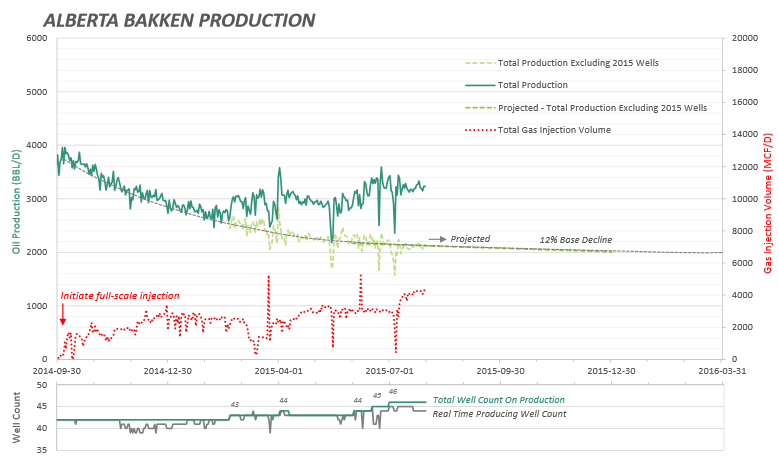
And they are beginning a gas injection EOR scheme that is showing promising results.  Below is company production as gas injection has increased.

alberta-bakken-eorThe results are well above expectation and show minimal decline even as the number of wells drilled has only increased marginally.

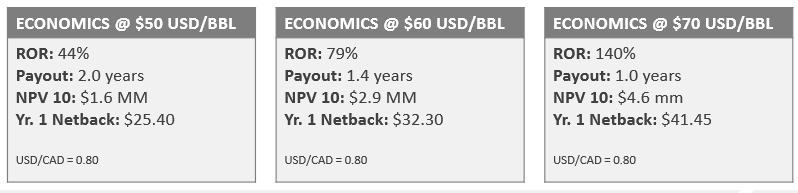
The result is some pretty strong economics even at lower oil prices.

economics

Granite management had been loading up on shares in the $4’s.  I did too.  The company announced earnings on Friday and is probably the only oil company to announce a dividend increase.  Like I said, this will be the last oil position to go for me.

Portfolio Composition

As I’ve said a number of times in the past, I sometimes forget to mimic my actual trades with the online RBC portfolio I track here.  After a while these differences get too out of whack and I have to re-balance.  I did some of that on Friday, and so the transactions on that day are simply me trying to square up position sizes.  I don’t have things quite right though; the cash level of my online portfolio is negative while my actual investment account is about 15% cash.  I looked at why this is and its the contribution of a number of positions that are all slightly larger in the online portfolio than they should be.  I didn’t have time to adjust everything exactly so I’ll just try to reduce this discrepancy naturally over time.

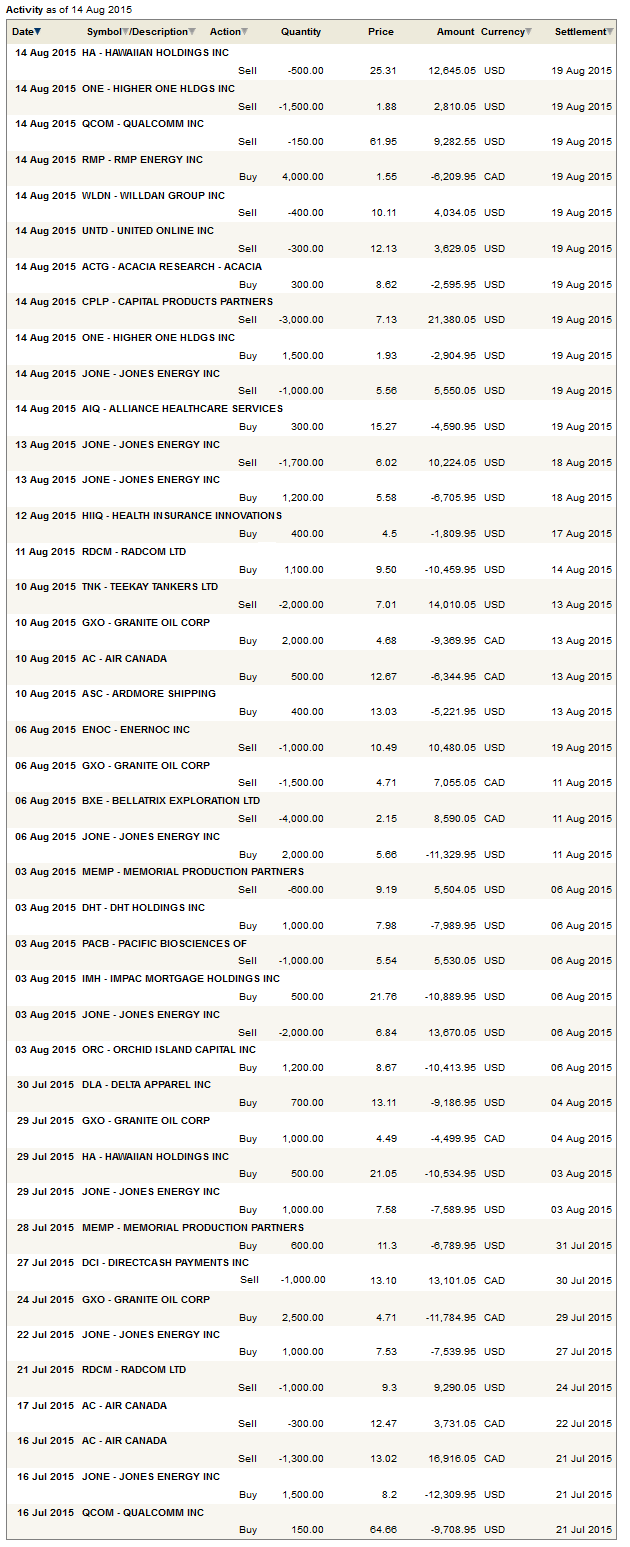
Click here for the last five weeks of trades.

week-215