Skip to content

Further investigation into Impac Mortgage Part I: Non-recourse trusts

I did more research into Impac Mortgage (IMH) over the weekend, and I plan to share my findings in a series of 3 posts.

In this first post I want to focus on the trust assets.  While the trusts are somewhat peripheral to my investment thesis in Impac, an explanation of how they work is central to the following posts I plan to write about earnings, and understanding the trusts helps quantify what potential they might hold for Impac if the housing market recovery becomes robust.

Impac Mortgage was a $250 stock in 2004 (I am including the 10:1 share consolidation that took place).  Obviously it has been a long way down.   The fall in the stock price from then to now has been entirely because of the mortgage market collapse.   This is something to keep in mind while I step through the next few paragraphs.

As I have explained in previous posts, I bought Impac Mortgage because of the growth I anticipate from their origination business.   But while the current business model centers around mortgage origination, it hasn’t always been that way.  Prior to 2008, in addition to originating mortgages Impac created and ran a number of off-balance sheet trusts.  These trusts would buy mortgages, mostly one’s originated by Impac, and pay for those mortgages by selling securitized mortgage obligations to investors.  The trusts would pay interest on their obligations from the cash collected on the mortgages. Read more

Week 65: Doing the work

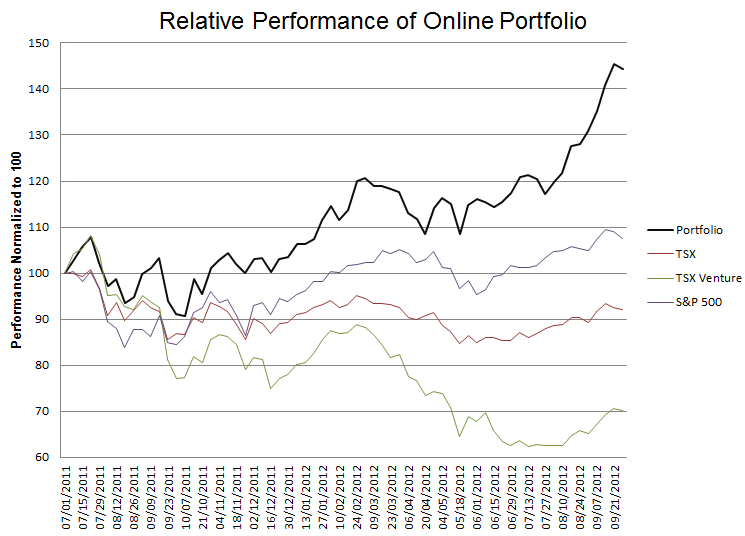
Portfolio Performance

The turn in housing

– Michael Burry – Scion Capital

The housing market has turned.

Being that it is a huge, lumbering tanker, it takes a long time to slow down and redirect.  The changes happen slowly enough that you can miss them if you are focused on the wrong details (price increases and to a lessor degree sales increases) and not enough on the right one’s (inventory).  All that matters is that prices are cheap, rates are low, and inventory has come down to levels that leave many cities firmly entrenched as sellers markets. Once buyers stop seeing themselves in the drivers seat, their attitude changes from one of waiting for a better buy to that of getting in before its too late.  The vicious circle is replaced by a virtuous one, and sales and price increases will follow.  Nothing lasts forever, and the US housing collapse didn’t either.

Falling inventories had to lead the housing turnaround, and that is what we are seeing now.  Nationwide in August housing inventories fell from 8.2 months of supply a year ago to 6.1 last month.

Read more

Out of Arcan

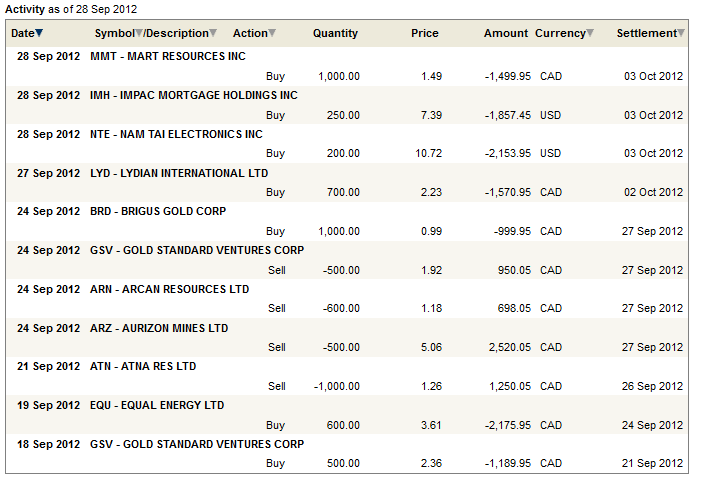
I sold out of the rest of my Arcan position this week.  I took the rest off at $1.18.  This was after I had sold the majority of my position a couple weeks ago (September 11th) at $1.25.

I had difficulty making up my mind on the stock.  The company could,  get taken over any day for a premium, and if that happens I will be kicking myself.  But I could also be sitting around for a long time waiting for that day.

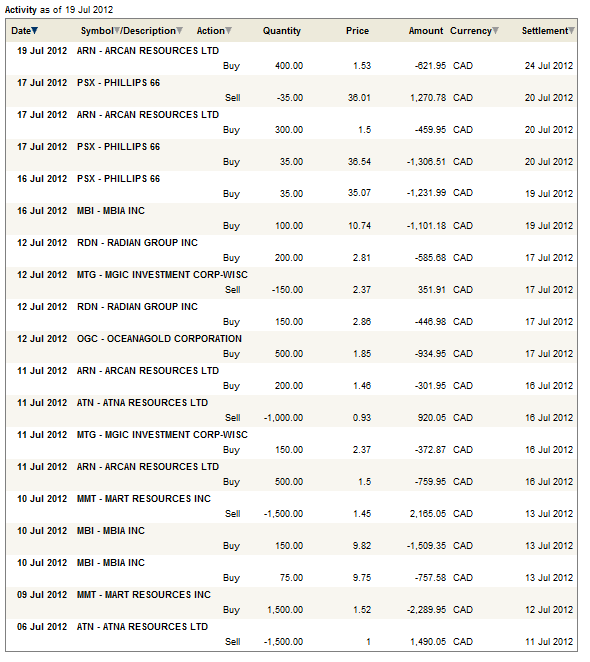
I bought Arcan at $1.50 in July.  Thus, I’m taking a loss of about 20% on the sale.

The deciding factor for me was this chart, from a BMO research note on the company released two weeks ago.

Read more

Does Radian Guaranty have a liquidity problem?

A couple of weeks ago a Seeking Alpha article was published that highlighted some problems on the horizon for Radian Group (RDN). The article was excellent and it introduced me to the idea of liquidity risk at a mortgage insurance subsidiary.  That led me into a much more detailed investigation of the Radian Guaranty insurance subsidiary, which I will discuss below.

The liquidity of an insurance sub

Before getting into the issues specific to Radian, let’s talk a bit about liquidity risk. For some reason liquidity is not at the forefront of discussion during conference calls and in brokerage reports on mortgage insurance companies. Questions and comments focus on risk to capital ratios and loan loss reserve methodologies, which, while providing important clues, do not in themselves allow you to conclude whether a company will have the cash available to pay the claims. The author of the SeekingAlpha article, Darren Oliver, suggested that this was because the mortgage insurance industry is not very well understood. This could be the case, I don’t know. I just find it surprising.

As a mortgage insurer, the bottom line is that you have the cash available to pay claims and that the regulator who watches over you believes that this is the case. Over time, the cash and short term investments on hand plus the premiums paid need to be enough to pay out claims made as well as operating expenses incurred. If there is a concern that the cash and future premiums will not be enough to cover the expected claims, the insurer will either be taken over by the regulator or put into run off.

Read more