Skip to content

Posts tagged ‘identiv’

Q1 Earnings: Identiv

I wasn’t planning on writing anything about Identiv’s first quarter.  There was nothing that stood out about the results.  The company reported so-so year over year growth (7%) that was hindered a little by slower growth in their Physical Access segment (5%) which is seasonally weak in the first quarter.  The Credentials segment grew at 11% and the Identity segment grew at over 20%.

The company reiterated guidance, which was set at $64-$68 million in revenue for the full year 2017 and EBITDA of $4-$7 million.

Nothing exciting.  Until the company decided to offer stock.

The news came out on Thursday.  It was priced by Friday morning at $4.85 and oversubscribed.  The pricing was favorable when compared to the close Thursday night (there was essentially no discount) but when you consider the stock has had maybe 3 or 4 up days in the last month, not so much.

So why did they do the offering?

The simplest explanation is that the stock price has moved significantly in the past few months, the company has only a small cash position on the balance sheet ($7 million) and the board thought it was prudent to raise funds (it ended up being about $12 million).  This would be the Occam’s Razor explanation.

While it’s probably as simple as that, there are some circumstances that make me wonder if other reasons were at play.  First, why would they do a share offering so close to the annual shareholders meeting?  It seems odd to raise the ire of shareholders right before they get their chance to speak to management unless the timing was precipitated by some specific need of cash.

And speaking of the word precipitate, there was an awkward exchange on the first quarter conference call between Stephen Humphreys (Identiv’s CEO) and an analyst.  The analyst asked about the recent shelf that Identiv filed.  Humphreys provided the usual run-around, the marketplace is exciting, looking for opportunities, making sure they have access to funds if something comes up.  But he also said there was “nothing precipitous”.  That seems to me like an odd phrase to use if you are one week away from issuing equity.  He didn’t have to give that color.  So why did he, or what changed in the following 7 days?

Also on the call was an odd disclosure by Humphreys about potential opportunities.  In his prepared remarks Humphreys explained the three tiers of growth for the company.  First is the base business growth.  Second is finding upside in their existing platform of products, new target markets or solution packages.  And the third is “disruptive growth”.  Humphreys spent some time on this, explaining how the company positions itself for a “black swan” event and “aspire for moon shots” with its “disruptive and transformational solutions”.  There was nothing specific in these remarks, which made me think it was odd to mention it at all.  What was the point?  Put yourself in the position of CEO.  What would cause you to decide to write prepared remarks discussing moonshots and black swans?  Would you really decide to do that on a purely hypothetical basis?

Finally there is the move in the stock price.  I was pretty surprised to see Identiv rocket up over a dollar after announcing the public offering.  I’ve seen an offering lead to a positive move in the price of shares, but its usually happens to a company where investors are concerned about solvency and the offering puts those concerns to rest.

So I don’t know. Maybe the move was just a reaction from a very oversold state.  Or maybe it had to do with the underwriter.  Whatever it was, there was nothing I could find in the prospectus or its follow disclosures to justify the reaction.  They were very standard documents.  It will be curious to see what transpires over the next few weeks and to see what they use the cash for.

Week 294: It doesn’t matter how you get there

Portfolio Performance
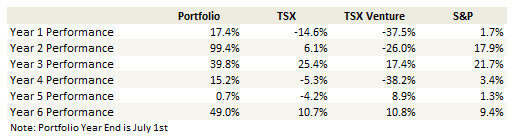
week-294-yoyperformance

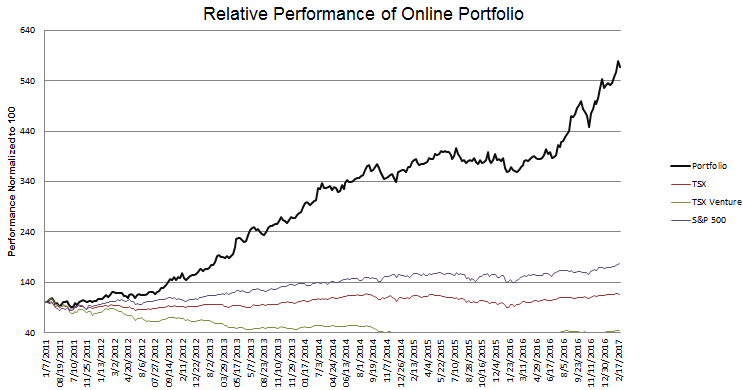
week-294-performance


Top 10 Holdings

week-294-holding-concentration

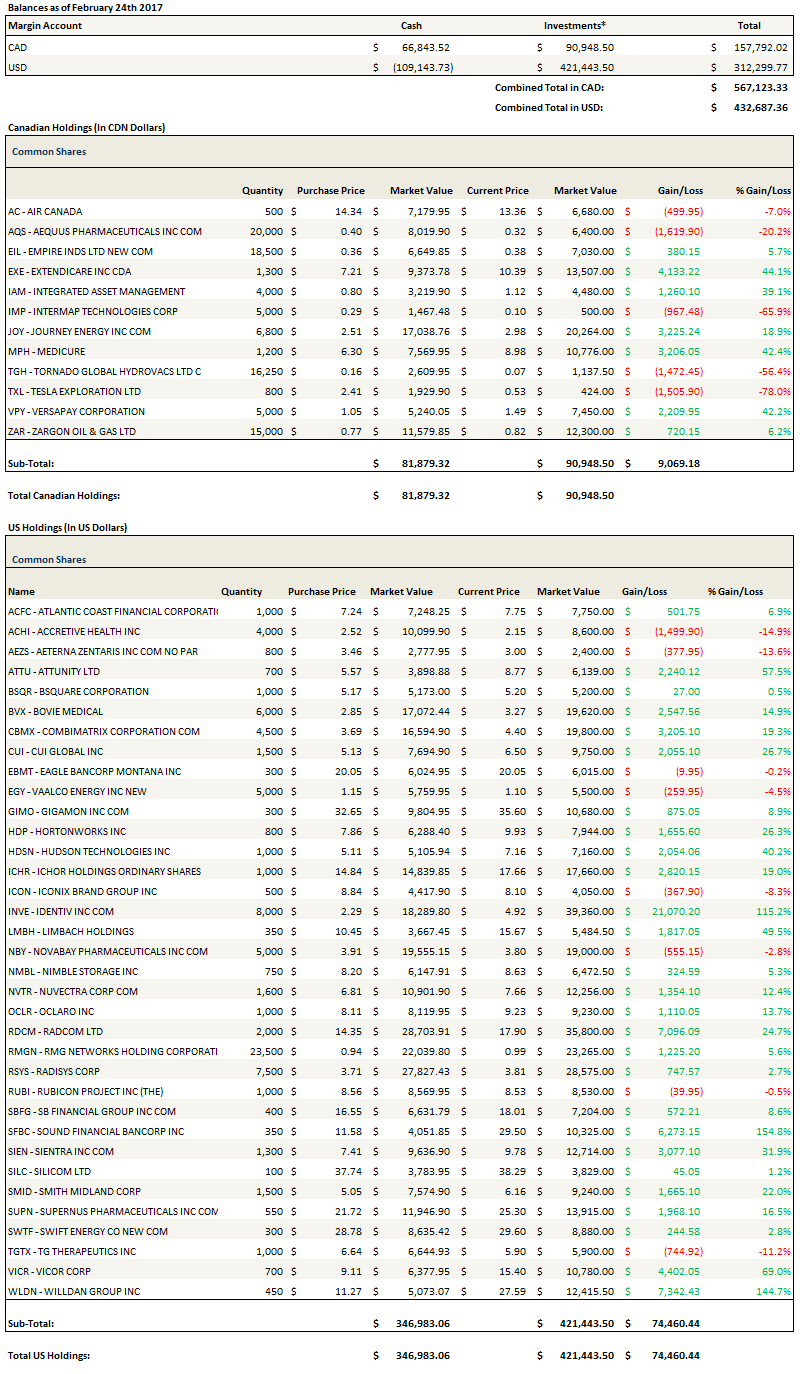
See the end of the post for my full portfolio breakdown and the last four weeks of trades

Thoughts and Review

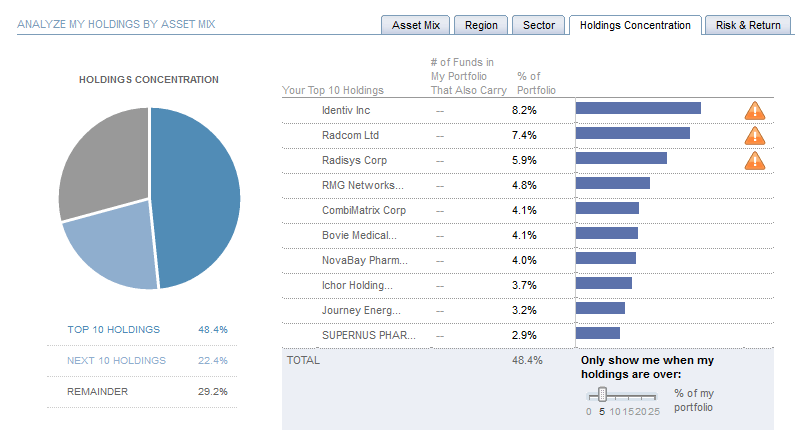
It’s a seminal moment for the blog!  For the first time in what seems like forever my largest position is something other than Radcom.  Thanks to more than doubling in price in the last four months (and even after pulling back from $6 to $5), Identiv now holds that honor.

At the beginning of November I wrote the following about Identiv:

I tweeted a couple of times this morning that I don’t think this stock makes sense at a $20 million market cap… The company has a $55 million trailing twelve month revenue run rate, they are showing growth, they are EBITDA positive now and it’s not an insignificant amount of EBITDA.  That feels like it should warrant at least 1x sales.

We are already at a $55 million market capitalization but with momentum at the company’s back I haven’t sold a share.

A second position, RMG Networks, has also ran up the ladder, and now sits as my fourth largest position at a little less than 5%.

I wrote this about RMG Networks when I first took the position in late June:

With the focus on the new verticals and improve productivity of the sale force new opportunities in pipeline are up over 40%.  And here is where we start to see an inkling that the strategic shift is bearing fruit.  In the sales pipeline, Michelsen said that the number of deals $100,000 or greater has increased by 50% in the last year while the number of $1 million deals have tripled…My hope is that these early signs of sales improvements lead to an uptick in revenues in short order.

We are starting to see that pipeline bear fruit.  The entire move has come in the last two weeks.  The stock has moved from 70 cents to a dollar on news that they had secured contracts in the healthcare vertical and converted one of their previously announced trials into revenue in the supply chain vertical.

Finally, a third company, Combimatrix, which I wrote about earlier this week, is beginning to run and take a more significant position in my portfolio after releasing solid fourth quarter results.

So that’s all great, but the reason I mention these three examples is because they illustrate how bad I am at predicting how things will play out.   In the second half of last year had you asked me what my portfolio would move on I would have replied it will rise and fall on the fortunes of Radcom and Radisys.

Flash forward a few months and my portfolio has moved significantly higher and Radcom and Radisys have done nothing.  Radisys has actually went backwards to the tune of 20%.  Whodathunkit.

This is why I carry so many positions.   A. I’m a terrible timer.  The events that I think are imminent take months or years to play out, while the events that I think are distant have a habit of manifesting much faster.

Second, my favorite ideas are often not my best one’s.  I have no idea why this is.  If I did I would change my favorite ideas.  But it’s uncanny.  I’ll sit on a thesis like Radisys, work it into the ground to understand it in depth, and then along will come a Health Insurance Innovations, which I will buy on a bare thesis (in this case that the Affordable Health Act will be repealed and this is going to be good for HIIQ) and when the dust settles I’ll have more gains from the latter than the former.  Its kinda crazy.

I guess as long as you are moving in the right direction it doesn’t really matter how you get there.

Portfolio Changes – Adding Silicom

I added a couple of new positions this month.  The Rubicon Project and Silicom.

Silicom got hit after releasing what I thought was a pretty good fourth quarter.  The company traded down to $35 from $39 pre-earnings.  I’ll try to get a more detailed write up out on Silicom at some point, but the basic points are:

  • This is a $250 million market capitalization company with $36 million of cash and no debt
  • It’s trading at a little over 2x revenue and just guided 15% growth in the first quarter and double digit growth for the year
  • Their past seven year compounded annual growth rate is 26% and growth was 21% in 2016.

Silicom designs a wide range (over 300 SKUs) of networking, cybersecurity, telecom and storage products. These are generally board level and appliance level hardware solutions.

They expect their security vertical will grow double digits, their cloud vertical will “grow significantly” and that a contribution from SDWAN will kick-in in 2017 and is expected to become a “major growth area”.  They said that over the intermediate term they see a larger opportunity in their pipeline than they have have in the past.

Already the stock has rebounded on news of a significant contract for encryption cards that will ramp in 2017 and reach $8 million in sales in 2018.

I’ll talk more about Rubicon Project in an upcoming post.

Apart from these new positions I did a bit of tweaking of my positions, adding a little to Nuvectra and Combimatrix, reducing my position in Bsquare and selling out of DSP Group.  I also have added to my Vicor position in the last couple of days (subsequent to the update end so not reflected in this update).

Taking advantage of Bovie Medical Weakness

I also added significantly to my position in Bovie Medical.  The stock sold off on news that their pilot project with Hologics for selling the J-Plasma device would not be extended.    As I tweeted at the time, I didn’t think this was as big of news as the market did.

To expand on my reasoning, Hologics has a particular business model they follow for their instrumentation and disposable business, of which J-Plasma would have been a part (from 10-Q):

we provide our instrumentation (for example, the ThinPrep Processor, ThinPrep Imaging System, Panther and Tigris) and certain other hardware to customers without requiring them to purchase the equipment or enter into a lease. Instead, we recover the cost of providing the instrumentation and equipment in the amount we charge for our diagnostic tests and assays and other disposables.

So they go “full razor blade”.  Bovie on the other hand, generates significant sales from generators.   The average selling price (ASP) for a generator is much higher than hand piece so Bovie generates a significant slice of their revenue from it.  From the 2015 fourth quarter conference call :

I guess when you think about it, the generator ASP is north of $20,000, the hand piece ASP is $375

So the models aren’t aligned.

Second, Hologic’s Gyn Surgical business segment (consisting of the NovaSure Endometrial Ablation System and our MyoSure Hysteroscopic Tissue Removal System) is a $400 million business so J-Plasma is microscopic for them.  They may not have been inclined to bend their model for Bovie.

Also worth noting is that Hologics wasn’t even mentioned in the Bovie 10-Q whereas the agreement with Arteriocyte that was mentioned favorably.

Finally the language used on the third quarter conference call around Hologics wasn’t exactly definitive:

Well, as you know, the sales channel partnership with Hologic,right now,is in a pilot phase.  So we wouldn’t be in a position, if we were to disclose the economic relationship, until that’s a permanent agreement.  So the pilot portion of our partnership will go until the end of February.  So you could look at some period after that before we can announce a permanent relationship and we’ll decide at that point in time if we’re going to elaborate on the economics of the relationship.

The agreement with Hologics hadn’t generated material revenue so there is no hit to the bottom line.  And in a separate press release (which oddly was released on the same day as the Hologics information but didn’t get on their website for a couple days after), Bovie reiterated guidance for 2017, including “accelerated growth for J-Plasma”.

I think the stock sold off in the following couple of days because its small, illiquid and under followed, not because this agreement was meaningful to the company.  So I bought.

Portfolio Composition

Click here for the last four weeks of trades.
week-294

Third Quarter Earnings Updates: INVE and SIEN

Identiv

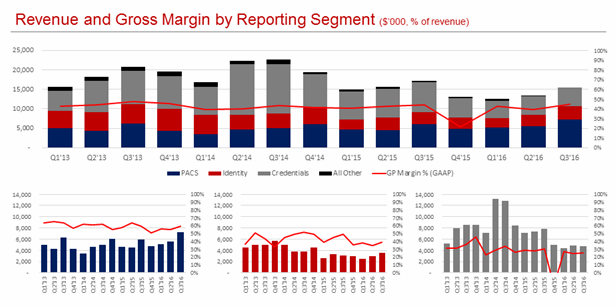
I was pleased with Identiv’s quarter.  Revenue was down year over year but that is mostly due to discontinued transponder sales to Disney.  Excluding this customer revenues were up 13% year over year.   The company appears to be on track.

Sequentially revenue was up 31% for the Physical Access Control Systems (PACS)  segment, 21% for Identity (smart card readers) and was down a little in RFID.  The third quarter is seasonally strong for PACS because of government customers that have a September year end.  But that alone doesn’t explain all of the strength in the results.

q3revs

The story here remains that a turnaround is occurring on the expense line.  Operating costs are down to a $6 million quarterly run rate.  Last year they were double that.

The stabilization of the top line and improved expense management has led to positive EBITDA for the first time in a while.  They have $1.7 million of adjusted EBITDA (no stock option expense) in the quarter.

Guidance was kept the same at $56-$60 million, which puts the fourth quarter revenue in the $14-$18 million range.

I think there is a good chance they can hit that range.  The fourth quarter is seasonally slower than the third quarter

I tweeted a couple of times this morning that I don’t think the stock makes sense at a $20 million market cap.  Its moved up since then but even at $2.50 the market capitalization is still less than $30 milion.  The company has a $55 million trailing twelve month revenue run rate, they are showing growth, they are EBITDA positive now and its not an insignificant amount of EBITDA.  That feels like it should warrant at least 1x sales.   We’ll see if it gets there.

 Sientra

I wasn’t expecting too much from Sientra in the third quarter.  So I was pleasantly surprised to see a couple of positive data points: sales growth of their bioCorneum product and a tuck-in acquisition in the area of tissue expanders.

Sientra continues to progress with their new facility for the breast implant product.   Their manufacturing partner, Vesta, has completed the build out of the facility and is producing test product.  Sientra will submit a PMA supplement (pre-market approval for a manufacturing site change) in the first quarter and expects to be shipping product by the fourth quarter of 2017, if not earlier.

They also announced on the conference call that they received notice (just that day) that Silimed, who was their prior manufacturer and from whom all of the manufacturing issues arose, had sued the company for contract breach.  I have a hard time believing there is much to worry about here since Silimed is under suspension, had their factory burn down under a still undetermined cause and obviously cannot supply product.

All of this was anticipated good news.  What makes Sientra more interesting to me are the moves around supporting products.

BioCorneum is a silicon based gel that is used to prevent scarring and also to hide the appearance of scars.   Sales of bioCorneum continue to improve.  Revenue was $1.32 million in the third quarter.  That is 20% of total revenue and up 18% sequentially.

Through the acquisition of bioCorneum Sientra has proven that they can take an under-marketed product in an adjacent vertical and apply their salesforce to increase sales.  They made a second foray into this “adjacency model” in the third quarter with the acquisition of Specialty Surgical Products (SSP).  SSP has a portfolio of premium tissue expanders, which Sientra said on the call is a $235 million market.  They didn’t disclose sales from SSP but I suspect they are small.  They did say they made the acquisition for a price in the range of 1.5x to 2x revenue.  They also retain “a handful” of sales staff from SSP that will help build-out their own salesforce further.  SSP products are manufactured by Vesta so there is overlap there.

Similar to bioCorneum, management said that the SSE portfolio is an “underdeveloped, under-promoted portfolio can expand with their sales staff”.  Additionally, because tissue expanders are typically used in a hospital sending, the SSP sales staff is geared towards the “hospital-based reimbursement market” for reconstruction.  Sientra has not sold their implants through this vertical, so there are market share gains to be made by leveraging that team.

I added a little to my Sientra position on the news.