Skip to content

Posts from the ‘Portfolio’ Category

Week 332: More Churn

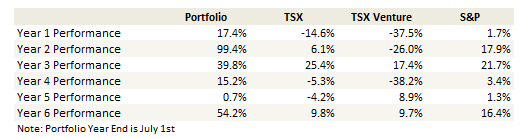
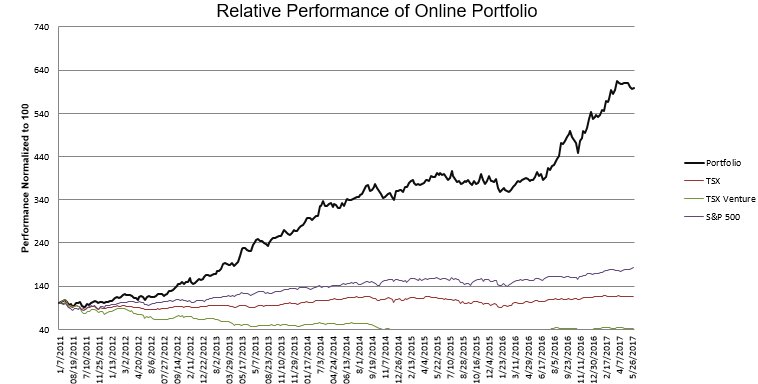
Portfolio Performance

See the end of the post for my full portfolio breakdown and the last four weeks of trades

Thoughts and Review

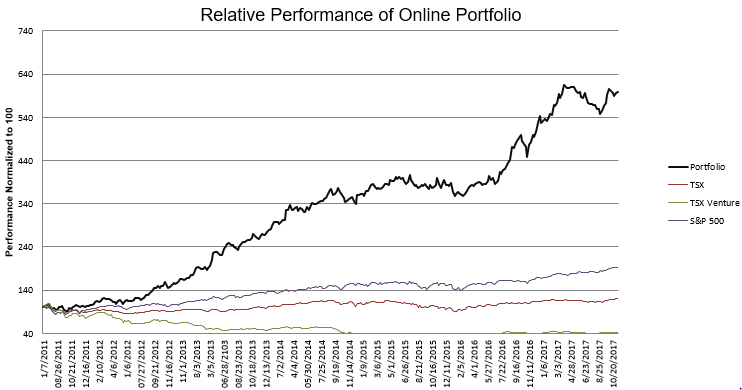
So I’ve been doing so-so with the portfolio.  I had a big bump up in September because of Helios and Matheson, and since then have mostly been treading water, a few winners and a few losers.

My online portfolio has actually done somewhat better than my actual one.  This is primarily because A. By chance I held on to a larger piece of Helios and Matheson into the high $20’s and B. I’m fully exposed to the Canadian dollar fluctuations in the online portfolio and the Canadian dollar has fallen back below 80c of late.

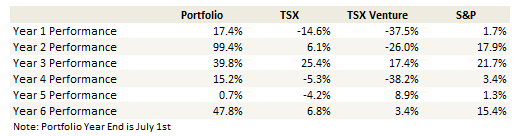
I’ve still failed to outperform the market for the last 6 months, and that’s been frustrating.  My outperformance in the near term is going to depend a lot on Overstock, which is my largest position right now.

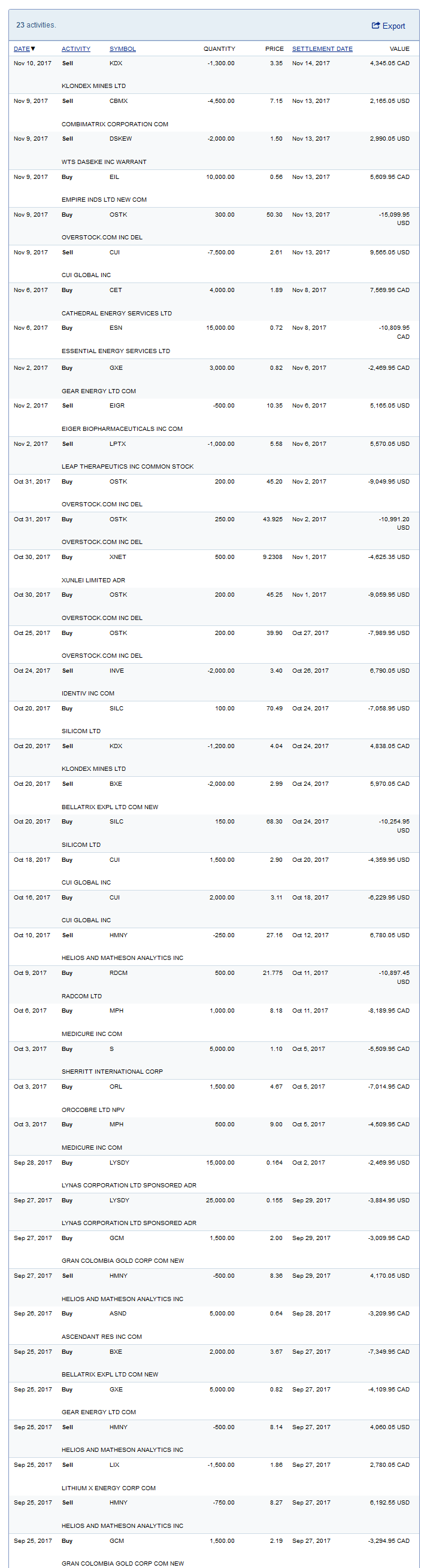
I added around my oil positions as it seems more likely then not we will continue to see draws through year end.   I find the Canadian service companies particularly interesting, mainly because they really look cheap based even on backward looking metrics but stand to benefit further from the price and volume increases one would expect are coming.  I have mentioned Cathedral Energy before, and also like Essential Energy (with the recent positive decision on the outstanding lawsuit) and Aveda Transportation, which is quite levered and has a business tied closely to drilling.

I sold out of Klondex.  I had reduced my position earlier and sold the rest after a pretty so-so quarter.  On the other hand I increased my position in Gran Colombia, which is a frustrating stock for me because it raised guidance and continues to show good cash flow but has these towering asks day after day that keep the stock down.  Gold has been crummy through December in the past but I am pretty excited about gold in 2018.  I want to keep more than my usual weighting going into the new year.

I was pretty happy with the mining results of Ascendent Resources, Largo Resources and Lynas, though none have really done much since their reports.  I plan to write something up on Largo in the near future.  Vanadium seems to be catching some attention and Largo is the only way to play that.  Largo had a really good day on Friday, but its volatile so I don’t know if there will be follow-through.  Vanadium prices are firming up though.  There was a good overview of Vanadium in this blog.  I plan to write up my thoughts on Largo soon.

I was disappointed in Sherritt’s results and sold down my position for now.  Similarly I didn’t like what I saw with CUI Global, particularly that the odorizer technology is not ready for prime-time.  So I sold that one too.  Smith-Midlands was disappointing and who knows when an infrastructure bill gets passed, so I’m out of that stock.  I sold Lakeland Industries, though I might buy that one back in the short term.  I sold the rest of Identiv, a bunch ahead of earnings and the rest after their dismal report.  I sold Daseke ahead of earnings, which turned out to be fortuitous.  And I bought and sold a company called Xunlei Limited, which I quite honestly lucked into when searching for blockchain companies.  I really can’t wrap my head around what they do, so I didn’t stick around after some gains there.

So there’s more churn for sure.  I’m going to try to be quicker to the sell button going forward.  I think that I have been slow to sell for logistical reasons, and this has been a contributor to my poor performance over the last few months.

I’ve taken a few other small, new positions but nothing with enough conviction that I want to talk about them yet.

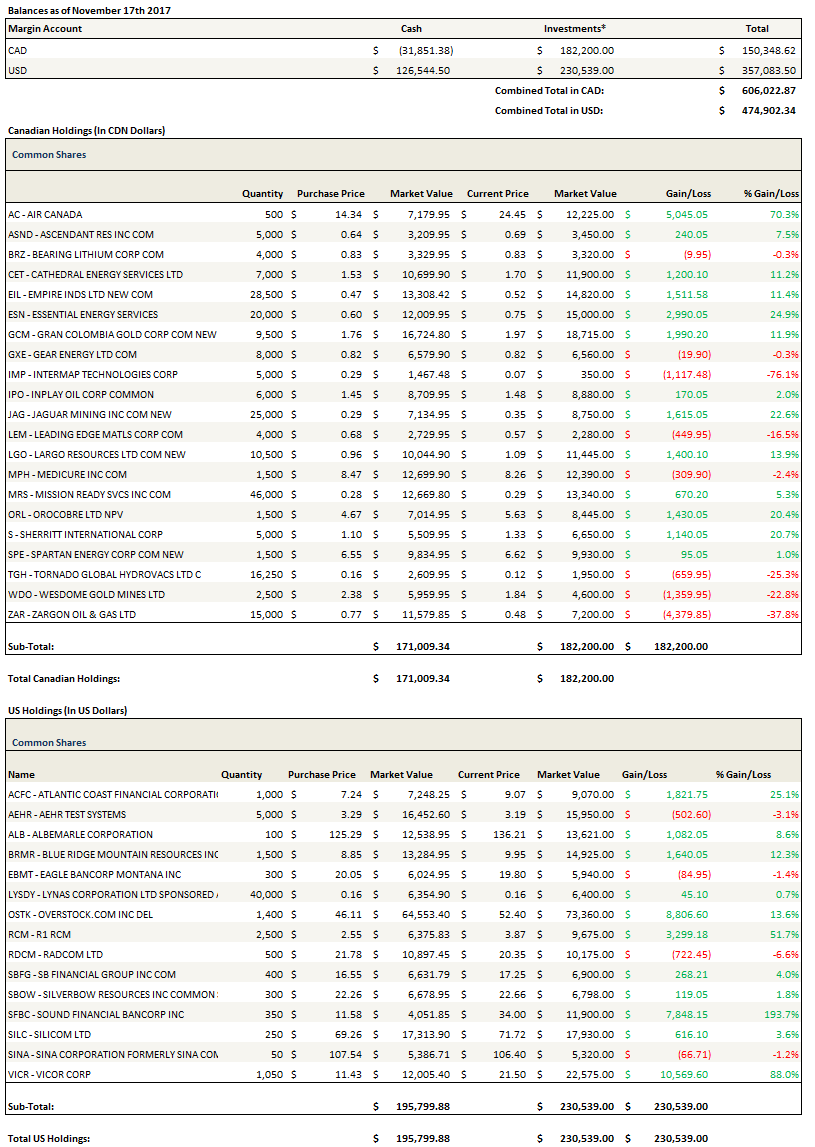
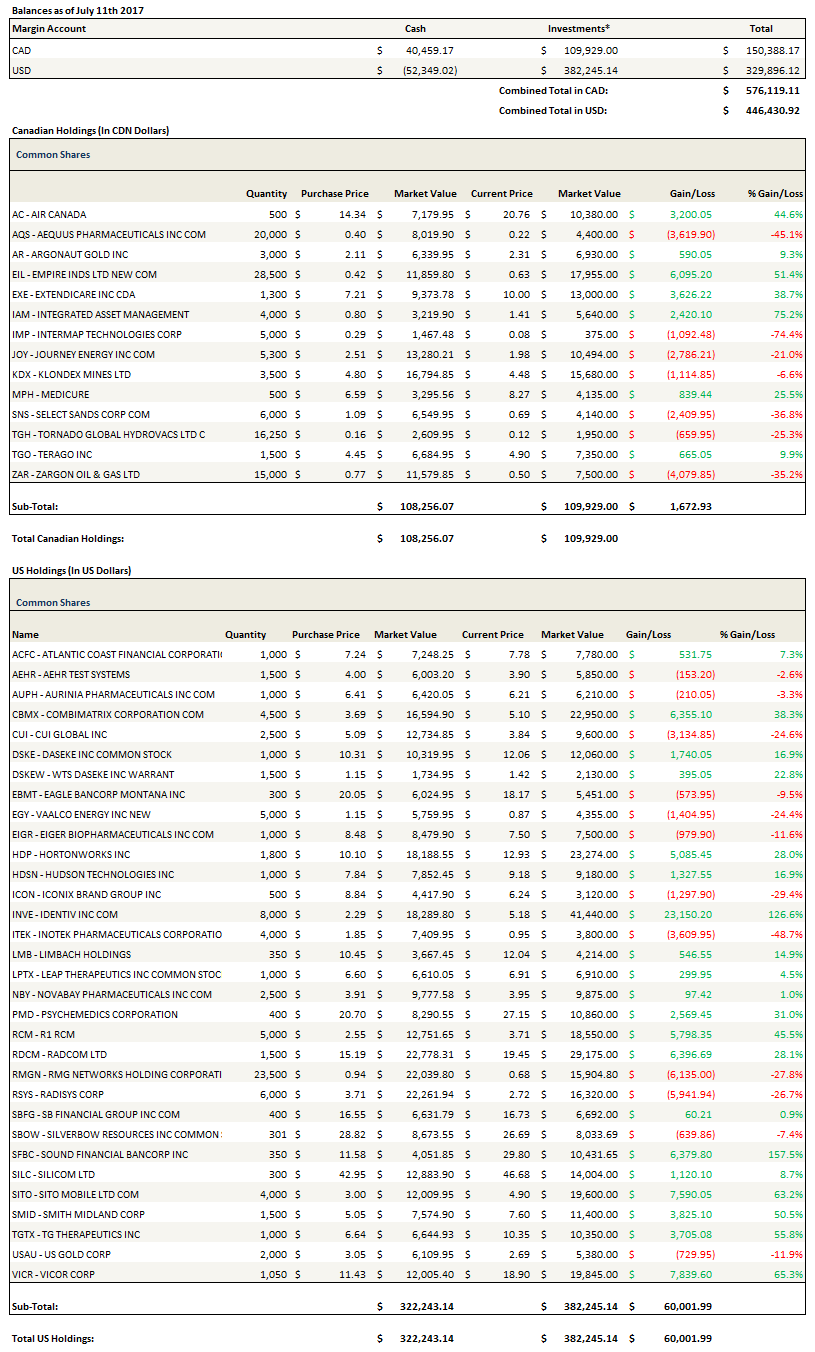
In fact that’s about all I want to say about the portfolio right now.  Here is my portfolio as of Friday.

Portfolio Composition

Click here for the last eight weeks of trades

Week 318: Not a Good Quarter

Thoughts and Review

I have been on vacation on and off since the beginning of July, so my posting has been sporadic.  I should get more regular again in my posting by the end of August.  I don’t have good internet access and so I won’t be posting my updated portfolio until I get back.

I wrote a few weeks ago about my thoughts on the Canadian dollar.  At the time, I was frustrated by the move but I did not see a fundamental reason for it to continue.  I therefore concluded that I was comfortable holding onto my US dollar stocks and maintaining my US dollar exposure.

That turned out to be a poor decision.

The Canadian dollar has continued to rise.  Its not the only currency to do so.  I see similar moves from the Australian dollar, the Euro, etc.  What we are seeing is broad based US dollar weakness.

Since that time I have become worried that what is happening has nothing to do with Canada.  I’m worried that the strength of the Canadian dollar is because of a growing recognition of just how bad the US government is.  That there is significant dysfunction that goes much deeper than the circus we see on CNN and Fox News.

There was an article published this week in Vanity Fair by Michael Lewis (the author who wrote Moneyball and The Big Short).  In it he describes the transition from the Obama administration to the Trump Administration at the Department of Energy (DOE).  Basically, the Trump team was uninterested in learning about the department, made no effort to replace key positions, and even 6 months into the administrations tenure many appointed positions have been left unfilled and policy directions unsaid.  The DOE, to put it bluntly, is running on fumes.

If this is representative of how the Trump administration has approached governing as a whole, it suggests a large degree of dysfunction.  Dysfunction that is deeply rooted into the core of the government departments that run the operations of the country.  Who knows what this will lead to.  It certainly does not give confidence in the country as a whole.

I remember that one of the things that Donald Coxe used to talk about was how you can’t have a strong currency with a weak government.  Much of his assessment on the direction of a country’s currency was based on the political climate of the country.

We know that on the surface, the Trump administration has proven to be reality TV.  But maybe behind the scenes things are actually worse.  If it is much worse, then maybe the currency moves over the last few months are just the beginning.  This move in the Canadian dollar is notable for its strength.  It does not want to quit.  I have learned that ignoring a very strong move in an asset class is unwise.  It is often brought about by seismic shifts to the economic landscape that are fully understood only after the fact.  I’m really worried that is what is happening here.

I regretfully reduced my USD exposure yesterday.  I sold down a number of US dollar positions and converted those US dollars into Canadian dollars.  I didn’t sell out of any position because there is nothing wrong with any of the stocks I own.  So I reduced everything across the board so that I could turn those US dollars into Canadian dollars.  The process was depressing.

I’ve always held the rule that if my portfolio falls 10% from its peak I will start to significantly reduce my exposure.  This is my “2008 rule”.  I won’t let 2008 happen again.  In 2008 the first 10% down was followed by another 10% and so on and so on.  Before I realized what was going on it was too late.  To prevent this, I decided that at 10% I draw a line in the sand.

I have held to this rule a few times over the last few years.  In 2014 when I was getting killed on oils.  In January 2016 when I was getting killed on everything.

What is unique about this time is that its almost all currency.  I’m down 9.5%, but a little over 7% of that is the Canadian dollar.  Its depressing to see most of my stocks holding their own at levels similar to where they were 2.5 months ago and yet my portfolio is down significantly from that point.

But 10% is 10% and I have to do something about it.  So I sold it all down.

Air Canada Earnings – out of the park

Air Canada released second quarter results this morning and they were well above anyone’s expectations.   The company blew away second quarter EBITDA estimates, guided gross margins higher, and guided free cash flow for 2017 of $600 million to $900 million.  The free cash flow guidance is up from previous guidance of $200 million to $500 million.  Air Canada has a market capitalization of a little over $5 billion, so the new free cash flow guidance means that the stock is trading at 7x FCF based on the new guidance.

Combimatrix Takeover – finally some positives!

Its been such a frustrating couple of months.   The Canadian dollar has been on an unstoppable march upward.  My moves into oil and gold to hedge the exposure have had mixed results at best.  Radisys laid an egg.  But things took a big step in the right direction tonight as Combimatrix has been taken over by Invitae Corporation.  From the news release:

Based on the Company’s current forecasts and estimates of Net Cash, and based on a fixed price per share of Invitae’s common stock of $9.49, the Company presently estimates that the CombiMatrix price per share received by CombiMatrix common stockholders would be between approximately $8.00 and $8.65.

This was a much needed win.  Combimatrix was one of only a few US stocks that I didn’t reduce over the last few weeks.  I’ve yet to sell my shares here.  I may start to reduce them as they get to $8.

Radisys lays an egg

Radisys reported and it was not good.  My thoughts are: A. I’m glad I sold down my position as much as I did, B. I’m less glad that I bought a little back a few days ago, and C. I’m wistful that I just would have sold the whole block back when they lowed guidance at the beginning of July.

Radisys reported second quarter earnings last night and the guidance for the third quarter was worse than the second quarter.  Verizon has stepped back from DCEngine purchases for 2018 because of changes they have made to their subscriber structure that has pushed off requirements for more capacity.

Listening to the call, apart from the revenue headwind that occurs when your largest customers steps back for 6 months, the company moved forward in all other respects.  They are seeing a material increase in engagements around CORD (central office as a data center), shipped for lab trials to a US Tier 1 which presumably is AT&T, closed on the “master purchase agreement” with the Tier 1 (again I assume AT&T) that they had alluded to in May, they were named systems integrator for a Tier 2 service provider in Europe, and they launched the new FlowEngine TDE and already have had a win with it in Europe.  Overall they are up to 15 proof of concepts which is 5 more than they were engaged with in the first quarter.

But none of this is revenue generating in the immediate future.

I held onto Radisys too long.  I’m generally good about selling a stock that isn’t working but in this case I was enticed time and again by the promise of a better future.  I don’t think that Radisys management was being deceitful, I just think that being telecom equipment manufacturer is hard.  I listened to a podcast of a seasoned telecom analyst who said as much.  You get one time orders, nothing is recurring, and you are dealing with big, lumbering beasts of telecom companies that can move at a glacial pace and do not care how their erratic decisions impact you.  Radisys is a casualty of this dynamic.  I sold.

Selling Radcom

I also used the bump back over $21 in Radcom to sell it down further.  I had been selling down Radcom over the last couple weeks.  I have completely sold out of the stock in one of my portfolios and own a mere shadow of the position that it used to be in the other.

My thoughts on Radcom are related to valuation and timing.  I’m worried about the market, and stocks that trade at extremely high price to sales ratios are particularly susceptible in corrections.  Radcom reports earnings on August 7th, and I don’t expect that they will have any new contracts in place at that time.  I wonder what happens to the stock if their next NFV win is delayed into the fourth quarter and in the mean time the market slides.  I’ve decided I prefer to be on the sidelines to watch if that event plays out.

Empire Industries

I will write something more extensive on Empire’s quarter when I am back but the bottom line is that I am happy with it.

On the surface the lower sequential revenue, lower sequential EBITDA, is probably the cause of recent selling but I see a number of positives in the quarter that bode very well for the future.

First, the company generated over $6 million in operating cash flow, including cashing in $4 million from working capital.

From what I see, they paid down about $6 million of debt in quarter!  I added up the numbers twice because it seemed like so much but if you add up bank debt and long-term debt it decreased substantially quarter over quarter.

Deferred revenue increased substantially from $10 million to $23 million sequentially.  This is related to the big working capital influx.  Revenue should follow shortly imo.

I don’t see how you can view the growing backlog as a negative.  This is a construction business, size of backlog is directly related to future work.  The doubling of the backlog is a huge positive imo.

Keep in mind this is a ~$40 million market cap company that just generated $6 million of operating cash flow for the quarter, roughly $5 million of free cash flow, and has doubled their backlog.

Hudson Technologies

Hudson was a mixed bag.  They had a blow out quarter.  But they forecast weaker volumes and prices for the third quarter.  They also made a huge acquisition, of Airgas-Refrigerants.  I honestly had trouble wrapping my head around all the data points, especially with limited internet and time, so I sold.

Hortonworks

Hortonworks had a blow out quarter and gave solid guidance.  The stock rose significantly, which was nice.  I sold out after the jump, which had more to do with my market outlook than any insights with the company.

Vicor

Vicor had a wait and see quarter.  Revenue, bookings and backlog were all up, but less than I would have liked them to be.  But the company forecast a much better third quarter and reiterated their guidance for a $75 million run rate by year end.  I still really like the stock and it is on the of the few I hold in size.

What’s Left

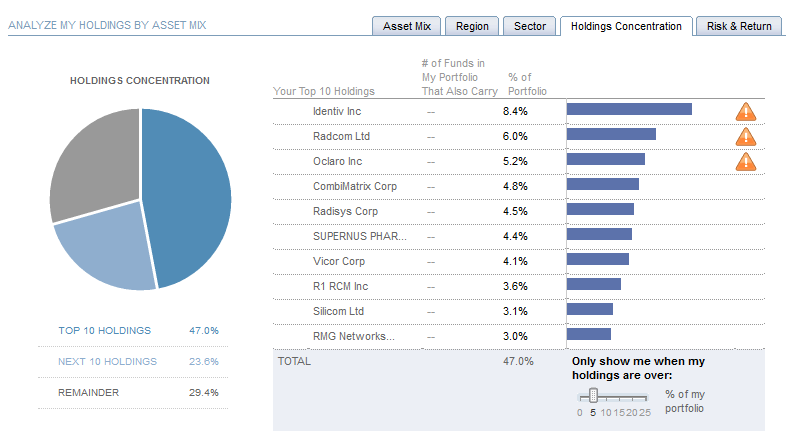
The only positions that I have right now that are greater than 2% position in the portfolio are the following:  Vicor, Combimatrix, Air Canada, Empire Industries and Americas Silver.  Every other position I own is less than 1%.  That kind of sums up where I stand right now.
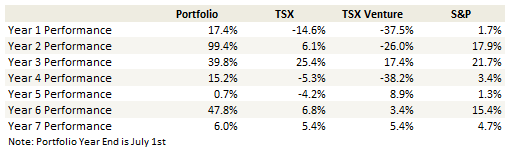
 

Week 314: Trying to Digest the Dollar


Portfolio Performance

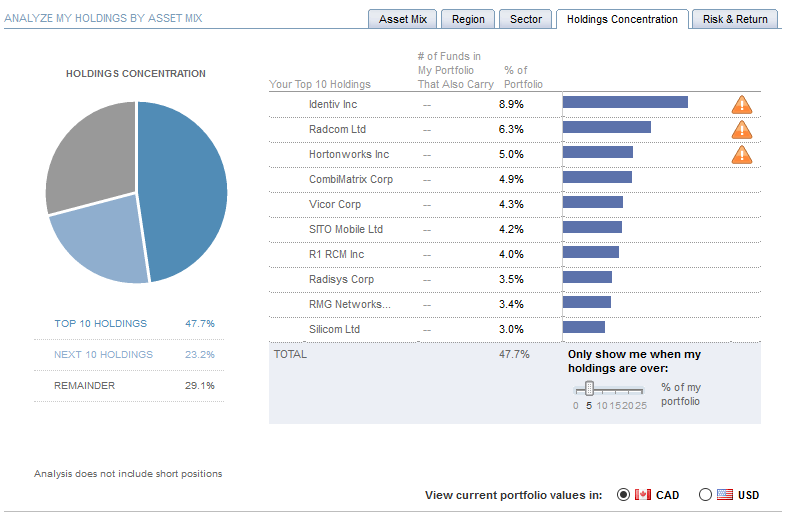
Top 10 Holdings

See the end of the post for my full portfolio breakdown and the last four weeks of trades

Thoughts and Review

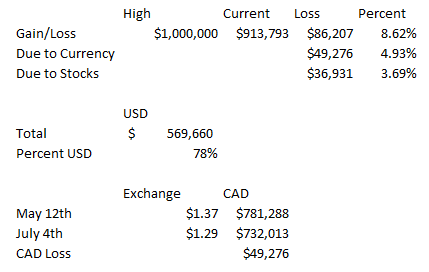
The Canadian dollar has been a massive headwind for my portfolio over the last 2 months.  I created a simple little spreadsheet to quantify just how much of a headwind it has been.  Below I have recreated that spreadsheet but normalized to a starting amount of $1 million so we are looking at round numbers.  Since mid-May the majority of my losses have come from the Canadian dollar.

The performance of my portfolio has been poor since mid-May.  Stocking picking hasn’t been great, and I am down 3.7% over that time.  This isn’t totally surprising to me.  I had a big run in the months after the US election and had wondered when the inevitable pull back would occur.  What I didn’t expect was that the pullback would coincide with a huge currency headwind.

The rise in the Canadian dollar has taken place as oil prices have fallen.  This has made the move particularly painful.  In the past I have been able to offset Canadian dollar gains by trading oil stocks that have tended to rise along with the dollar.  Not so this time.  Oil stocks have mostly fallen along with oil as the dollar has risen.  On Friday the Canadian dollar was up almost a full percent even has oil traded down over $1/bbl.

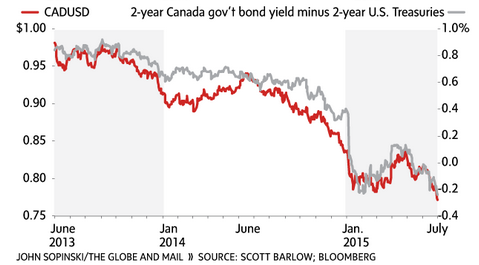
Scott Barlow, who is a writer at the Globe and Mail, had an interesting piece on the Canadian dollar a couple of years ago.  In it he pointed out that there was a strong correlation between the Canadian dollar and oil, which is not surprising, but also an even stronger correlation between the Canadian dollar and the yield spread of the US 2-year Treasury and the Canadian Government 2-year note.  He presented the chart below.

While the Canadian dollar/oil relationship has went out the window over the last two months, the yield spread relationship has not. Below is a table taken from the Financial Post website that shows Canadian and US Government bond yields. I tried to find a chart to update the one above but could not.  Nevertheless, looking at even just the last 4-week data in the table, its clear that Canadian yields have risen substantially while US yields have only risen modestly.  The spread has risen from -0.592 to -0.236.

Comparing that to the historical spread chart from the Globe, we can see that a spread of -0.236 is pretty much in line with a Canadian dollar in the 77-78c range.  In this context the move in the Canadian dollar is no surprise.  The dollar is just moving along with yields.

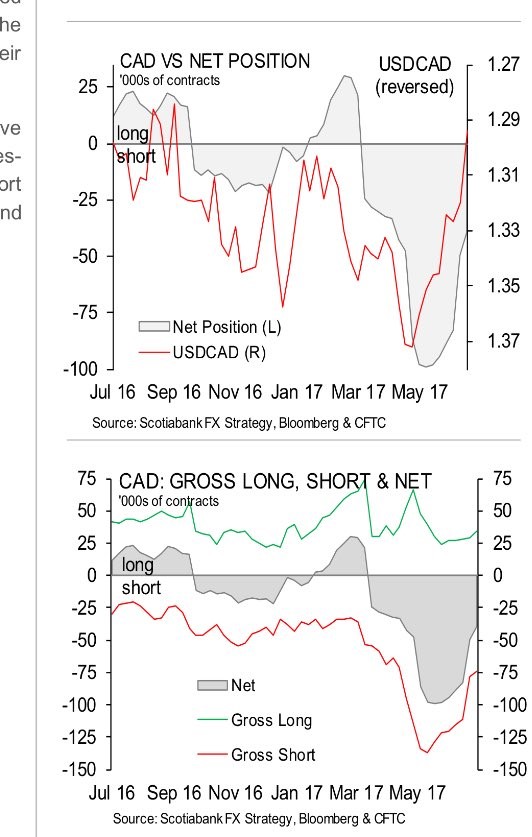
The other factor at play right now are the short positions.  I read back in May that Canadian dollar short positions were at an all-time high.  It worried me, but I didn’t react to the news, incorrectly assuming that the short covering might send the dollar up a couple cents and I could handle the blow if it occurred.

The shorts have begun to unwind.  Below is a chart posted by Frances Horodelski.

We aren’t quite at a level where the Canadian dollar is overbought.  The net position remains short.  It is still larger than it has been over the past year.  But much of the froth has been worked off.

The last consideration is what the Bank of Canada is going to do.  The rise in the dollar has coincided with hawkish comments from the Bank of Canada.  The market is now 95% convinced there will be a rate hike this week.

So it seems like much of the coming rate hikes has been (painfully) priced in.  The rise in the Canadian 2-year yield has been 43 basis points.  This pretty much prices out the 50 basis points of rate cuts expected this week and in October.

I would think that for spreads to rise further there would have to be evidence that the Canadian economy is actually stronger than the US economy.  While the Canadian economy is showing strength at the moment, so is the US.  The jobs numbers in Canada were strong (though a lot of it was part time work) but so was the jobs number in the US. Historically, the only times that the Canadian economy has outperformed the US economy were during times of commodity price strength.  This isn’t one of those times.

Meanwhile so much of the Canadian economy is being driven by housing right now.  I know many will disagree with this, and I know I have been wrong about this for some time, but I still do not think this is healthy and I do not think this is going to end well.  I read over the weekend that transaction costs on housing make up 2% of Canadian GDP.  That seems incredible to me.  It is but one example of how important housing, and buoyant housing prices, have become to the Canadian economy.

There was an interesting BNN interview last week with John Pasalis, president at Realosophy Realty.  Pasalis said that over the last couple of months the “Toronto housing market turned on a dime”.  June home sales were down 37% year over year and prices declined 14% from the April peak.

I am sure that the response of the housing bulls is that this is just another buying opportunity, and they will point to Vancouver, which quickly recovered from its dip last year.  Maybe so.  But what is going on in housing has every earmark of a bubble.  When I read about the foreign ownership, about the domestic speculation, and about prices exceeding traditional metrics of income as debt piles up, it sounds so familiar to other speculative bubbles I’ve read about.  I’ve read Extraordinary Popular Delusions and The Madness of Crowds multiple times, as have I read Manias, Panics and Crashes multiple times.  All of the lessons I tried to learn in those book rhyme with what I read about Canadian housing.

I have no idea when Canadian housing plays out in the way I expect it to.  But being short the currency of such a bubble does not make me lose sleep at night.

Could I lose more because of the Canadian dollar?  Most definitely.  I can see a path to 80 cents.  There are more shorts that need to be unwound.  If the Bank of Canada raises rates and strikes a hawkish tone this week, the market will likely push the dollar up.

But I am not going to try to trade this for a couple of cents.  My belief is that the only thing that is going to move the Canadian dollar sustainably higher is higher commodity prices.  If we get those, then the stocks I own should more than compensate me for any rise.  Unless that happens I will take the lumps that I am getting from this move, try to focus on maximizing the performance of the stocks I own, and not focus on what the short-term movements of the dollar are doing to my portfolio.

Portfolio Changes

I’m going to be brief with my transactions this last month and a half.

Radisys has been a disaster and I have reduced my position some in my actual portfolio but I have not in the portfolio tracked here.  As usual I was a bit slow to the trigger with the online portfolio and by the time I got around to it the stock had sunk to a level that I believe is too low, even given the reduced guidance and lowered debt covenants.

What led me to reduce my position were the changes to the credit agreement amendment that they filed.  There was a change to EBITDA, which was consistent with the change in guidance and therefore not unexpected.  But there was also a change to the expected restructuring charges in the second and third quarter.  Total TTM restructuring costs are expected to be $9.5 million by the end of the third quarter.  This compares to $1 million in the previous amendment.  I’m a little worried what precipitated this and until the earnings call, its impossible to know.  If this is restructuring of the legacy business, then no problem.  If its something to do Software Systems or DCEngine, that would be bad.  And until we get to earnings, we won’t know.

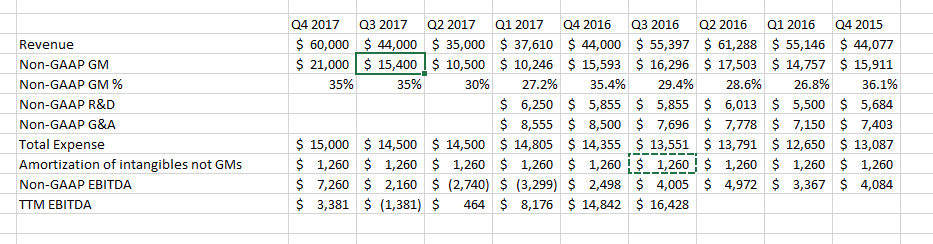
With that said, the credit agreement also implies decent revenue in the third or fourth quarter.  Below I have recreated what their minimum EBITDA covenants, which were just amended in the new agreement and therefore presumably at levels that management is comfortable with, imply about the third and fourth quarter.

They are still predicting a revenue ramp, albeit not as significant as they had been suggesting previously.

At $2.75 the stock is kind of in no man’s land.  It seems too low to me to sell (its essentially back to the level it was at before they even had Verizon as a customer).  However I find it impossible to be a buyer until there is some clarity around the restructuring and what constitutes the delays.

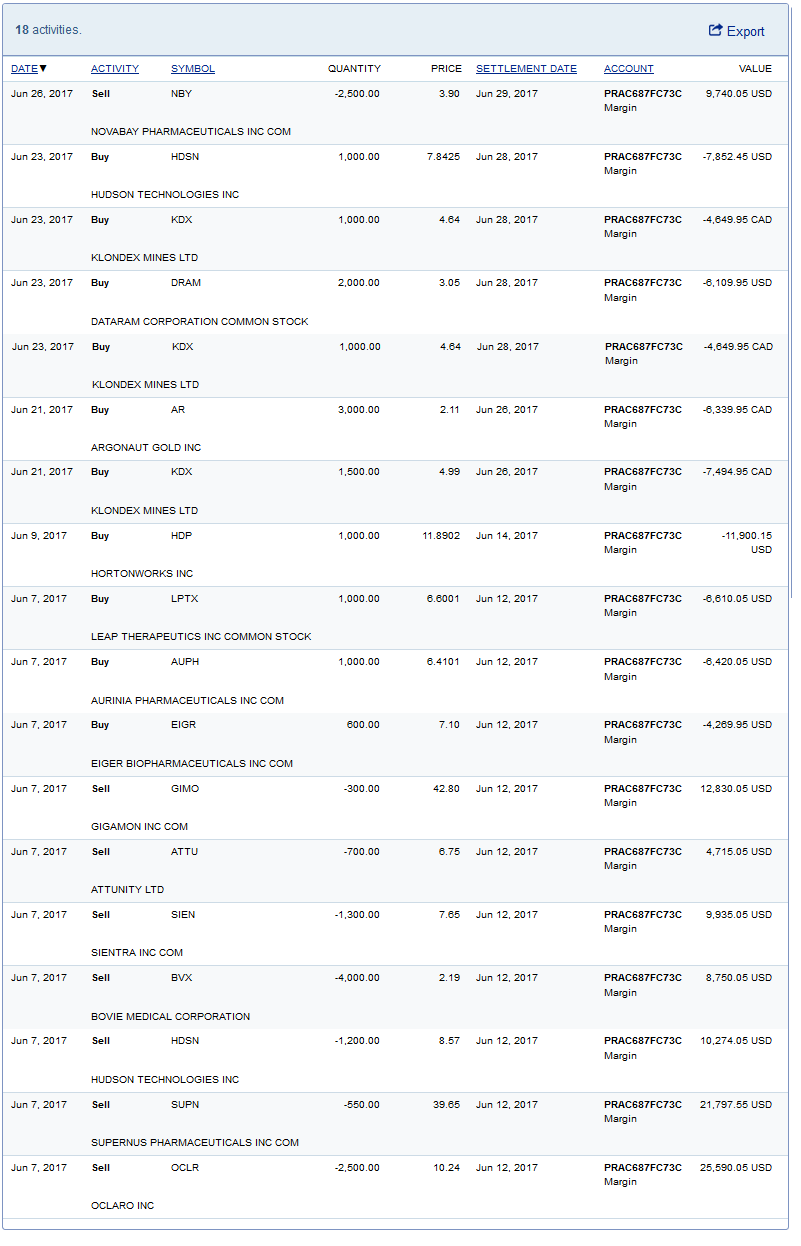
The other portfolio change that I will mentions is that I added a few gold stocks, Klondex Mines, Argonaut Gold and US Gold (which I already wrote about here).  I like how beaten up the junior miners are, and I will write something up shortly describing how changes to the GDXJ have impacted these stocks.  Apart from that early in the month I sold out of a number of names which in retrospect, for the most part at least, turned out to be a mistake (GIMO, ATTU, SUPN, SIEN, BVX and OCLR) as many of these names are higher now.  I would have been better off selling Radisys!

Portfolio Composition

Click here for the last four weeks of trades.

Week 309: One Step Back

Portfolio Performance


Top 10 Holdings

See the end of the post for my full portfolio breakdown and the last four weeks of trades

Thoughts and Review

April and May have been frustrating months.  My portfolio has been down about 2.5%, which isn’t terrible, but as the market has kept moving to new highs it has felt quite a bit worse.

Looking at the performance of my individual positions, I would attribute my under-performance to the following themes:

  1. Investments in sectors that are doing poorly
  2. Companies that have exciting potential but its still not showing up on the income statement
  3. Upside exhaustion

On the first point, I’ve had positions in oil and gas and biotech, and these sectors have been somewhere between lackluster and dismal.  Regarding oil, its been a tough time to own Journey Energy, Zargon Oil and Gas, and Vaalco Energy.  Each has performed about as poorly as every other oil and gas name.  I’m reluctant to cut these stocks loose though, I think each is cheap based on current prices and I’m not really in the camp that thinks we are heading back to $30 oil for any significant time.  And as I’ve said before, if we do, the Canadian dollar is going to collapse, which will more than “hedge” any oil exposure that I have.

My biotech positions have been similarly crummy.  Eiger Pharmaceuticals is the poster boy for this, having declined from $11 to under $7 in the last few months.  I’ve held off adding to Eiger up until last week, when I put in some bids in the high $6 range that got filled.  I am looking at a few other biotech names that I am looking to add on weakness.

Likewise, the performance of Novabay and Bovie Medical has been dismal.  I sold Bovie Medical after their first quarter results and a conference call that I just didn’t find inspiring.  Novabay, on the other hand, I feel more constructive about.  The stock is down to an enterprise value of a little over $25 million (or was as of the weekend when I originally wrote this).  The company is guiding to sales of $18 million for 2017, which is 50% growth over the $12 million in revenue for 2016.  It seems like the stock is being crushed off of a notice of deficiency from the New York Stock Exchange.  It’s a very low volume pull-back, which suggests it a couple of folks getting spooked out.  It doesn’t seem like a big deal to me?  I’m sure they will resolve it.

On the exciting potential but still not revenue bucket we have CUI Global, RMG Networks and Radisys.   Radisys hasn’t done terribly,  its about the same level it was in April (which is not really a positive thing to say), but RMG Networks and CUI Global have both been crushed.  RMG Networks needs to get some of these trials and engagements contributing to revenue and until they do I’m not going to be buying the stock.  I’m still wary of this name; it could pan out in a big way but it seems like there is a lot of hand waving about what’s to come that has been going on for a number of quarters now.  I’m waiting, but not as patiently as I once was.

I added a position too soon with CUI Global.  I bought the stock after some very weak results in the low-$4’s but that hasn’t proved to be even close to the bottom.  Fortunately I only bought a little, and have subsequently added at $3.70 and again at $3.40.

I have some conviction that CUI Global has the technology to generate significant revenues over time and that its just a matter of time before we see those materialize.  In particular, one day they are going to see the regulatory issue that their customer Snam Rete is having that is preventing installations get resolved, and when it does the stock is going to pop big-time.  I noticed there were some small insider buys at the $3.40 level so I’m not the only one who thinks this is a decent value here.

As for the third theme, I had great runs from Combimatrix and Identiv and they simply ran out of legs.  I continue to hold both, believing their momentum will resume after this breather.

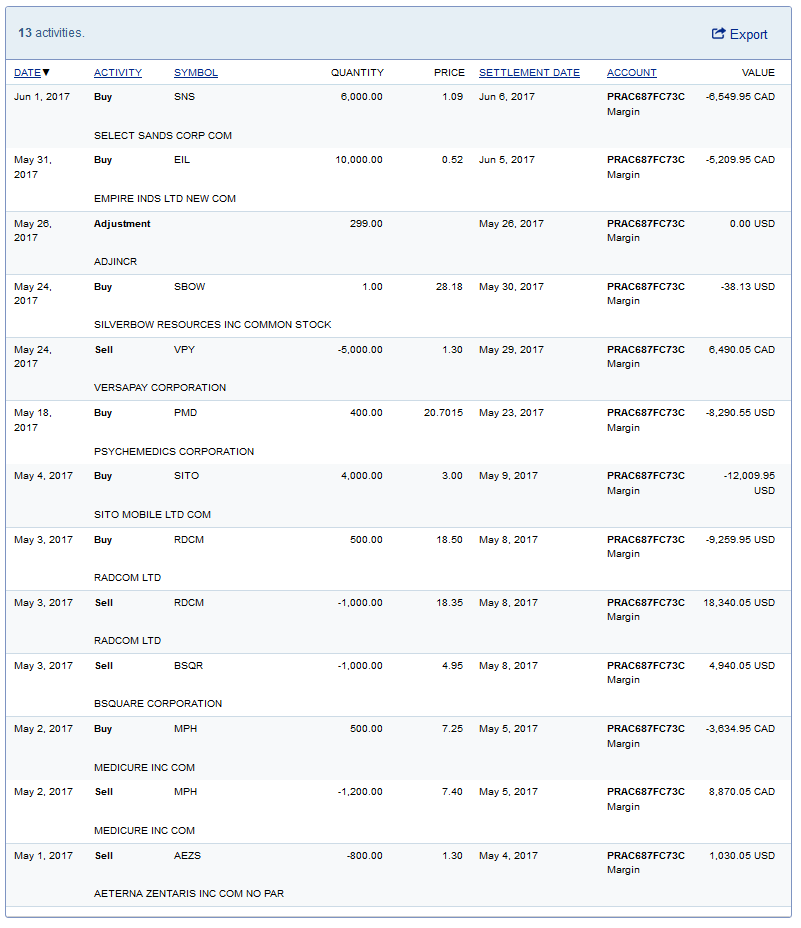
I took new positions in Sito Mobile and Psychemedics this month and have already written about both.  There are a couple of others that I will try to write about shortly.  I also reduced my position in Medicure, which I talked about here, and exited my positions in BSquare and Versapay.

Neither Versapay or BSquare have shown me that they can convert their leads into sales.  Versapay announced another quarter of decent growth on a year over year basis but still very low revenue on an absolute basis.  They are not cheap on a multiple of revenue.  BSquare isn’t gaining traction fast enough for my liking with its DataV product.  The company recorded no new bookings in the first quarter and their DataV backlog declined from $5.7 million to $3.2 million.  I’m actually a little surprised both stocks have held up as well as they have after what in my opinion were somewhat lethargic quarters.


Portfolio Composition

Click here for the last four weeks of trades.