Skip to content

Posts from the ‘Portfolio’ Category

Week 286: On being wrong a lot

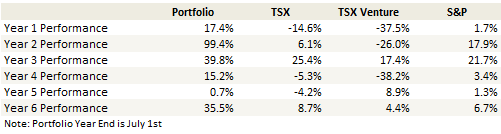
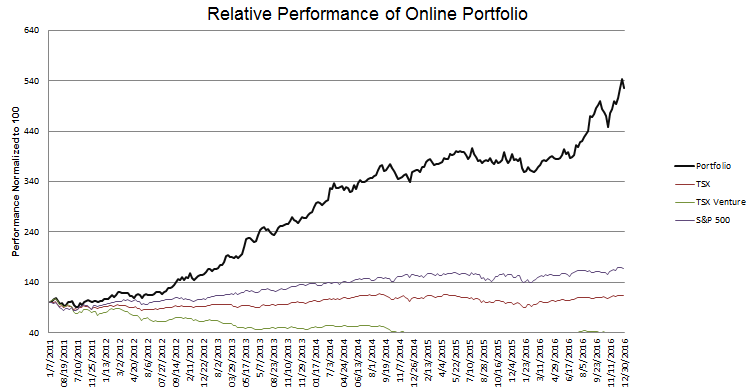
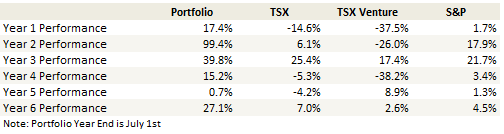
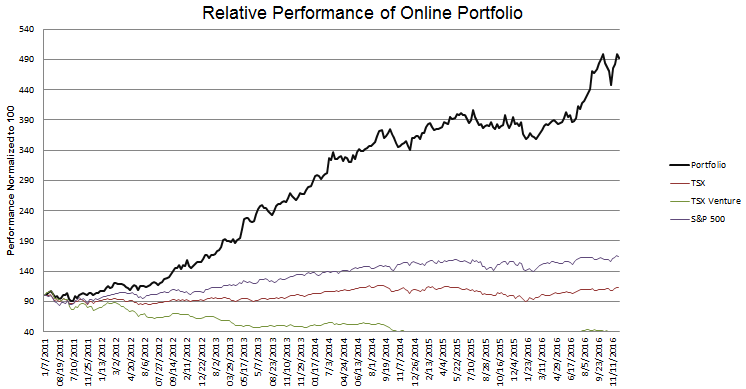
Portfolio Performance
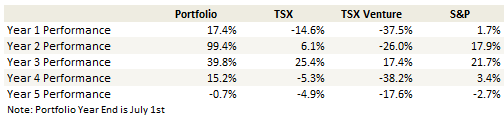
week-286-yoyperformance

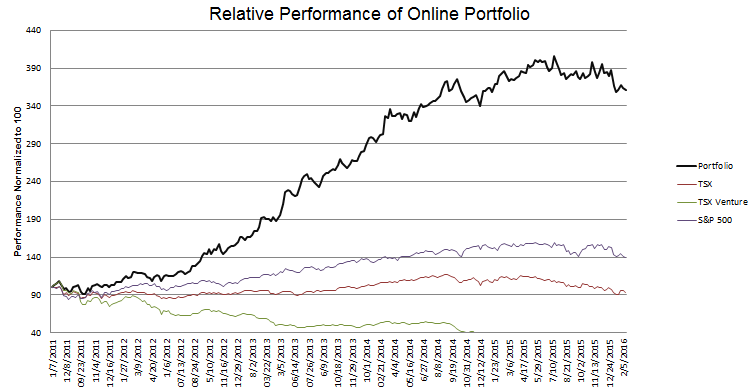
week-286-performance

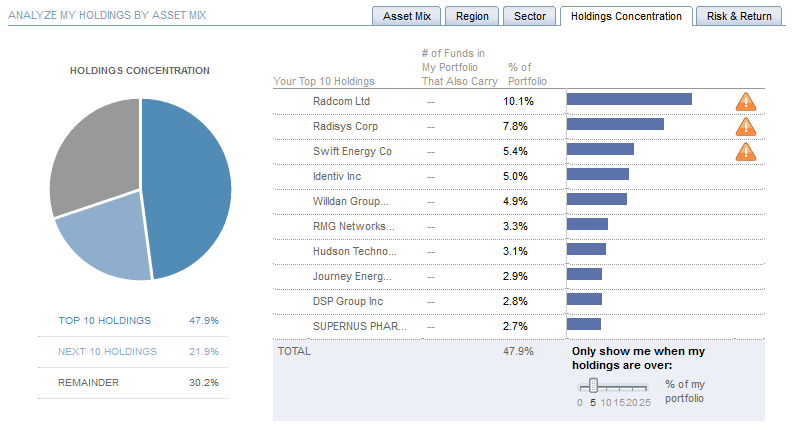
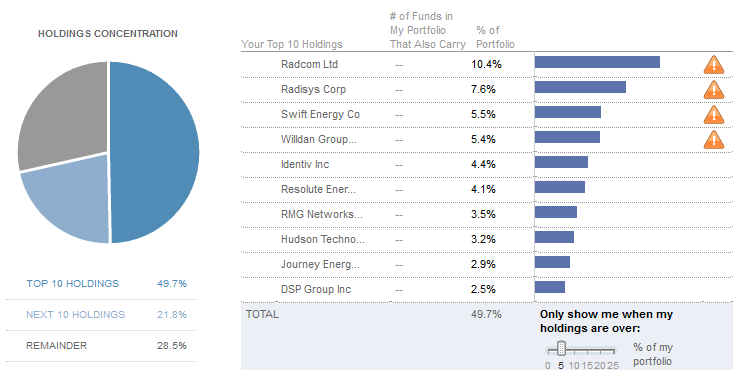
Top 10 Holdings

week-286-holding-concentration

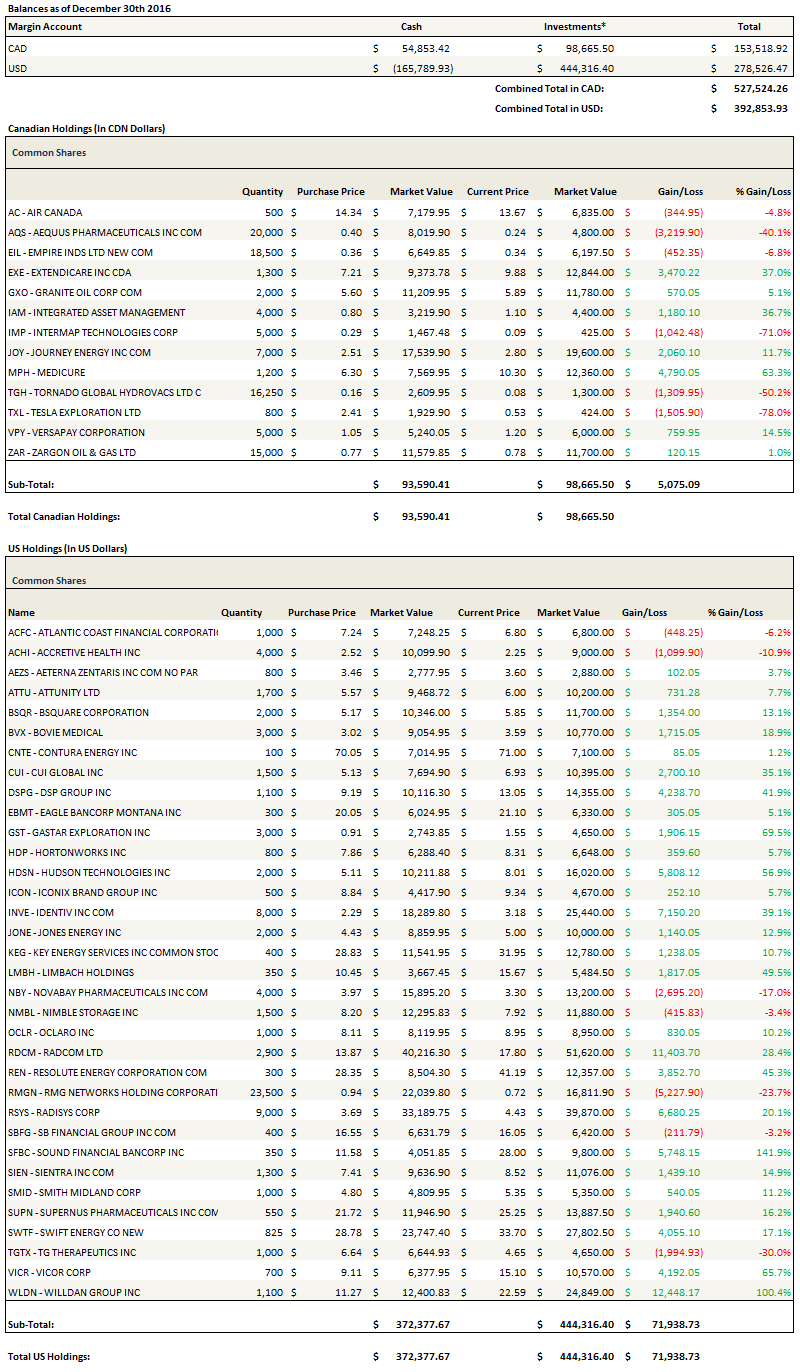
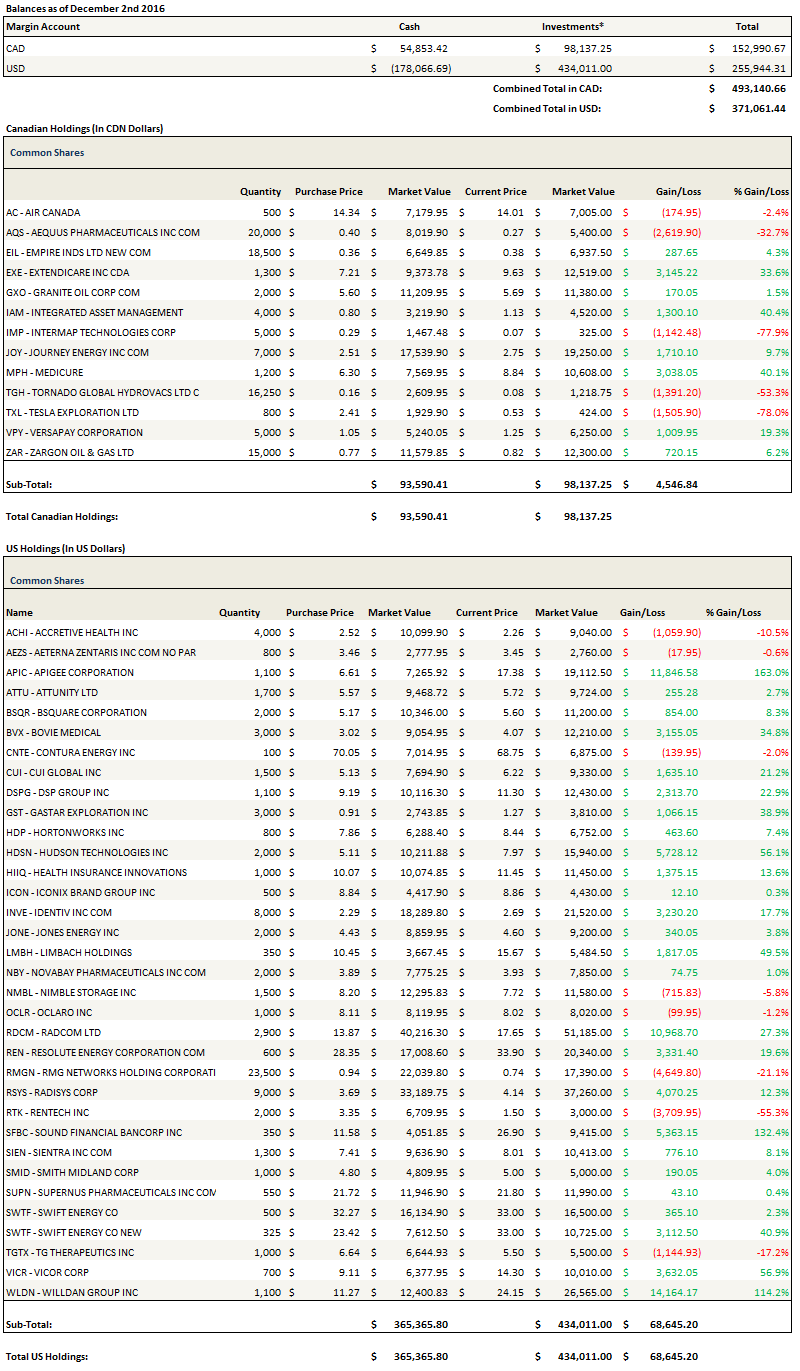
See the end of the post for my full portfolio breakdown and the last four weeks of trades

Thoughts and Review

The other day I was considering posting an article on SeekingAlpha.  I couldn’t muster the energy.  I wasn’t sure why, but I felt a strong resistance against it.

So I put it aside and in a couple of days it came to me why.

Take a look at my SeekingAlpha history.  I’ve written a few articles for it.  The list of names is, at best, uninspiring.  Hercules Offshore went bankrupt not long after I wrote about them.

The fact is, I’m wrong a lot.  At least a third of the time I pick a stock it doesn’t even go in the right direction.  In a bad market that number is likely well north of 50%.  And even when I’m right, I often miss by degree.  The last couple of months, while my portfolio has done pretty well, it would have done much better if I was not weighted most heavily in two positions that have done absolutely nothing (Radcom and Radisys).  My biggest winners are often afterthoughts where credit should only be taken with qualification.

If there is one redeeming feature about my strategy it is that I am fully aware of my own limitations.  I am never certain.  In my blog write-ups I try to phrase every position in terms of what might happen, both the positive and negative, with the expectation that I may have the thesis totally ass-backwards.  If anything, the limitations of the medium (writing) convey more conviction than I generally have.

This doesn’t play well when writing an article that is trying to convince others about what a great idea you’ve just found.  It might be, it might not. Who knows.  What I can say is that as long as I cut my losses quickly, it presents a pretty good risk/reward.  But I have no particular insight into whether its going to pan out or not.

It doesn’t make a compelling narrative.

Nevertheless after another pretty successful year, despite a whole lot of mind-changing and almost constant self-doubt, I can say that it worked pretty well once again.  To summarize:

  1. I freaked out in January when my portfolio lost over 10% in a couple of weeks.
  2. I only tentatively added back as the market bottomed.
  3. I sold out of the years big winner, Clayton Williams, about $100 too soon.
  4. I mostly missed anticipating the Trump rally apart from a position in Health Insurance Innovations and a couple of construction plays I bought in the days immediately following the election.
  5. (As I will describe below) it only donned on me that community banks should be firing on all cylinders in the last few days.

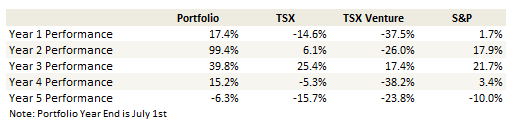
Yet I’m up about 35% since July (my portfolio year end) and about 40% in 2016 (though with the asterisk that it is with far less than $50 million in capital 😉 ).

Most occupations don’t tolerate excessive uncertainty.  I am fortunate to be involved in one of the few that reward it.

The last Month

Last month most stocks in my portfolio stagnated.  The gains I had were fueled by a few oil names (Gastar Oil and Gas, Jones Energy, Resolute Energy) as well as Health Insurance Innovations, Identiv, DSP Group, and a last day move back up by Radisys.

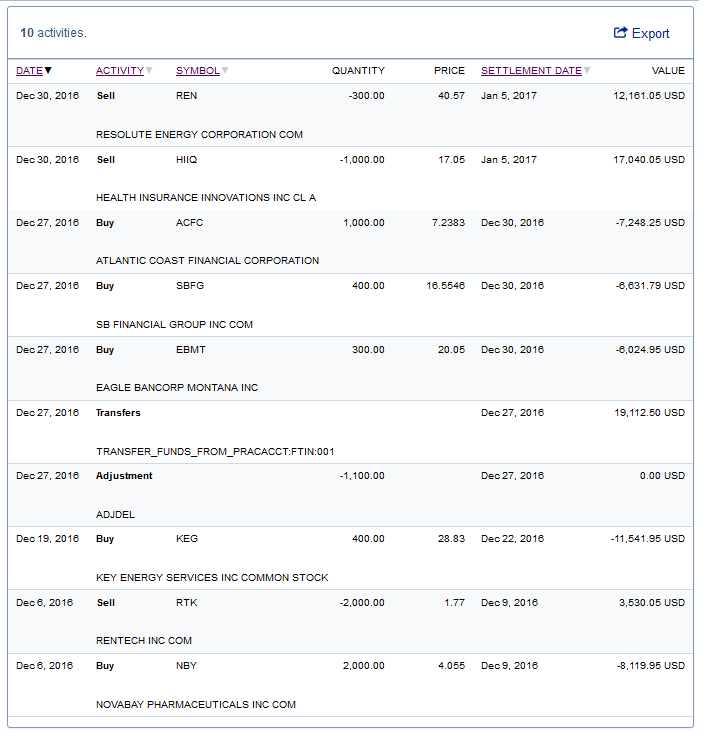
Health Insurance Innovations has been a big winner for me.  If only I had bought more!  The stock has more than doubled since Trump took office.  I sold some of my position in the last days of the year (I mistakenly sold all of it in the practice portfolio so that is why it doesn’t appear in the list below).

The second big winner has been Identiv.  Unlike Health Insurance Innovations, I have not taken anything off the table.  Identiv remains quite cheap, with only a $35 million market capitalization.  There is a rumor that after a presentation given at the Imperial Conference the company suggested some recent business with Amazon, which, if done in mass, could be quite a big contract for the company.  I have no idea if its true though.  The stock has pulled back in the last few days, but I’m not too worried.  As long as business continues along its current trajectory, the stock should do well in the coming year.

Key Energy Services

In mid-December I took a position in an oil services firm, Key Energy Services (KEY).  I was given the idea by someone in the comments section of the blog.  Key Energy operates a number of well services rigs, as well as having businesses in water management, coil tubing, and wireline services.  This is a tough business, and has been a disaster over the last two years.  At least 3 competitors in the space have been through bankruptcy.

At the time I bought the stock it was still trading in bankruptcy.  Similar to Swift, existing shareholders received a piece of the new company and warrants.

Since exiting bankruptcy in late December the stock has traded up quite a bit but I think there is still some value there as oil services demand rises.  What I remember from past cycles is how leveraged these companies are to improving fundamentals.  They gain on both pricing and volume. With both natural gas and oil moving up, this may be the first time since 2012 where Key Energy has had pricing of both commodities as a tailwind.

The company has reduced its G&A, reduced interest expense via the bankruptcy process, and is the first of  its brethren to make it through the restructuring process.

On the negative side, its a low margin business, I don’t get the sense that management was particularly astute heading into the slowdown, and in the current pricing environment even after restructuring they are still EBIDA negative.

Nevertheless I am willing to see if I can ride the cycle here.  Its probably no multi-bagger, but I am looking for a move into the $40’s where I would sell.

Community Banks

The last thing worth mentioning is that after a month and a half of rallying, and the astute comment of Brent Barber asking me why I wasn’t looking at them, I finally spent some time on the community banks.  Its soooo obvious, its painful to think that if I had spent a few hours on November 9th I would have quickly realized the same conclusion and ended up a number of dollars richer as a result.

Nevertheless, a good idea is a good idea.  Though the names I bought are up between 10-20% in the last month and a half, I still think they have much further to run.  I added positions in SB Financial (SBFG – former Rurban Financial, which I’ve talked about in the past and owned a small piece of of for some time), Sound Financial (SFBL – another bank I’ve owned for years), Atlantic Coast Financial (ACFC – which I have owned and written about in the past), Home Federal Bancorp of Louisiana (HFBL), Parke Bancorp (PKBK), and Eagle Bancorp of Montana (EBMT).  I took a basket approach because all of these namess are illiquid and difficult to accumulate in too much size.  I will write these up in more detail shortly.

Portfolio Composition

Click here for the last four weeks of trades.

week-286


Week 282: Two Big Events

Portfolio Performance

week-282-yoyperformance

week-282-performance

Top 10 Holdings

 week-282-holding-concentration

See the end of the post for my full portfolio breakdown and the last four weeks of trades

Thoughts and Review

My portfolio bounced back this month.  This was somewhat remarkable given that my two largest positions, Radisys (RSYS) and Radcom (RDCM), continued to perform poorly.  I don’t expect much from either of these stocks until they are able to secure additional contracts with service providers.  With year end coming up, I am hopeful (but not counting on) some news on that front.

The rest of my portfolio did extremely well, benefiting from the rotation to small caps that occurred after the election of Donald Trump.  I didn’t anticipate the market move or the small cap revival.   But I wasn’t the only one, in fact I didn’t hear that prediction from anything I read.  I would be interested if anyone else knows of an expert, newsletter writer or manager that predicted the move?  They would be worth following.

In retrospect it makes sense; expectations of significantly lower taxes and a relaxation of regulations would lead to a market rally with a bias on small caps with domestic exposure and few tax loop holes.  The stocks that have performed the best for me have had that characteristic.

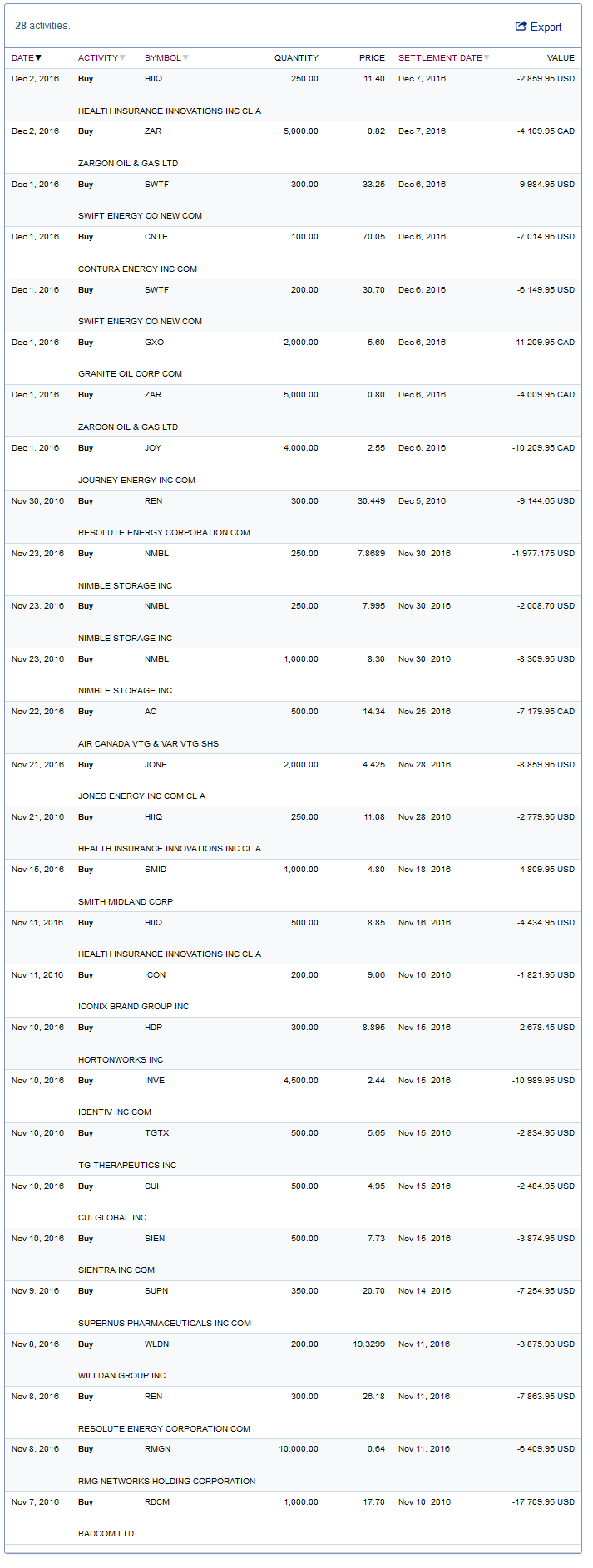
Willdan Group (WLDN) is a text book example.  Willdan has always paid a high tax rate, sometimes over 40%.  If the companies tax is cut in half, which is not impossible under a Republican government, earnings go up by 30%.  They are also essentially an infrastructure play, another positive.  The stock has moved from $16 to $24 in the month since the election.

Adding Healthcare, Infrastructure, Biotech

While I wasn’t positioned for a rally leading into November 8th, I adapted as the market moved higher.  As I’ve written about here, I added Health Insurance Innovations shortly after the election on the expectation that changes to the Affordable Care Act (Obamacare) would open up competition, which would be positive for their business.

I also added an infrastructure play, Smith-Midland (SMID), as it seems that this will be the focus of spending under the Trump administration.  Smith-Midland makes make pre-cast concrete products like barriers, sound walls, small buildings, and manholes.  They have a market capitalization of $25 million and even after having run up to $5 are not expensive.  There is a good article on the company here.  I also added to my existing position in Limbach Holdings, another infrastructure play.

My last move in response to the election result was to add to a few biotech names.  This worked out initially but interest has waned in the last couple of weeks.  I added to my position in Supernus (SUPN), to Bovie Medical (BVX) and added back some TG Therapeutics (TGTX).  I may jettison the latter position soon.

Responding to OPEC

The Trump move was followed by the OPEC move, which I again don’t profess to have predicted.  I was agnostic going into the OPEC meetings; I held my usual weighting of energy positions, but did not pile into them as a bet that a deal would be reached.

Instead, as is my typical strategy, I chased the news, adding to energy names on the heels of the announcement.  By waiting I missed out on the first 10% move, but once the deal was announced it was a far lower-risk entry into stocks on my watchlist.

It can be argued that OPEC’s cut will only lead to high US production, or that it will be diluted by cheating by OPEC members, but nevertheless its difficult to argue that this doesn’t put a floor on prices.  And if there is a floor, stocks that previously had to discount the possibility of another move into the $30’s do not have to anymore.  Therefore stock prices needed to move higher.  I think they still do.

Many of the names I am interested in are small enough that they do not move immediately with the market.  Thus I have been able to add to Journey Energy (JOY) and Zargon Oil and Gas (ZAR) at prices not too different to what they were leading up to the announcement.  There is a good SeekingAlpha article (and comments, in particular note those on the interim CFO hire) on Zargon here.  I haven’t seen any analysis on Journey, and I will try to write up a summary on the stock in the next couple of weeks.

A second energy name that I added to and am in the process of writing up is Swift Energy.  As I tweeted on Friday:

I also added Resolute Energy (REN), a Permian player I have been in and out of over the past 6 months, and added back Granite Oil (GXO).  There was a good comment to my last portfolio update that gave me some perspective on the concerns I had raised about Granite.  I wanted to add to Jones Energy (JONE), but it moved so quickly off of the OPEC news that I didn’t get a chance.

Finally I added to a derivative play, CUI Global.  CUI Global is a bet on Trump as well as OPEC.  The company has said in their presentations that they have struggled gaining traction with their GasPT products in North America because of the dour investment climate for oil and gas infrastructure.  This should change under Trump and with support to oil prices.  Its no guarantee that CUI Global will be the beneficiary, but if their product is as good as they profess it to be, it should be the preferred measurement tool for new projects.

I also added a position in Contura Energy.  It was written up here.  I think this article will move behind the paywall soon, so I would recommend reading it sooner than later.

Where we go from here?

I’ve taken on some risk as the market has moved higher and especially after the OPEC agreement.  But I do not expect this to last long.  I’ll be paring back positions over the next few weeks.

I don’t feel like I know what to expect from this new US regime.  Tweets like the one’s Donald Trump made over the weekend, promising a 35% tax against companies moving production abroad, leave me wondering where we end up?  Are these just empty threats, impossible to implement?  Or is this only going to escalate?

It’s uncharted territory.  If government spending increases significantly, taxes are cut and trade restrictions are imposed, I’m not sure where it leaves us.  Will bond yields rise, setting off a negative market event?  Will investors continue to pile into domestic US equities?  Will stocks based in foreign locales or with manufacturing operations abroad sell-off on concerns over tariffs being implemented.  The answers are just way beyond me.

Lacking confidence in the answers means I have to get smaller.  That’s the only response.  Since July (my year end) I am up nearly 30%.  I feel like I am pushing my luck asking for the same kind of performance in the second half of my fiscal year.

Portfolio Composition

Click here for the last four weeks of trades.

week-282

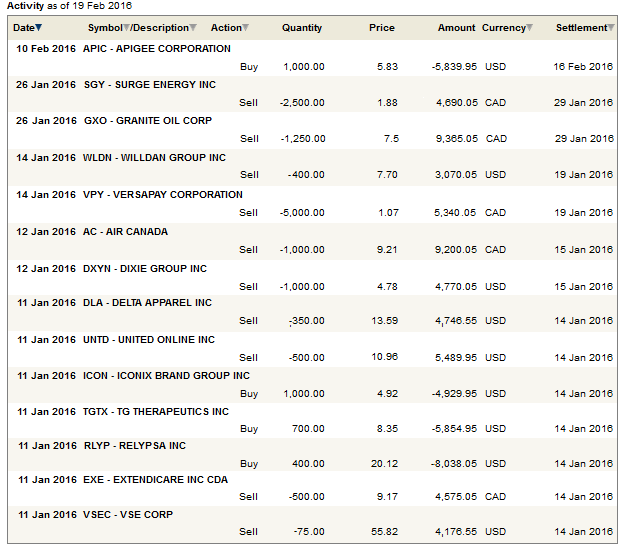
Week 241: Surviving

Portfolio Performance

week-242-yoyperformanceweek-242-Performance


See the end of the post for the current make up of my portfolio and the last four weeks of trades

I had more than one acquaintance send me news that Orange Capital was shutting down.  I found this sad.  Those of you that have been following the blog know that Orange Capital and myself came into large positions in Bellatrix at about the same time.  The fall of 2014.  Both of us saw a company with excellent assets, the potential for significant growth, and a valuation that was compelling.

Unfortunately for us, while company specific factors lined up, the macro backdrop was quite the opposite.  As a consequence in the last year and a half Bellatrix has dropped from my original average cost of $6 down to, at one point, below $1 and current $1.42.

How Orange Capital and I responded was quite different.  Strong in their conviction that Bellatrix had solid assets and weather the storm, Orange Capital held their position and continued to buy more.  Myself, never all that sure whether I am missing some vital information, always wary of “giving it all back”, threw in the towel at around $4.50 in late November, capitulating into an interim low.

That I happened to be right in this case isn’t the point.  I didn’t forsee $20 oil or a $1 handle in front of the AECO spot contract.  I am positive that Orange had a better researched position than my own.  That I was right was, to a large extent, just luck.

What is demonstrated though is a difference in philosophy between what I am trying to do versus many money managers. I’m not a big believer in my own infallibility.  As my positions go down, I try to reduce them.  I’m not perfect in this respect, but its something I try to follow.

This is a methodology that I am finding has its shortcomings in this bear market.  You end up selling a lot of stock only to see bounce back shortly after.  I’ve been whipsawed on a few positions.

The other point I want to discuss, which is semi-related to Orange Capital, is the topic of blowing up.

The point of existence of a hedge fund is to risk money in order to make more of it.  You can argue the particulars of that statement, that risk reduction can occur through various hedges, diversification, concentration, whatever your flavor is, but the bottom line is that the money should be at risk somewhere or why is the fund even there?

But that’s not my job.  While part of what I am trying to do is of course maximize my profit line, my first mandate at this point in my life is also very clearly and in capital letters, TO NOT BLOW MYSELF UP.

I see some of the funds shutting down and stories about others that are down 15 or 20% this year already.  If a hedge fund is down big going into this weekend (I suspect that this is not completely uncommon and that there are many I have read about that are down far more) their primary motivation has to be to get it back.  They need to make money to survive.

I am down 9% since the beginning of the year as well.  But while it would be nice to get it all back, my primary motivation right now is not that.  My motivation is simply to make sure that my family and I are in a position to live comfortably regardless of what happens.  Whether that is 9% higher or not is really not the fundamental point.  Most important, and what I guard against with absolute vigilance, is insuring that my capital doesn’t permanently disappear.

With that said, my biggest transaction over the past month is irrelevant to this blog.  I paid down my mortgage in full. I also went to a mostly cash position in my RRSP (the Canadian equivalent of an IRA).  My investment account, which I track here, has more risk to it at the moment than I would perhaps like, but that is because, as I tweeted on last Wednesday, I thought there was a decent chance of a rally, which we seem to be getting.

So what do I see that is making me take such a bearish, worried stance? A couple things, and I will get into those in a minute, but the overriding factor is the same one that led me to sell Bellatrix in November 2014.  It simply isn’t working.  And when it doesn’t work I have to stop doing it before I suffer a permanent and significant capital loss.

As for those other things, the two legitimate concerns I see are the same one’s everyone else is talking about (which is partly why I think we might be due for a rally).

  1. The collapse of oil bringing about energy company bankruptcies that a. lead to investor losses that start to domino into broad based selling, and b. lead to bank losses and bond losses that cause overall credit contraction
  2. The collapse of China’s banking system leads to currency devaluation and god knows what else.  Kyle Bass wrote a terrifying piece (which I would recommend reading here) about how levered China’s banking system is, how their shadow banking system is hiding the losses, and about how government reserves are not large enough to pacify the situation without a significant currency devaluation.

Just how and to what extent these things come to pass is about as certain to me as $20 oil was in November 2014.  I have no clue.  But they are there, they are clearly worrisome, and what I have been doing is not working.  So I have to act accordingly.

What I did this Month

Not a whole heck of a lot.  In my online portfolio I added back two stocks and sold a few other. I bought small positions back in Relypsa and TG Therapeutics a few weeks ago.  I also made a couple of more buys on Wednesday of last week, adding (very small) positions in Cempra, Apigee, Five9, Ardmore Shipping and DHT Holdings (I subsequently sold DHT on Friday in favor of Teekay Tankers).

This week I added a small Air Canada position back and made two adds to existing positions: Radcom and Intermap.  Radcom gave a very positive quarterly update, said that the recent contract for NFV deployment is much bigger than the $18 million originally announced and that we should expect more contracts in the second half of 2016 or beginning of 2017.  I’m pretty sure this contract is with AT&T.  And while Radcom doesn’t give guidance they did say they expect $20 million of cash by the end of the first half of 2016.  This would be up from current $9 million.  They clarified that the cash is due to new revenue not deferred payments which exemplifies how profitable the new NFV contract is.  I think its quite a good growth story in a landscape bereft of them.

Intermap closed their $125 million SDI mapping contract and I don’t think the market is giving them full credit it for it.  I would expect that as the money rolls more believers will jump into the stock.  Intermap remains highly speculative but if they can follow up this contract with another large contract the upside for the stock would be significant, making it just the sort of market-insensitive story that I like to have in this environment.

Portfolio Composition

Click here for the last four weeks of trades.

week-241

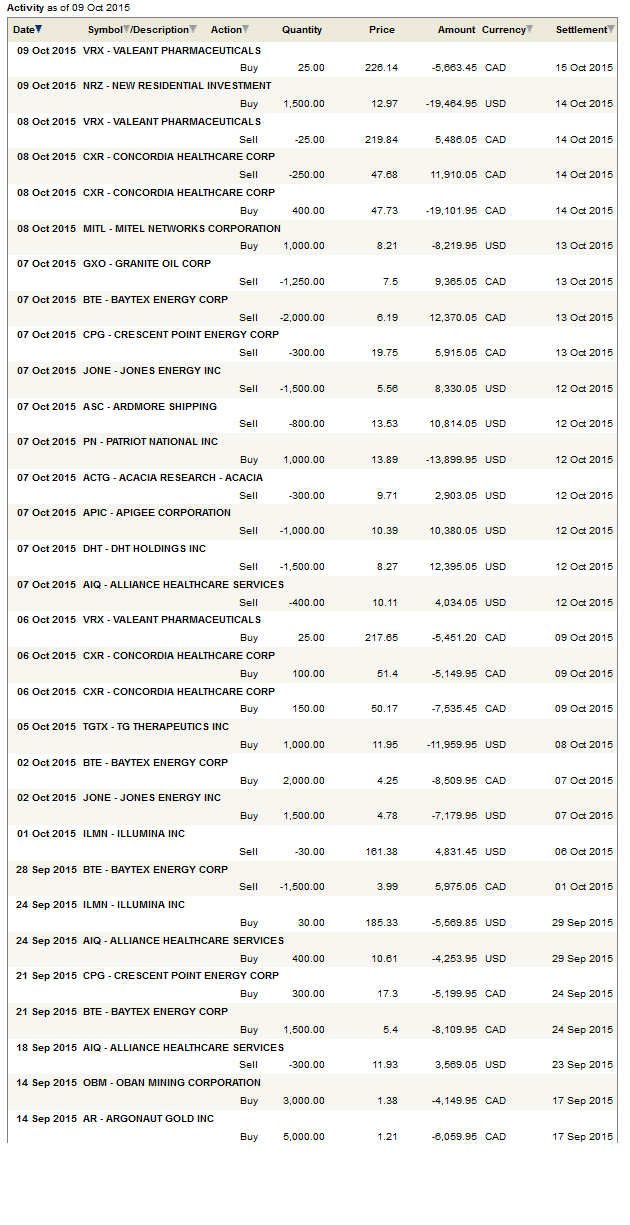
Week 223: Playing the Volatility

Portfolio Performance

week-223-yoyperformance

week-223-Performance

See the end of the post for the current make up of my portfolio and the last four weeks of trades

Monthly Review and Thoughts

I was on vacation for three of the past four weeks, so my portfolio changes have beeen minimal.  It was nice time away but the timing was unfortunate; the market swooned but bounced back before I got back.  There were plenty of opportunities I missed out on.

As it were, the only two I was able to capitalize on were Mitel Networks and New Residential.  In both cases I had old stink bids that got hit (a little over $6 for Mitel and $12.50 for New Residential).  But even in these cases, the positions I ended up with were much smaller than I might have had I been actively watching the action.  I’ll talk about Mitel a little later on.

I haven’t been tweeting a lot either, but I can’t attribute that entirely to being away.  I find my mind hesitating on any conclusion.  Its very difficult to tweet when each comment requires a couple of caveats a maybe and at least two possible scenarios.  There are only 140 characters.

David Tepper was on CNBC a few weeks ago sharing his thoughts about the current state of the market (click here for one of the clips).  Most of the summaries I’ve read focused on his comments about the S&P possibly going to 1,800.

What I took from the interview was uncertainty.   The direction of money flows are criss-cross, whether the tide is still coming in or starting to go out is more uncertain then it has been in recent years. When quantitative easing was in full swing there was a clear easing of liquidity, now its much more muddled.  And Tepper isn’t really sure where it will all settle out.  It might be higher, but he seemed to suggest that he thought it was more likely to resolve itself lower.

If David Tepper isn’t sure of path of least resistance, I bet you can say the same for the market.  And that to me says we are in for volatility.  Which is what we are getting.

If we are going to be in market where directionality is wanting and volatility rules then the right approach is to not believe too much too fast.  Sell the rallies and by the dips.

If I’ve done one thing right in the last four weeks it is that I have manifested these convictions in my trades.  I sold out of a lot of positions as the market rose last week.  I will be ready to buy them back if the market falls back far enough.  Without QE, without China, and without sensible leadership from any of the market groups, I think we simply flounder around aimlessly, at worst with a downward bent.

A Position in Mitel

Mitel develops and installs unified telephone systems for businesses.  They also provide white label back-end services and software for carriers so they can offer their own telephone products to business.

With Mitel’s legacy business, called the “premise” segment, they install a telephone platform on location, including the phones, connections and back-end.  Upon sale of a telephone system Mitel generates revenue from upfront hardware and software sales, and a small amount of recurring revenue for maintenance and support.

The premise business has been shrinking as companies migrate toward a cloud solution.  The cloud system Mitel provides is similar to premise in terms of functionality: the business gets a telephone platform that operates and connects its devices, provides unified voice mail, conferencing, all of the functionality you’d expect.  But the system runs through the cloud, so the hardware component is mostly absent.

With the cloud product Mitel receives recurring revenue for each end-user that is hooked up.  For their retail customers (those who purchase cloud services directly from Mitel) they receive around $45/month revenue per user.  For their wholesale clients (carriers who resell the service as their own) they receive somewhat less, but at a much higher margin as they are only providing the software and support.

In April Mitel expanded into a third segment, mobile, with their purchase of Mavenir for $520 million. Mavenir offers a 4G LTE solution to telecom carriers.  4G LTE is the next evolution of telecom transmission.

4G LTE is slowly being adopted by carriers for its functionality and costs. With respect to functionality, 4G LTE allows for something called Rich Communication, which makes it easier to do things like video calling, group messaging or video streaming over mobile.  As well 4G can deliver voice over the LTE connection rather than the legacy voice network which is expected to improve call quality.

For carriers the cost advantage is that once installed 4G LTE uses less bandwidth, which limits the requirements of additional spectrum that they have to buy.

Mitel’s shift to cloud and mobile means that the overall business model is shifting towards one of  recurring revenue through subscription/licenses.  Below is a snapshot of recurring revenue growth for each of the segments.
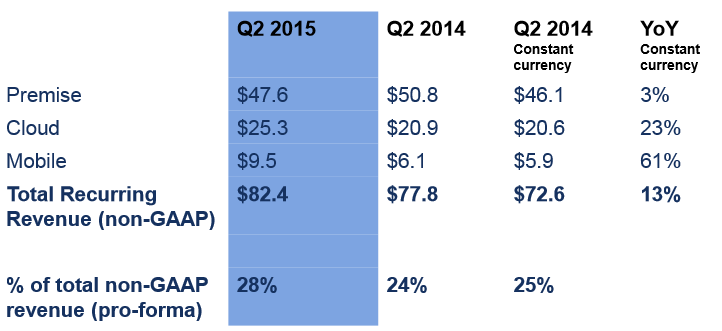
recurringrevs

The overall premise business is shrinking by about 5% to 8% per year as companies migrate to a cloud or hybrid cloud/premise solution.  The cloud business has been growing at 20%. Mavenir grew at 30% in the second quarter.

Overall the company has been growing only nominally as the premise business, which makes up 75% of revenue, declines have overshadowed the smaller, growing cloud and mobile businesses.  But this will change as the other two segments become larger.

The early indications are that the Mavenir acquisition is going well.  Second quarter revenue for the mobile segment (which is essentially Mavenir), was $45 million.
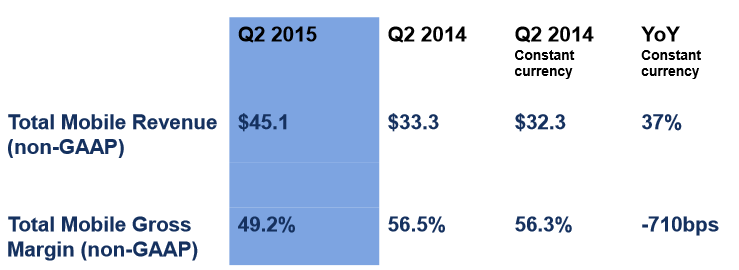
mobilerevs

On both the second quarter conference call and at subsequent conferences Mitel has noted an acceleration in Mavenir’s wins since they have been acquired.   The concern of many carriers with respect to choosing the Mavenir solution was that it was a small company with limited resources and a small global footprint.  Mitel’s acquisition has alleviated those concerns.  At the time of the acquisition Mavenir had 17 footprint wins with carriers.  Since April Mitel/Mavenir have won 10 more footprints including 1 major cable company in the United States.

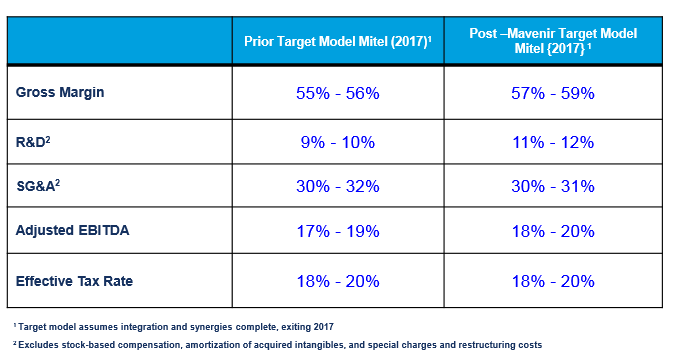
Mitel provides the following roadmap for earnings in 2017.
earningsroadmap

If I use the above roadmap and assume that Mitel can continue 20% growth in both the cloud and mobile business and that the premise business declines at 5%, I can see Mitel earning over a dollar in 2017.

I only wish I would have bought more of the stock when it was in the $6’s.  The timing was unfortunate.  As it is, I am contemplating adding to the position if it dips back into the $7’s.

There are a couple of decent Seeking Alpha articles on Mitel here and here.

Wading into the Biotech Controversy

I decided to jump in with the sharks and take a position in Concordia Healthcare.  I also took a very small position in Valeant Pharmaceuticals.

Concordia has a similar business model to its much larger competitor Valeant.   Its a roll-up strategy.  In the last year they have acquired three pharmaceutical companies: Donnatal, Covis and AMCo.  In the process they have increased their revenue from a little over $100 million in 2014 to over $1 billion in 2016.  Below is a table of the companies acquisition pre-AMCo.

acquisitions

The stock has been hammered as Valeant has been singled out for pushing through price increases on many of its newly acquired drugs.  The comparison is not unwarranted as Concordia has much the same strategy as Valeant, raising prices on newly acquired drugs where the market has been inelastic.

In both the cases I haven’t been able to get a solid handle on the extent of the price increases.  Articles point to 20% plus increases in some drugs.  Others go on to point out that these list price increases are not representative of what is actually paid, and that the actual price increases are more modest.

Valeant is also suffering from its own opacity.  There is an excellent four part blog series that I would recommend reading before investing in either Concordia or Valeant.  It is available here.  The author illustrates numerous examples where Valeant had questionable disclosures and raises some questions about the performance of their acquisition post-integration. Most important though, it provides an overview of how to think about the valuation of both companies that I found extremely helpful.

Concordia is not quite as opaque as Valeant, though some of this is a function of its size.  Until very recently the company only owned a few drugs and depended heavily on Donnatal for its revenue.  So its not too hard to separate the contributing parts.

Unlike Valeant, I don’t see evidence that Concordia’s acquisitions have underperformed after being acquired. Donnatal, being Concordia’s largest acquisition prior to 2015, is illustrative.  Donnatal was purchased in May of 2014.  In 2013 Donnatal had revenue of about $50 million.  In 2014 Donnatal had revenue of $64 million.  In 2015 Donnatal is expected to bring in between $87-$92 million of revenue.

Of course some if not most of that revenue increase was due to price increases.  How reasonable are future price increases on newly acquired drugs?  Without a doubt the potential has diminished.  But I think that as the front page headlines fade the reality will appear less dire than it does now.  Keep in mind that the price increases are not comparable to the 5000% jack-up by Turing Pharmaceuticals an other aggressively managed hedge-fund like pharma providers.  Meanwhile Concordia is down 50% in the last month; surely the more robust expectations have been priced out of the stock.

The bottom line is that both Valeant and Concordia have real negatives but they have also experienced really dramatic falls in valuation.  Concordia was a $100 stock (Canadian) a few months ago.  Valeant was over 30% higher.

I can’t take a big position in Valeant because I can’t really figure out how well its doing and I think the difficulty of performing their roll-up strategy  increases with size.  With Concordia performance is easier to evaluate and they are still small enough to be able to find interesting acquisitions and fly under the radar of the news. I think the question is more one of: are the negatives priced in?  And I think there is a reasonable chance that is the case.

A Few Small Bets on Gold Stocks

Gold stocks have been so beaten up that it just had to turn at some point soon.

I also thought I saw was kind of a win-win situation with respect to the September rate hike decision.  Either the Fed was going to hike rates, which would mean the event had finally passed and the stocks could stop pricing in its inevitability, or they wouldn’t, in which case the legitimate question would resurface as to whether we are really passed the QE-phase.

Additionally, there has been a shift quietly occurring in the gold sector.  Many producers are getting their costs under control.  This has been helped by improving currencies for non-US based producers, by lower energy costs and by lower construction costs.  While the market seems to have a curious focus on valuing gold companies on the price of gold, which has been stagnant to down, the margin they make have been improving.

Let’s take Argonaut for example, which is one of the companies I took a position in.  Argonaut has 155 million shares outstanding and trades at about $1.50, so the market capitalization is about $250 million.  Debt is nil and the cash position is around $50 million.  They have been improving their performance year over year.
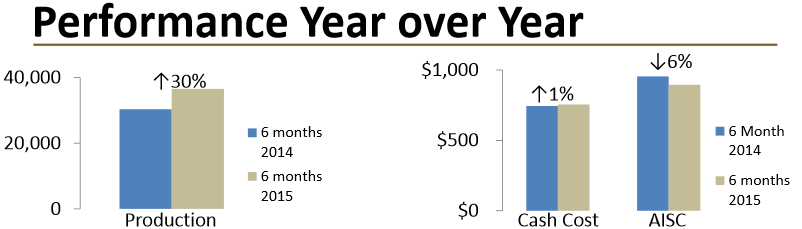
yoycomp

Argonaut produced cash flow from operations before working capital changes of $28 million in the first half of 2015 (cash flow including working capital was $38 million, but because changes in inventory are such a big and fluctuating part of a gold mining operation I think they need to be ignored).

Sustaining capital expenditures and capitalized stripping at Argonaut’s operating mines (El Castillo and El Colorada) runs at about $5 million per quarter.  So free cash (so before expansion and development capital) is around $35 million for the year.

Argonaut, and other gold producers like them, are not expensively priced at $1,100 gold.  That means there is no expectation of higher gold prices priced into them.  I think there is a reasonable chance we see higher gold prices as there is a reasonable chance that the economy continues to muddle.  These stocks are multi-baggers if that happens.

Oil

I have had some strong opinions on oil over the past few months but I don’t have a strong opinion now.  When oil was in the low $40’s I once again bet on a number of oil stocks including Crescent Point, Baytex and Jones Energy.  I went through some consternation as Goldman Sachs came out with their $20 oil call and I listened to the twitter universe decry the inevitability of a collapse in the oil price.  But in the end it all worked out, and I sold Baytex for a quick 50% gain, Crescent Point for a 40% gain, and Jones for a 20% gain.

With oil back in the $50’s I feel much more non-committal.  For one, I think that at least some of this move is due to geo-political concerns, which isn’t a firm footing to base a stock purchase.  For two, earnings season is upon us and there is at least some risk that the lack of drilling leads to downward revisions in production forecasts for companies like Baytex and Crescent Point.  And for three, pigs really do get slaughtered, so when the market gives you a big gain in a couple of months I have found it more often than not prudent to take that gain and run.

I will be a bit sick to my stomach if Baytex runs quickly back up to $8, or Crescent Point to $25 but this doesn’t seem like the sort of market to be trying to squeeze out the last 10%.

What I sold (and one more I added)

As I already said I sold out of most of my oil stocks.  I also used the run-up in tanker rates (they breached the $100K per day rate last week) to sell out of DHT Holdings in the mid-$8s and Ardmore Shipping at $13.  I took some quick profits on my small position in Apigee, which ran back up from $7 to $10 on just as little news as what precipitated its move down from the same level.  And I sold out of Alliance Healthcare after the rather bizarre acquisition of shares by a Chinese investment firm (another case where poorly timed holidays contributed to a larger loss than I might have otherwise taken).

I also had a bunch of stocks that I neglected to add to my on-line portfolio, mostly previously held names like Enernoc, Espial Group and Hovnanian.  I took small positions in these stocks during the last dip but sold out them of quickly as they rose.  My plan is to continue to do this sort of cycling, taking advantage of dips and selling the rips.

With that in mind, I did re-add one last position on the last downdraft that hasn’t recovered like I had hoped and that I think will at some point soon.  Air Canada.  The third quarter is mostly passed and there isn’t a lot of evidence that overcapacity from Air Canada and WestJet is going to hinder their performance.   The stocks has barely budged from $11 while other airline stocks soar.  I think it catches up some of this performance in the near term. (Note that I forgot to add this one to the online portfolio but will correct that when the market opens on Tuesday).

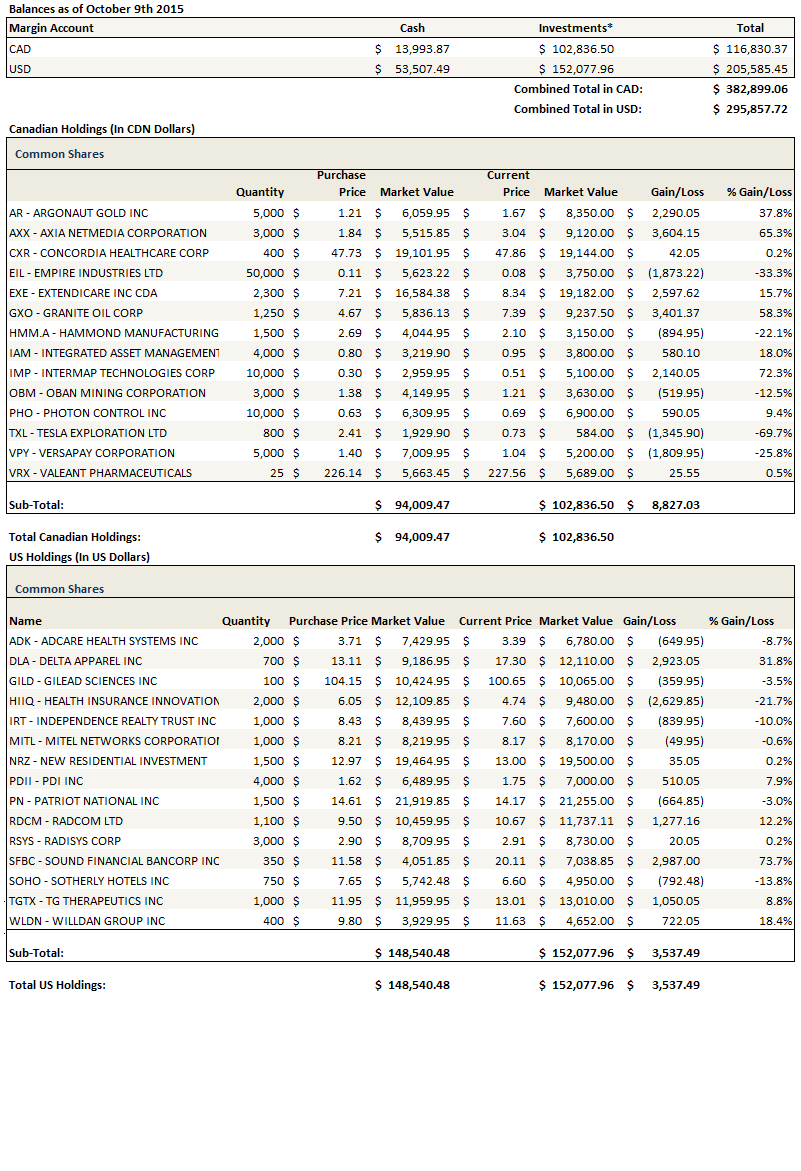
Portfolio Composition

Click here for the last four weeks of trades.
week-223