Skip to content

Posts from the ‘Portfolio’ Category

Week 304: More on Edge

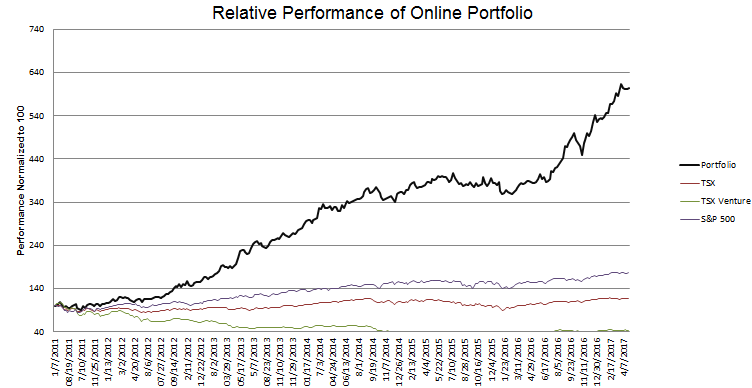
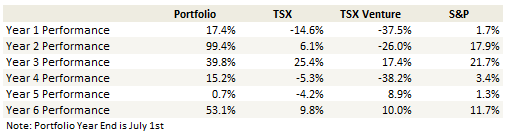
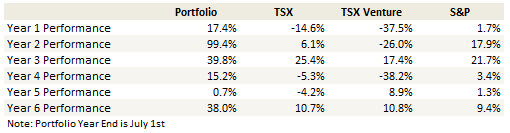
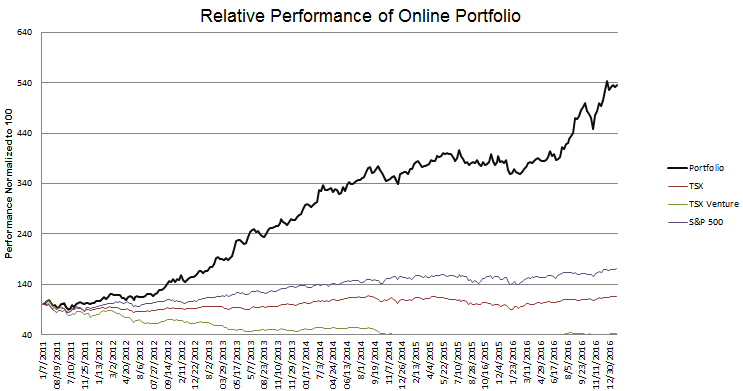
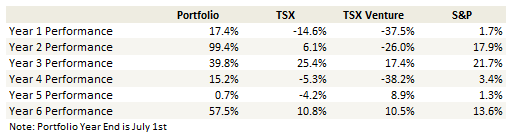
Portfolio Performance
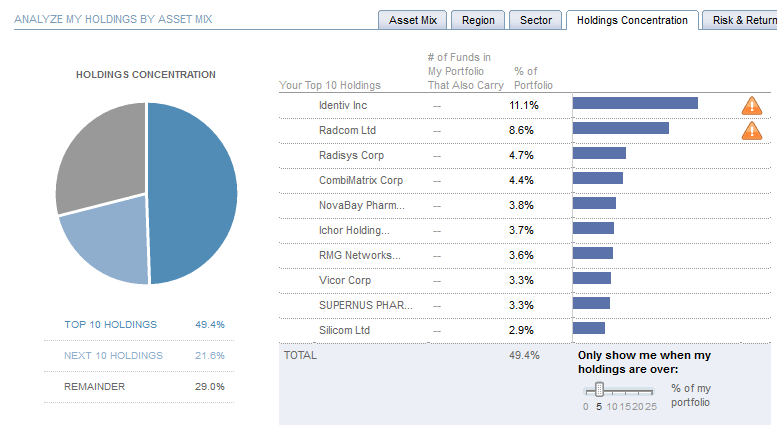
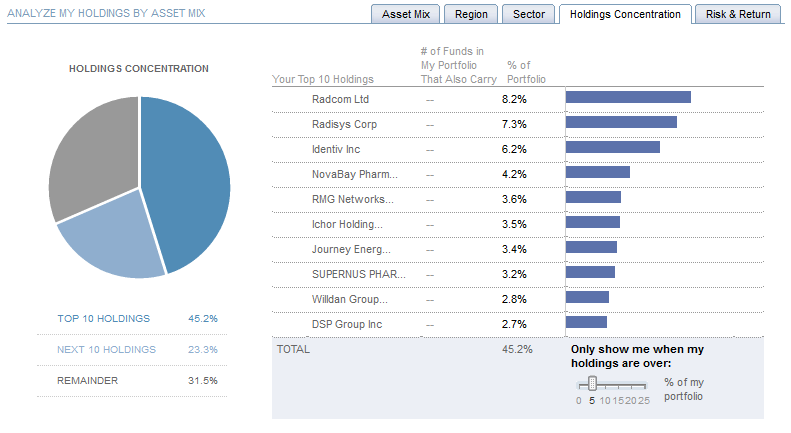
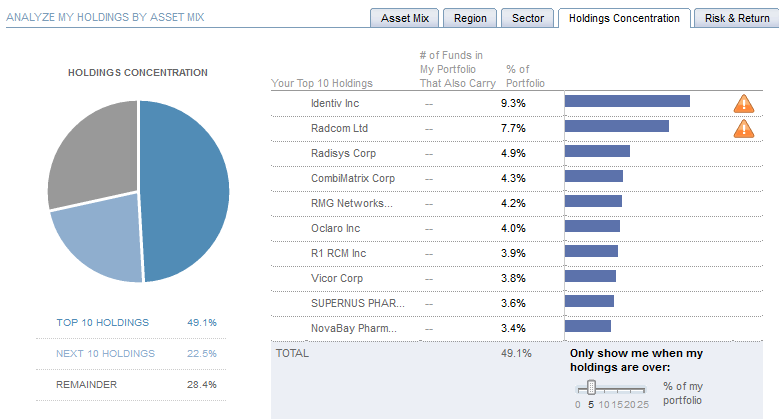
Top 10 Holdings
Thoughts and Review

In my June update I took space to describe some of the attributes of my edge.  At that time I didn’t define it specifically, and so I wanted to extend that discussion here.  To repeat the definition that I put forth back then:

An edge is essentially the advantage that allows you to beat the market more than it beats you.  For many of these traders understanding their edge; a system, a pattern, a money management technique; has been a major step toward consistent success.

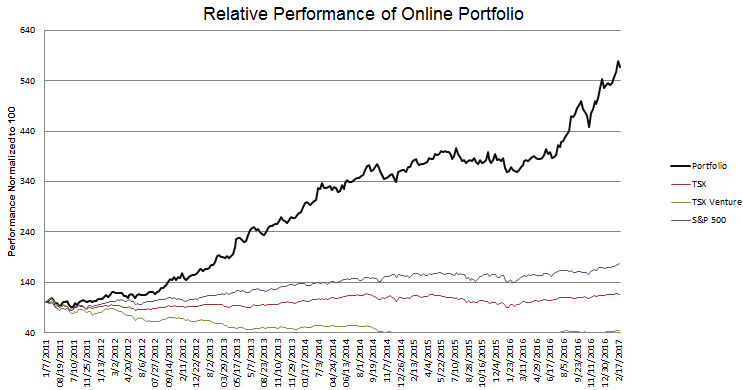
I think I have put up enough years of out-performance to tentatively conclude I have some sort of edge.  Its still possible that I don’t; maybe I will blow up yet and these past years will prove to be a statistical aberration.   But as times goes on those odds become less likely.

So what is it?

First, I do quite a bit of research.  Now maybe I’m not the most exhaustive researcher; I know some folks that will, at minimum, read through the last 5 years of 10-K’s before pulling the trigger, but nevertheless I am on the heavy side of the research spectrum. I think its fair to say that I make decisions on a more informed basis than the average investor.

Second, I’ve come up with a methodology that works, both absolutely and for my personality.  I take small positions that let me be wrong without losing a lot of money.  I rarely add to those positions if they fall and sometimes cut them if they fall too much even if I have no news to suggest anything has changed.  And I add to the positions as they rise and price movement reinforces the thesis.

This works for me because in the real world I’m not very good at making decisions.  Just to give a couple examples from every day life, I don’t like having to choose the TV show we watch at night, what food we will have for dinner, or where we are going to go on vacation.  I would rather have someone else make the decision and just go with the flow.  I am fortunate to have an understanding wife.

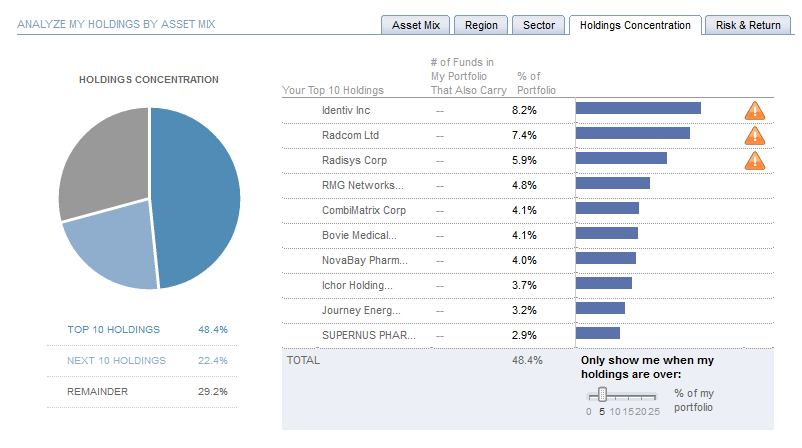
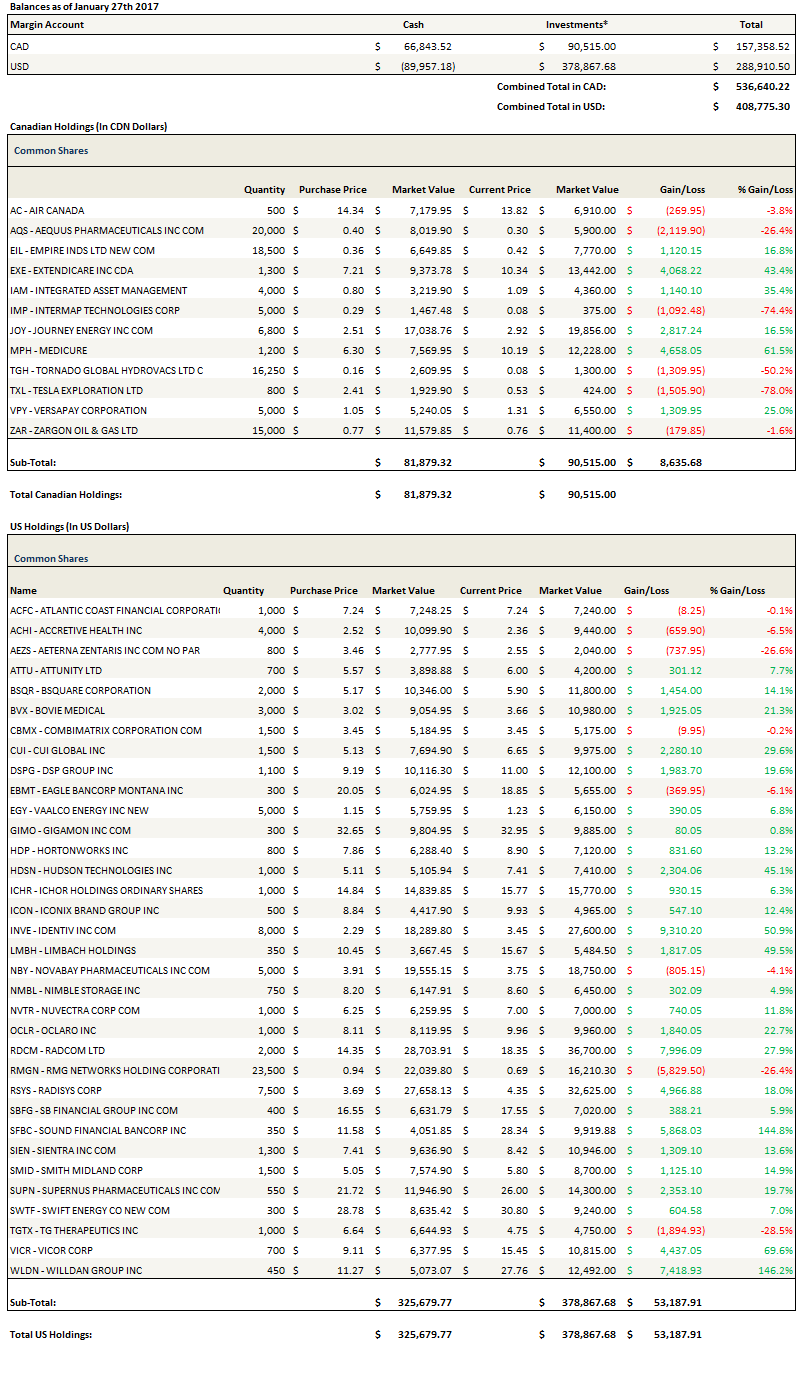
I invest in a way that is in tune with this nature.  I rarely commit to an idea unless I am deep into it.  Even with my biggest positions; Identiv or Combimatrix or Radcom, I don’t feel sold on the ideas.  I’m more of a renter.  I am not sure if they will pan out and I am ready to run if something goes awry.  It’s easier for me to pick a stock then what’s for dinner because I know it’s not for good.

The final element of my edge is the type of stocks I look for.  I try to find companies that, while they may only have a small probability of going up, have the chance to go up by multiples if things play out in a certain way.

To put it another way, if I am right 30% of the time and on average my gains are 20% and my losers are 20%, I am going to lose money.   But if my gains can be 100% and my losers 20% then I am going to do quite well even if I’m wrong most of the time.  So I am wrong a lot, I change my mind a lot, but when I’m right its often for a double, a triple or even more.

What I did last month – Aehr Test Systems

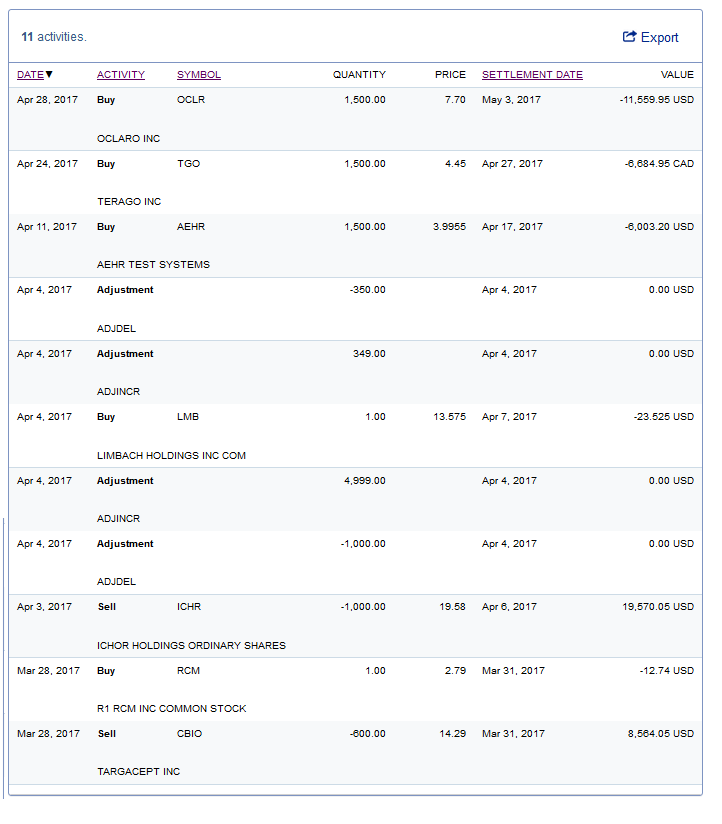
Its actually been 5 weeks because we were on vacation for the last week and so I didn’t get this update out on time.  Even with the extra week, I didn’t do too much.  In fact I only made three trades.  One, Catalyst Biosciences, was a fluke that I discussed in my last update.  The stock is back down to where it was and I didn’t actually buy it anywhere but the practice account so who really cares.

The other two were new positions.  The one I’m going to mention in this update is Aehr Test Systems.  They are a fairly tiny company ($90 million market capitalization) that makes testing equipment.  They have a unique design (I don’t believe there is a lot of direct competition) that can test at the wafer level rather than the module level, which eliminates much of the potential for mechanical failure and improves quality controls.  They started selling a multi-wafer testing machine called the Fox-XP system back in July and they have started to see orders come in.  Their test equipment is sold to some large companies, like Apple and Texas Instruments (Apple and TI accounted for 47% and 32% of revenue in 2016) and they have made references to being in talks to sell product to a Korean firm that seems likely to be Samsung.

The stock doesn’t appear cheap at a glance.  Revenues in the last 9 months were only about $12 million so on a trailing sales basis the stock looks wildly overpriced.

What makes it interesting is that we are only starting to see orders for the Fox-XP system.  So far these orders have been for prototypes to verify the concept.  The units sell for $4 to $5 million, so even a trickle of prototypes are incrementally material to the company.  But the orders could scale substantially if the proof of concept testing goes well.  The company doesn’t give a lot of guidance, and there isn’t much of an analyst following to prod information out of them, but on the third quarter conference call management said that if successful with their lead customer (probably TI?) they could ship 10 systems a program and that they are currently working on 2 programs.  So the lead customer alone could amount to a $40 million to $60 million opportunity per program.

If the Fox-XP takes off, the stock is going to move significantly.  Will it?  I don’t know.  It has a chance though, and that is worth a small position.

The dangers of short-term funding

In October of last year I wrote that I was short Canadian alternative lenders and mortgage insurers in the wake of the Federal government mortgage rule changes.  For 5 months these positions did poorly.  I began to think my puts would expire worthless and my shorts would be tax loss candidates.  But last week the bet was vindicated as I took profits after the alleged fraud at Home Capital.

My thesis was not premised on the discovery of fraud.   I thought there was a reasonable chance something would be uncovered as the market unwound but that wasn’t my primary reason for going short.  Instead I thought the measures the government put in place in October would finally cool down the housing market and that, given that many of the measures were targeted at alternative lenders and insurers, these companies would suffer the most.

That hasn’t happened, so in that way I was lucky.  But what I did get right was how things would unravel once the ball got rolling.

It cannot be overstated how precarious a company is if they lend long, borrow short and have a funding source that is easily called away.  If any uncertainty develops about their lending book, the run on funding can be swift and fierce.

The collapse of Home Capital was precipitated by their dependence on high interest deposits to fund part of their loan book.  Those deposits were available on demand, so at the first allegation of wrongdoing, many were pulled.  Why not?  Who wants to take a chance with their money for an extra percent.  Adding to this outflow, there is and will continue to be a slow motion run on their GIC funding, many of which will mature over the next year and almost assuredly not be renewed.

This capriciousness is why I don’t have the stomach to hold non-bank financials through any bouts of turmoil (think back to New Residential or Northstar).  You just never know when the funding side is going to tighten, and when it does an extremely profitable business model can be flipped to insolvency in a heartbeat.  Again, and I know I’m repeating myself, but I don’t think you can over-state how precarious it is to lend-long, borrow short and have funding callable on demand.  Everything is great until it isn’t, and then it’s all over.

As for the Canadian housing market, it continues to tick on.  It will be interesting to see how the events of the last week interact with the price rise of homes in Southern Ontario and coastal BC.  We are all familiar with how the US played out.  There the topping out of prices was the catalyst that collapsed the loans and tightened of credit.  I wonder if it has to play out that way, or whether causality could be reversed in Canada, as lenders for marginal buyers lose their funding sources in the wake of Home Capital?

We’ll see.   We sold our rental property a few weeks ago so I don’t even have that chip in the game anymore.  However that wasn’t driven by macro worry; instead we realized that renting is very time consuming and not very profitable (unless you live in the GTA or the coast and your house can appreciate in value by 30% in a year).  Our last tenant also turned out to be a convicted criminal which didn’t help my stress level last year.

It will be another interesting week.

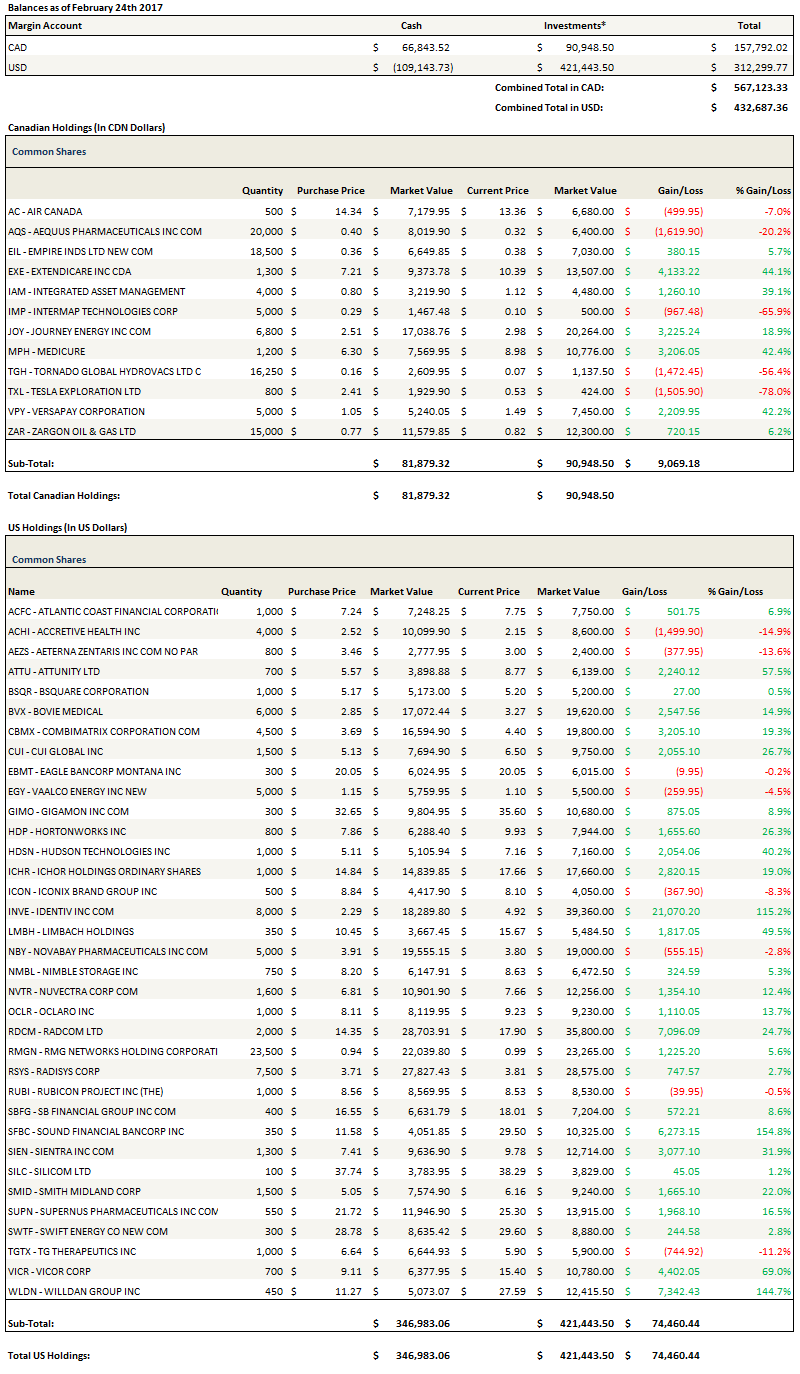
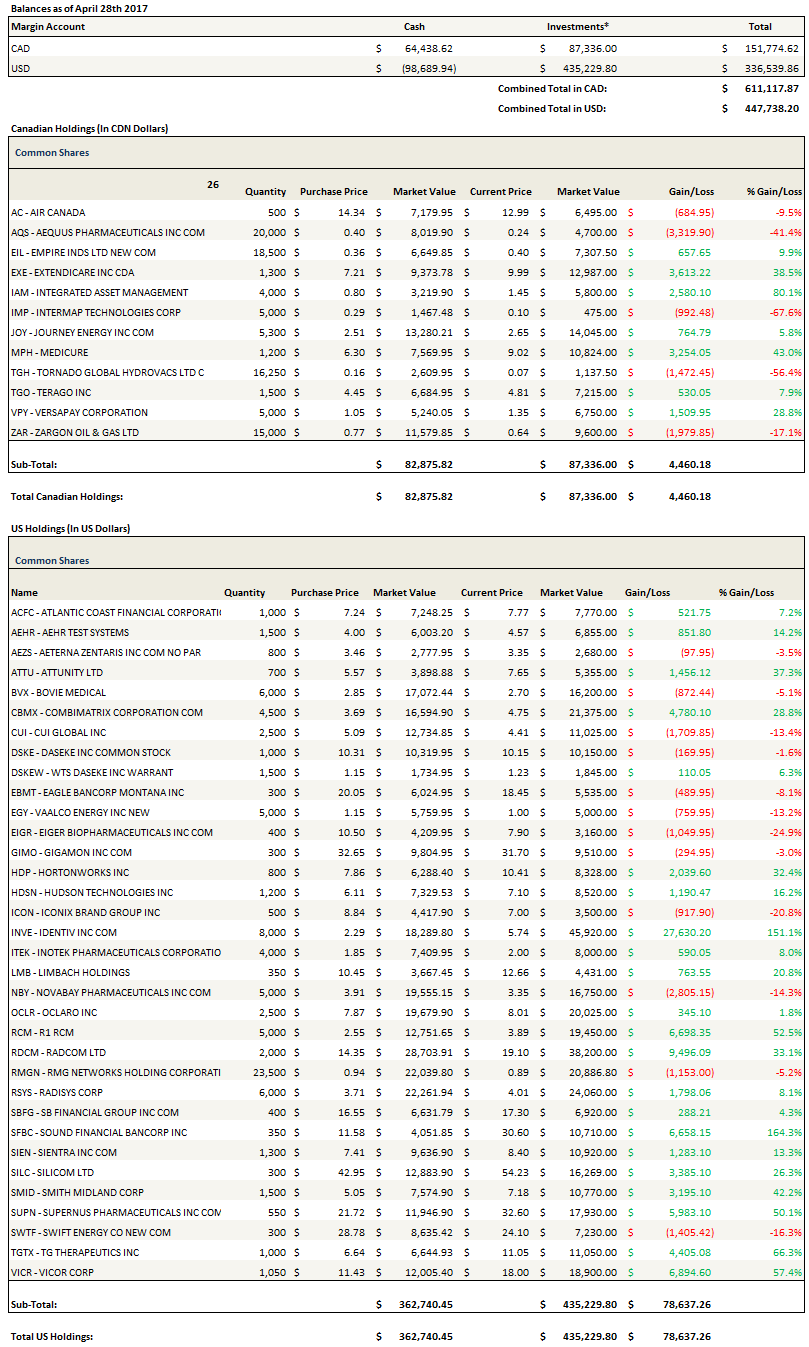
Portfolio Composition

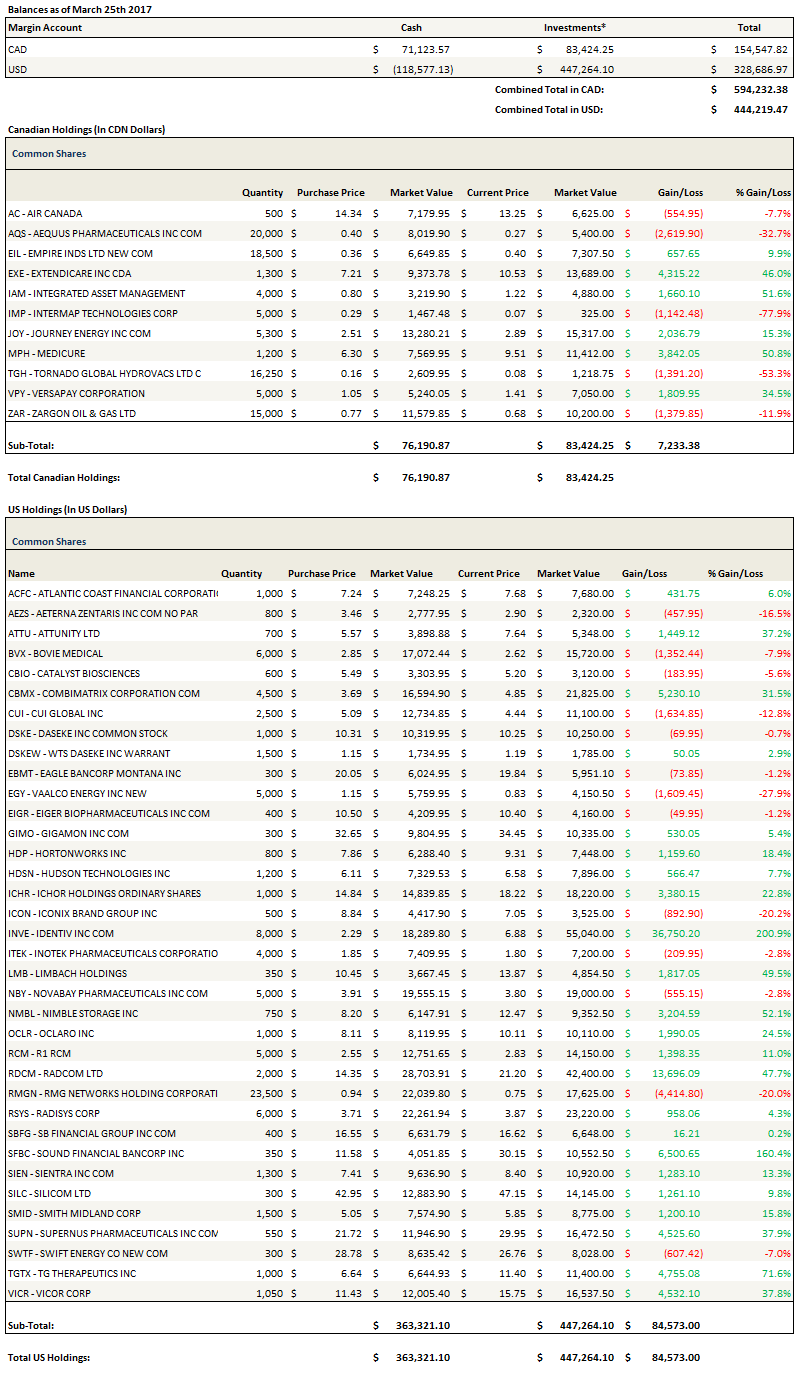
Click here for the last five weeks of trades.  I had to make two adjustments to the portfolio that show up as trades because of name changes that weren’t automatically updated in the practice portfolio.  Accretive Health recently changed their named to R1 RCM and a while ago Limbach changed their symbol to LMB.  The Limbach situation was brought to me by a reader.  Its been wrong in my update for a while (displaying the old symbol and last traded price of it).  This has been corrected now.
Week 298: Keep on Truckin

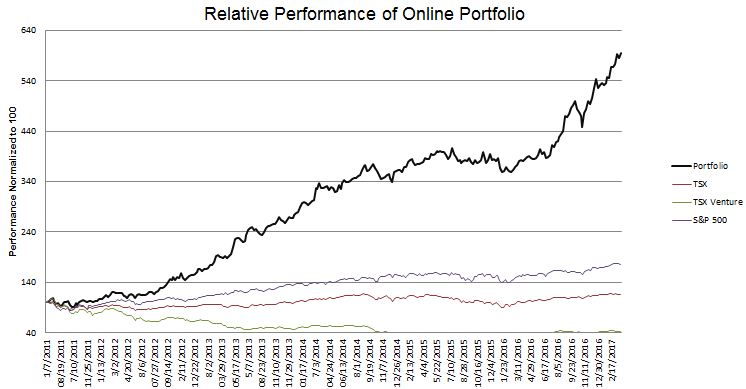
Portfolio Performance


Top 10 Holdings

See the end of the post for my full portfolio breakdown and the last four weeks of trades

Thoughts and Review

No great insights this month.  My portfolio continues its upward climb even as the market stalls.  I continue to be buoyed by my large position in Identiv and more recently my large position in Radcom.  Combimatrix is consolidating in the $4’s but it looks healthy and I am hopeful it will break out on another leg up soon.  Silicom has helped a lot and I will talk more about that shortly, as has Supernus.  I still have a bunch of stories that I think are on the cusp and waiting for that final catalyst, Radisys, Vicor, and maybe even CUI Global, which I wrote about a little earlier this week.  Overall, no complaints.

New Position: Daseke Inc.

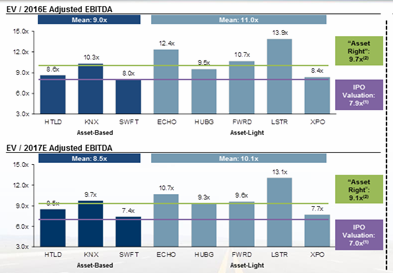
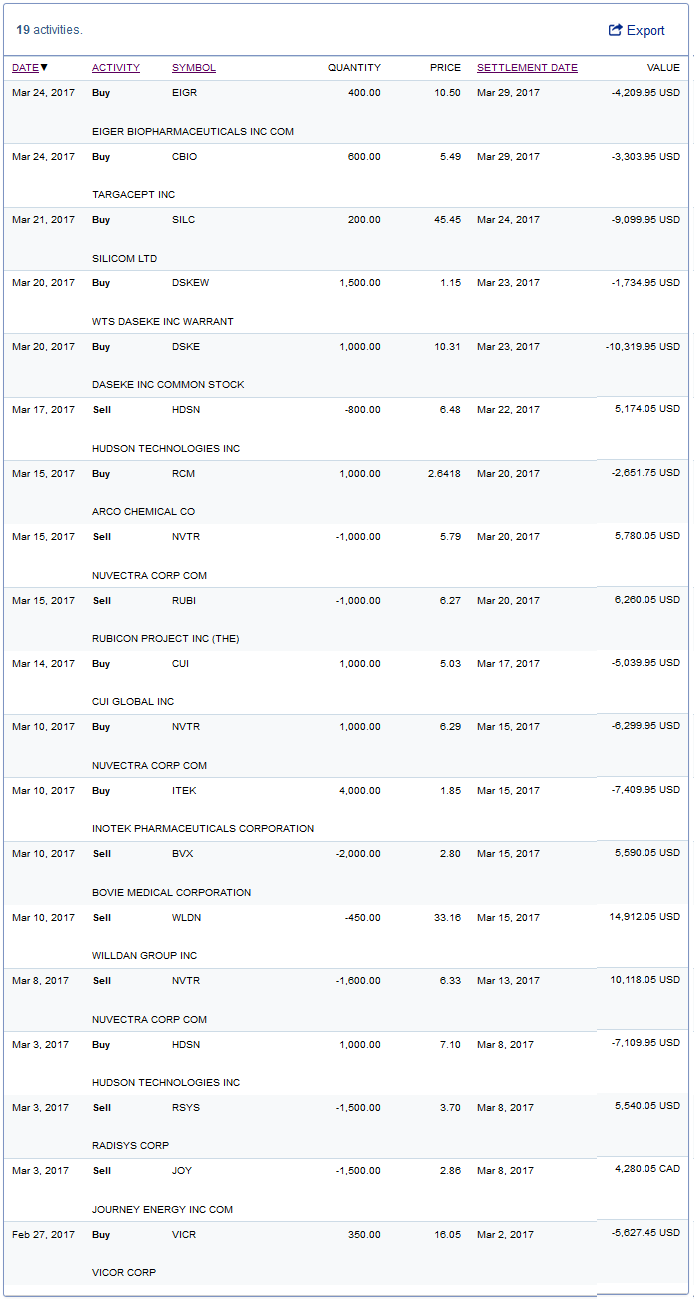
I added a new position in Daseke after reading this write-up by Dane Capital.  The story seems pretty straightforward.  Daseke is born of a special purpose acquisition company (SPAC) that acquired the previously private company, its trading cheaply relative to its peer group (see chart below from their presentation) and is in an industry that should see a tailwind as economic activity, infrastructure spending and oil and gas capex pick up.  There is not point repeating what Dane Capital already wrote so I recommend going to the article for the details.

I added both warrants and shares.  I’m not really sure whether the warrants are fundamentally overvalued or undervalued compared to the shares, I just thought they represented a good upside given that the stock is probably around two times EBITDA lower than it should be and that if it traded up to an appropriate level it would get to the high teens, which would be a triple for the warrants.

What I added to

I added to four companies over the past month.  In each case I was persuaded by an upbeat outlook about the future that was given by management on the calls.  I’ve already written my thoughts on Vicor.  Likewise I wrote up CUI Global just the other day.

I also added to Accretive Health, which has changed its name to R1 RCM.  I last talked about R1 RCM here.  Not much has changed, they are making progress on-boarding Ascension and finally moved their stock over to the NASDAQ.  I figured the NASDAQ listing would be a bit of a catalyst, so I added the day prior to that.

Finally I added to Silicom on this news.  This is just a huge contract for the company with an $17 million initial purchase order and $30 million expected annual run rate.  I read somewhere that the customer is likely with Gigamon.

I do intend to write-up Silicom, I just keep getting tied up with other stories, and I wanted to spend time understanding their whole product suite before putting any post up.  The good news is that as I have dug more, I have become even more comfortable with the company.

What I sold

On the sell side of the ledger, I already wrote about my sales of Nuvectra and Rubicon Project, and my reduced position in Bovie Medical.

In addition to these names I also sold the last of Willdan Group.  Willdan has been a great name for me.  I added the stock in the single digits, around $8, and am selling the last of my shares in the low-$30’s.  The business is still humming, and the company seems to have shifted to an acquisition strategy that so far is fueling further growth.  Yet at this price I just feel like the upside is priced in, with the stock trading at 25x the upper end of their 2017 guidance (which is $1.20 diluted EPS).

A couple late Biotech Buys

I also bought starter positions in a couple of mid-stage biotechs at the end of last week: Eiger Pharmaceuticals and Inotek Pharmaceuticals.  I got both of these names from Daniel Ward, who comes up with a lot of good ideas.  I’ll try to write up some details on both companies in the near future, but you can get a pretty good overview of the investment thesis if you listen to their recent conference presentation (Eiger at the BIO CEO and Investor conference and Inotek at the Cowen Healthcare conference).

The Catalyst Biosciences Catastrophe

Finally there is Catalyst Biosciences.  This is so painful.  So on Friday I put in a market order for Catalyst in the practice portfolio.  I always use market orders with the practice portfolio because it doesn’t always work to put in limit orders.  With limit orders sometimes you get filled, sometimes you don’t, even if the stock moves below your limit.  But because I didn’t like the bid/ask spread on Catalyst (it was something like 5.20/5.45 at the time, so really big), and because the stock bounces around a lot, in my actual account I put in a limit order at 5.10.  I liked the stock because it was at a big discount to cash, but it didn’t seem like there was any reason to chase it.

It was with great pain that I watched the open this morning.  Catalyst opened in the $9’s and proceeded to move to as high as $18.  I made a killing in my practice portfolio (its not reflected in the update because this update is for the four weeks ended last friday) but I made nada in my actual account.

I hate, hate, hate limit orders.  I rarely use them and this is a big reason why.  If you want to buy a stock, buy it.  If you want to sell it, sell it.  All the pennies I may save putting in limit orders over the next year will not amount to what I should have made on Catalyst today.  It makes me a little ill to think about it.

Portfolio Composition

Click here for the last four weeks of trades.

Week 294: It doesn’t matter how you get there

Portfolio Performance

week-294-yoyperformance

week-294-performance


Top 10 Holdings

week-294-holding-concentration

See the end of the post for my full portfolio breakdown and the last four weeks of trades

Thoughts and Review

It’s a seminal moment for the blog!  For the first time in what seems like forever my largest position is something other than Radcom.  Thanks to more than doubling in price in the last four months (and even after pulling back from $6 to $5), Identiv now holds that honor.

At the beginning of November I wrote the following about Identiv:

I tweeted a couple of times this morning that I don’t think this stock makes sense at a $20 million market cap… The company has a $55 million trailing twelve month revenue run rate, they are showing growth, they are EBITDA positive now and it’s not an insignificant amount of EBITDA.  That feels like it should warrant at least 1x sales.

We are already at a $55 million market capitalization but with momentum at the company’s back I haven’t sold a share.

A second position, RMG Networks, has also ran up the ladder, and now sits as my fourth largest position at a little less than 5%.

I wrote this about RMG Networks when I first took the position in late June:

With the focus on the new verticals and improve productivity of the sale force new opportunities in pipeline are up over 40%.  And here is where we start to see an inkling that the strategic shift is bearing fruit.  In the sales pipeline, Michelsen said that the number of deals $100,000 or greater has increased by 50% in the last year while the number of $1 million deals have tripled…My hope is that these early signs of sales improvements lead to an uptick in revenues in short order.

We are starting to see that pipeline bear fruit.  The entire move has come in the last two weeks.  The stock has moved from 70 cents to a dollar on news that they had secured contracts in the healthcare vertical and converted one of their previously announced trials into revenue in the supply chain vertical.

Finally, a third company, Combimatrix, which I wrote about earlier this week, is beginning to run and take a more significant position in my portfolio after releasing solid fourth quarter results.

So that’s all great, but the reason I mention these three examples is because they illustrate how bad I am at predicting how things will play out.   In the second half of last year had you asked me what my portfolio would move on I would have replied it will rise and fall on the fortunes of Radcom and Radisys.

Flash forward a few months and my portfolio has moved significantly higher and Radcom and Radisys have done nothing.  Radisys has actually went backwards to the tune of 20%.  Whodathunkit.

This is why I carry so many positions.   A. I’m a terrible timer.  The events that I think are imminent take months or years to play out, while the events that I think are distant have a habit of manifesting much faster.

Second, my favorite ideas are often not my best one’s.  I have no idea why this is.  If I did I would change my favorite ideas.  But it’s uncanny.  I’ll sit on a thesis like Radisys, work it into the ground to understand it in depth, and then along will come a Health Insurance Innovations, which I will buy on a bare thesis (in this case that the Affordable Health Act will be repealed and this is going to be good for HIIQ) and when the dust settles I’ll have more gains from the latter than the former.  Its kinda crazy.

I guess as long as you are moving in the right direction it doesn’t really matter how you get there.

Portfolio Changes – Adding Silicom

I added a couple of new positions this month.  The Rubicon Project and Silicom.

Silicom got hit after releasing what I thought was a pretty good fourth quarter.  The company traded down to $35 from $39 pre-earnings.  I’ll try to get a more detailed write up out on Silicom at some point, but the basic points are:

  • This is a $250 million market capitalization company with $36 million of cash and no debt
  • It’s trading at a little over 2x revenue and just guided 15% growth in the first quarter and double digit growth for the year
  • Their past seven year compounded annual growth rate is 26% and growth was 21% in 2016.

Silicom designs a wide range (over 300 SKUs) of networking, cybersecurity, telecom and storage products. These are generally board level and appliance level hardware solutions.

They expect their security vertical will grow double digits, their cloud vertical will “grow significantly” and that a contribution from SDWAN will kick-in in 2017 and is expected to become a “major growth area”.  They said that over the intermediate term they see a larger opportunity in their pipeline than they have have in the past.

Already the stock has rebounded on news of a significant contract for encryption cards that will ramp in 2017 and reach $8 million in sales in 2018.

I’ll talk more about Rubicon Project in an upcoming post.

Apart from these new positions I did a bit of tweaking of my positions, adding a little to Nuvectra and Combimatrix, reducing my position in Bsquare and selling out of DSP Group.  I also have added to my Vicor position in the last couple of days (subsequent to the update end so not reflected in this update).

Taking advantage of Bovie Medical Weakness

I also added significantly to my position in Bovie Medical.  The stock sold off on news that their pilot project with Hologics for selling the J-Plasma device would not be extended.    As I tweeted at the time, I didn’t think this was as big of news as the market did.

To expand on my reasoning, Hologics has a particular business model they follow for their instrumentation and disposable business, of which J-Plasma would have been a part (from 10-Q):

we provide our instrumentation (for example, the ThinPrep Processor, ThinPrep Imaging System, Panther and Tigris) and certain other hardware to customers without requiring them to purchase the equipment or enter into a lease. Instead, we recover the cost of providing the instrumentation and equipment in the amount we charge for our diagnostic tests and assays and other disposables.

So they go “full razor blade”.  Bovie on the other hand, generates significant sales from generators.   The average selling price (ASP) for a generator is much higher than hand piece so Bovie generates a significant slice of their revenue from it.  From the 2015 fourth quarter conference call :

I guess when you think about it, the generator ASP is north of $20,000, the hand piece ASP is $375

So the models aren’t aligned.

Second, Hologic’s Gyn Surgical business segment (consisting of the NovaSure Endometrial Ablation System and our MyoSure Hysteroscopic Tissue Removal System) is a $400 million business so J-Plasma is microscopic for them.  They may not have been inclined to bend their model for Bovie.

Also worth noting is that Hologics wasn’t even mentioned in the Bovie 10-Q whereas the agreement with Arteriocyte that was mentioned favorably.

Finally the language used on the third quarter conference call around Hologics wasn’t exactly definitive:

Well, as you know, the sales channel partnership with Hologic,right now,is in a pilot phase.  So we wouldn’t be in a position, if we were to disclose the economic relationship, until that’s a permanent agreement.  So the pilot portion of our partnership will go until the end of February.  So you could look at some period after that before we can announce a permanent relationship and we’ll decide at that point in time if we’re going to elaborate on the economics of the relationship.

The agreement with Hologics hadn’t generated material revenue so there is no hit to the bottom line.  And in a separate press release (which oddly was released on the same day as the Hologics information but didn’t get on their website for a couple days after), Bovie reiterated guidance for 2017, including “accelerated growth for J-Plasma”.

I think the stock sold off in the following couple of days because its small, illiquid and under followed, not because this agreement was meaningful to the company.  So I bought.

Portfolio Composition

Click here for the last four weeks of trades.

week-294

Week 290: Renewal

Portfolio Performance

week-290-yoyperformanceweek-290-performance


Top 10 Holdings

week-290-holding-concentration

See the end of the post for my full portfolio breakdown and the last four weeks of trades

Thoughts and Review

I came into the new year wanting to reduce my exposure.  I had racked up gains last year that I had held onto for tax gain reasons.  It’s also been a good run, and there are at least a few signs that the market is topping out.

I also find too much exposure leads to poor decisions.  The lack of cash causes me to ignore ideas I might otherwise pursue and I start to feel stuck with the positions I have.  I end up “hoping”.

When it comes to investing “hope” is a dreaded word for me.  Hoping that a takeover happens.  Hoping that a news release comes out.  Hoping that this quarter is different.

Moreover, hope is inextricably tied to patience and patience, while not so toxic as hope, has a love/hate relationship with me.  Patience is necessary.  You have to wait to have your ideas play out.  And I do this.  I sat on Willdan for 3 years before it decided to more than triple in 6 months. You can’t cash out on the first gain or jump ship on the first sign of loss.

But too much patience, at least for my style of investing, is counterproductive.  It wastes capital of all kinds.  When I am too patient with my positions it also means I am not looking for new and better ideas.

So every so often, maybe once or twice a year.  I take a hard look at every position and ask myself if I really want to own it?  Do I really believe in this idea?  And I force myself to sell at least some of them.

I have to go through a renewal.  I sell off a bunch of positions, reduce a bunch of others, and, at least in terms of my own mindset, I start over.

I did my last big reset last January and that one was sparked by the market moves.  It was not pleasant.  This reset was more minor.  I shook things up enough that I could refresh my perspective.  It seems to be working so far.

Changes to the Portfolio

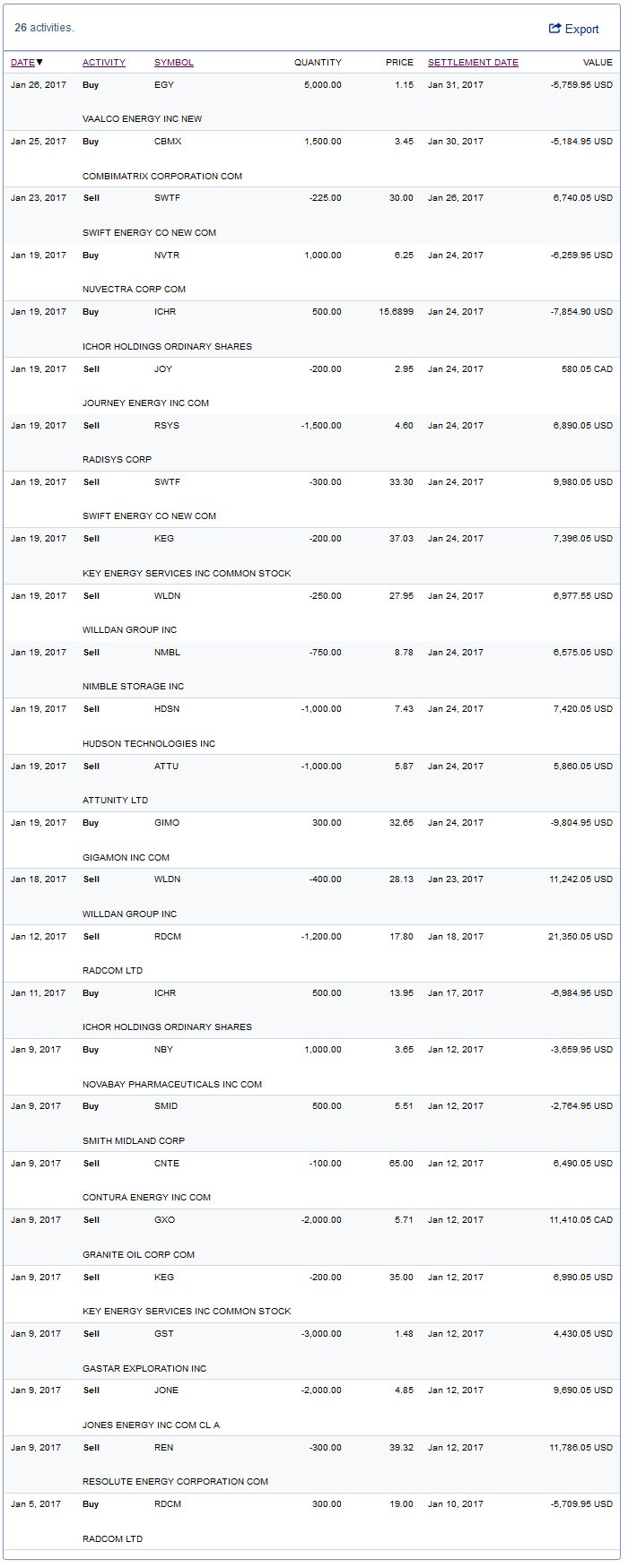
I sold a number of energy positions: Jones Energy, Resolute Energy, Gastar, Granite Oil and Key Energy Services.  I didn’t time these sales particularly well, as many of these names have rallied further after I sold.

You might ask why I sold Key Energy Services so soon after buying them?   Partly it was logistics; in the account I track with the practice portfolio I wanted to raise cash and so I had to look for names to sell.

Second, it had appreciated 20% from my original price and, in light of my first reason, seemed like an easy gain.  Energy services is a tough business and so this isn’t a stock I wanted to hold for a long run.  Nothing has changed with the company though, and in my actual account I still hold my warrants, which give me exposure to upside in the stock.

I also sold Contura Energy.  I did more research on the met and thermal coal market and I concluded it was more likely that coal prices would decline than increase.  In particular, much of the increase seemed to be because of closures in China that could just as easily be reopened and there was evidence that was already happening.  I’ve been in and out of the coal market since 2006, I know how volatile it can be (especially met) and I also have experienced that when the coal price is declining it doesn’t necessarily matter how cheap the company appears, the stocks will follow the price of the commodity.  Maybe that won’t happen in this case, maybe Contura is “cheap enough”.  But I couldn’t ignore the precedents I had seen.

Even with these changes I still don’t have enough cash in the practice portfolio.  I’m running about 20% cash in my regular portfolio and am a little less than flat with the online account.

As for my remaining positions…

I still have reasonably big positions in Radcom and Radisys, but along with many other stocks I reduced these positions as well.  I am balancing my expectation that the first and second quarter results from each of these names will likely be modest with the awareness that positive news in terms of new contracts could happen at any time will send each stock much higher.  However I did decide to add a little Radcom back on Monday, which is not reflected in the update.

I also reduced Willdan.  Its just gone up so much.  I took some off at $27 and $29, which turned out to be a little early as the stock briefly hit $31.  I don’t plan to sell any more; I still really like where the company operates (energy efficiency), they should see some benefit from infrastructure plans, have the ability to pull together cheap accretive acquisitions and will also benefit from changes to the tax code (their tax rate has typically been above 40%).

Finally I reduced my positions in Attunity, Hudson Technologies and Nimble Storage.  I’m not completely confident that the results for these companies in the next quarter are going to be stellar.  I prefer to wait to see the results an add back depending on the reports.

And a few new positions…

I took five new positions in the last month.  I wrote up two of them, Ichor Holdings and Nuvectra.

I tweeted that I took a position in Vaalco Energy (hat tip to @teamonfuego)

And I tweeted that I took a position in Combimatrix:

I have a write-up in the works about Combimatrix and have plans for one on Vaalco after that.

The last position that I took was in Gigamon.  I have written in the past that I been waiting for this stock to correct and continually regretted not buying it when it was lower.   The company announced poor numbers for the fourth quarter and the stock took a massive beating.  I was happy to step in.  The stock could go lower but I am not convinced that their announced portends a trend so I wanted to get at least started with a position here.  If the stock dipped into the $20’s, I would double down.

Last Thought

I’m very edgy about Trump and his economic agenda.   Given the role that Steve Bannon has taken on, its worthwhile to read and listen to what he has said.  I might do a more detailed write-up on this in the future, but for now consider this speech.    Bannon’s ideas remind me of what you hear from gold bugs and all those economic podcasts that portend the financial end of the world.    He talks about the contingent liabilities, the trade deficit with China, its all those things you hear from the newsletter writer/economic podcast cohort.  Some of what he is saying has merit, but if he is going to attack what he sees wrong I don’t know if this plays out well.

Portfolio Composition

Click here for the last four weeks of trades.

week-290