Skip to content

This Market Creeps Me Out

I remember something my uncle said a couple of Christmases ago that turned out to be very astute.  It was 2018 and the market was crashing.  We were talking about the carnage on Christmas Day. I was doing my usual “I don’t have a clue what’s going on” routine.  He pointed out one positive was that when it got to be January 1st the passive re-balancing funds (funds that adjust the allocation of stocks and bonds every quarter) were going to buy stocks to get their weightings back up. 

At the time, I didn’t really clue in to how important this was.  But I am wrapping my head around it now.  I’ve read all these Mike Green pieces and listened to his past interviews (he’s on RealVision a lot). His themes are mostly centered around passive investing (which re-balancing funds are a part of) and to a lessor extent vol strategies and carry (which I wrote about last post).  With respect to passive investing, consider the following:

  • Passive investing is 40%+ of the market now
  • Passive investing is 100%+ of flows – in other words it represents more than 100% of the new money coming into the market (this is because millennials are almost entirely passive investors

You add carry strategies on top of this (some of which are probably already included in that 40% bucket but others are not) and you can start to paint a picture of what is happening in the market.

Consider that there is no decision making process in passive investing.  There is no analysis of valuation, of the future prospects of a business or the economy. As Mike Green points out, the basic rule of these funds is: if new money comes in, buy.

Now add to that the impact of the carry trades (short volatility and others) that I have alluded to in my last post. These strategies aren’t driven by a value assessment of the market either (at least not in a fundamental way).

Carry trades are more like side-bets. They add liquidity and momentum, but they don’t assess value. All they really care about is that their return is there. They just want to clip the coupon.

Add it up and you can imagine how, as these strategies take on more weight, that more of the market becomes driven by forces that simply do not care about reality.

To think about the impact consider this thought experiment that Mike Green makes: assume 100% of the market is passively invested. Now $1 of new money comes into the market.  What happens to the market?  It hits an asymptote – there is no seller.   Passive funds don’t sell because of valuation.  The market keeps going up and there is still no seller, unless someone pulls their money out.  The opposite applies as well.

Obviously this isn’t realistic but it illustrates the general point of what happens as these factors gain influence.

It’s crazy.  But I think it helps explain why some of the market seems to be divorced from what might makes sense right now.  And maybe why the market as a whole doesn’t really make sense right now (though as I’ve written about before, I’m not totally sold on that).

For me, I don’t have to map this out 100%. It doesn’t matter if such-and-such nuance is flawed or so-and-so nuance hasn’t been considered. All that matters for my market decisions is to weight the potential that the above assessment is right, and let that weighting influence my buying and selling decisions.

I am definitely putting some weight on the idea. I think that over time this dynamic means higher prices than what we would otherwise have. I think it means momentum continues to do better (though right now, I mean my goodness!). And I think volatility is going to be higher than you’d expect, maybe even as stocks do well.

What it means practically is that I have to take a little off my hedges. Which I did on Friday. But I also took off my longs as well. I just lowered exposure.

Now, you might point out that if I really believed the above, the right thing to do would be to just say F-it, add to longs, dump the index shorts. Stocks only go up right?

But, I am reluctant to do that. I am weighing the option against something else I suspect is going to happen: that while the market may have the inclination to move higher, it will also become more volatile. So I have to be careful about becoming stretched, regardless of what I might believe the eventual direction to be. That 7% correction we had a few weeks ago makes perfect sense in this environment. It might portend to the future – these kind of extremely sharp but short-lived corrections could become the norm. I need to be careful about my exposure to that.

There is weird stuff going on:

Maybe the better way of explaining why I am reducing exposure is simply: this market creeps me out. Like I feel really, really uneasy about it – and not because I think a crash is imminent – it more just feels like the wheels are coming off. I said a couple months ago I could see 4,000 or 2,000 on the S&P. That feeling is as strong as ever right now.

Week 471: Siding with Carry

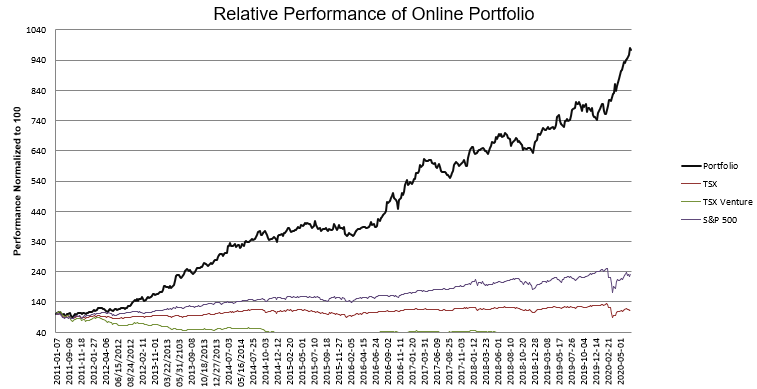
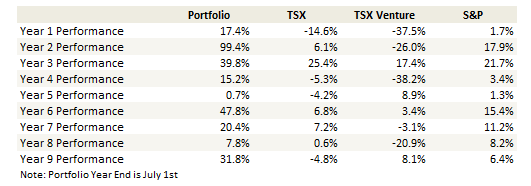
Portfolio Performance

Thoughts and Review

I finished reading the book The Rise of Carry.  It was recommended in a comment a couple of weeks ago.  I thought it was a really good book.  It made sense of some things that were already floating around in my head and that I’ve written about lately but where there were details and mechanics that I didn’t really understand.  I’m actually reading the book for a second time right now because there is still a lot of it that I’m fuzzy on, but I’m going to write about what it has made clear to me.

The book’s big picture idea is really simple.   The authors believe that markets are now being driven by carry trades, that this is the main mover of financial markets (more so than the economy) and that one carry trade in particular, the S&P volatility carry trade, has become so ubiquitous that it is driving all markets together.

So what are carry trades?  Carry trades are financial transactions that make money when nothing happens.  The authors describe them as the financial equivalent of selling insurance.  They are usually leveraged.   They add liquidity to the market.  They tend to follow a pattern of long periods of stable returns followed by sharp, sudden draw downs.

Another way of saying this is to say that carry trades sell volatility.  Volatility is a measure of how much a market goes up and down.  How volatile it is.  “Selling volatility” means that you are making a bet that the market won’t change by very much, or at least that changes will be gradual.

The pattern of these trades follow the patterns we are seeing more and more in markets.  Long periods where basically nothing happens (stocks go up slowly), followed by sharp collapses like what happened at the end of 2018 or what happened in February and March of this year.

The argument made by the authors is that these patterns are being caused not by economic considerations (the market isn’t going up and down on hopes of an economic boom or fear of a recession)

Carry trades are a natural part of the financial market.  Most of the time they act as a way to help capital get allocated to where it is needed.  What makes the current period unique is that central banks have greased the wheels of carry-trades.   The unlimited liquidity that they have provided has created a “put” (a put is something that limits losses if markets start to fall) that has allowed the carry trade to morph into something with a much larger influence on markets and the economy than has ever been the case in the past.

Carry trades started out as a currency phenomenon – in the 1990s and early 2000s most carry trades centered around currencies.  They took advantage of interest rates spreads between countries to sell one currency (usually the yen or dollar), to buy another (such as the currency of Australia or an emerging market).  They would then use that currency to buy high yielding debt instruments from that country.

More recently carry trades have moved into the stock market.  This change occurred after the Great Financial Crisis of 2008. Today the biggest carry trade out there is to short volatility on the S&P.

Through the book they argue, and use data to back it up, that carry trades – ie. selling volatility and specifically selling S&P volatility, as a source of leverage – has become the driving force of markets.  Its influence has gotten to a point where carry-trade induced draw downs of the stock market drive economic events, rather than vice versa.

This is a really important conclusion.  If its true, then everything we know about why markets go up and down is wrong.  It explains why the markets seem to be indifferent to what is actually going on in the economy right now.

If the view is true markets will follow a typical carry-trade like pattern: we are likely to have long periods of slowly rising markets followed by steep, short squeeze induced, crashes.

We just saw one of those crashes.  The book makes clear that every crash must be followed up by a doubling down on the “put” by central banks. If not, the entire carry-trade centric regime risks deflating for good (the consequences of this would not be good for anyone).  In this crash, like all the others in the last 25 years, central banks rose to the occasion, once again came to the rescue, supplying massive liquidity to get the carry-trade back on its feet.

Another important point relevant to the present moment is that the central banks just doubled down again.  It seems unlikely to me that we will have another crash so soon after this.  The carry trade bubble needs to inflate again, and then, once liquidity is tapered off, another crash will come.

Each successive reflation of the carry-trade makes it bigger.  The authors describe it to be analogous to a Ponzi scheme.  Each time a Ponzi scheme is on the verge of collapse, it must get even bigger if it is going to survive (it needs enough new capital to pay out the existing holders).  The carry-trade regime that we are in has many similarities to a Ponzi scheme and this is one of them.

A lot of what the book says is what I have already suspected but haven’t had the tools to put my finger on.  It is very worthwhile to read for that reason.  It reinforces my thought from the last couple of posts – that A. Portnoy is right and B. you don’t want to try to short this market.  It also reinforces my resolve that at some point this will not end well.

We may be at ridiculous valuations and speculation may be rampant, but given that the carry-trade is back in full swing – ie. that central banks have provided the liquidity to give it another lap around the track – I’m not sure if the market can fall far from here.  We could get another 10% drop like we saw a few weeks ago, but if the authors are right (and what they are saying feels right to me) that dip would be bought.  Until there is a liquidity event that will “shock” the S&P volatility carry-trade (and to be clear, I am saying a liquidity event, not an economic event or even, I suspect, a rising hospitalizations event), it is all systems go for the market – economy be damned.

My gut tells me that the smart decision would be to lighten up on shorts and let the longs ride. That would be the path to greatest returns.  What I’ve read in this book only enhances that intuition.  Like I said in my last post – I suspect that Portney is right – stocks really should only go up right now.  And not because of the economy, not because of valuation and not because it makes any kind of historical sense, but simply because the carry trade is alive and well again, that volatility selling is self-reinforcing until it is not, and that all this engenders a rising S&P, which floats all boats.

So that is what I probably should do.  If this was 2011 and I was where I was then, I probably would do that.  But I’m in a little different spot now.  I’m more willing to let some gains get away in return for a little less stress and a little more piece of mind.

I have to follow my process.  So while I may lighten up on my index shorts on the next correction, relying on my suspicion that we can’t fall too far with the central bank put in place (which, after reading this book, is truly aptly named), I’m not going to go all in.

If my gut is right this will mean that I will continue to lose money on the index shorts and that will be a headwind to my performance. That puts more pressure on my stock picking, which is fine.  My shorts are my own put on the put.  The book points out in its somewhat depressing conclusion that the eventual conclusion to all of this is not all that rosy.  It is likely that each successive resurrection of the S&P carry trade will lead to successively larger collapses until eventually the whole system is put into question – ie. that we question the legitimacy of the central bank put itself.

We are probably a long way from that point, but I will sleep better knowing that I have my own put against it anyway, even if it comes at the cost of some return.

In the mean time, what this means is that the Robinhooders are probably right.  There is no sense in looking for value, deep analysis of businesses or weighing the economy as elements in stock selection.  Or at least, those considerations are secondary to the question that really matters – what is most likely to go up?

That statement may sound superfluous at first glance, but I don’t think it is.  What it is saying is that instead of picking a stock that might seem undervalued and waiting for the market to see that value, you are better off (in this market) to look for the stocks that others are likely to buy, before they buy them, and don’t pay too much attention to what it “should” be worth.

I suspect that this may be exaggerated even more than it might have been because of the unique environment caused by the pandemic.  Like I wrote about in my post about the bi-furcated economy, some indsutries are basically knee-capped by the pandemic, which means that even more money must flow into the sectors that remain viable.

I am trying to take advantage of this idea with a few small purchases.  I don’t have the stomach or the tools to gear my portfolio to this on a larger scale, but I’ll wade in where I can.  I stepped into this a little with a purchase of Graf Industrial a couple of weeks ago.

I actually bought the stock for totally the wrong reason.  I liked the potential acquisition of a plastics recycling technology firm that they said they were going to buy.  While not named in the press release, seemed almost assured to be a company called PureCycle.  PureCycle has a very cool technology that lets you turn a plastic container back into virgin resin.  This allows you to take a #5 yogurt container and recycle it into another #5 yogurt container.  In the world of plastic recycling this is a real game changer.

Like all SPACs I did not know what Graf was paying for PureCycle, nor did I know anything about PureCycle’s financials apart from a few tidbits I could gleen from their website.  But, as the previously mentioned axiom implies, who cares!  It is not the valuation but the likelihood that it will go up that matters right now.

Of course what ended up happening is that instead of buying PureCycle Graf decided to buy Velodyne LiDAR.   LiDAR is autonomous driving and next-gen driving technology is even hipper than recycling right now.  The stock shot up.

I wasn’t smart enough to hold on for the entire ride, but I caught a few points before I sold out.  Ironically, I sold way too soon (at around $15-$16 instead of $20+) because (in my opinion) I knew too much.  I have followed Foresight Autonomous for a while, and while the technology is different and the applications not entirely the same, there was enough overlap, and I’ve seen Foresight struggle for long enough, that I was skeptical of the eventual ability of the business to generate growth.

It is only in a market like this where experience, and therefore skepticism, is a handicap.

I have 3 other plays that I would characterize as being along the say line as Graf Industrial.  I’m not sure what the right word is for these ideas, momentum or greater fool or just stocks that I think have a good chance of going up regardless of whether I think they should or not.

The first is AYRO, which was a Rev Shark stock of the week pick on Sunday.  I looked at the stock on Monday and at first I wasn’t very interested. It popped hard on Monday morning, maybe because of the Rev Shark recommendation but more likely because of news that they had completed a factory expansion which, from what I could tell, was just a recycling of what was already in their filings.

But after the company announced a registered direct offering for $4.75, I changed my tune.

There is a lot I don’t like about this stock – again these are trades to try to take advantage of the market we seem to be in, not investments where I have confidence they can stand on their own merit.  AYRO produces low-speed vehicles – these are kind of like golf carts with flat beds, pickups or boxes.   They only do the final assembly – there is a Chinese company that manufactures and holds patents on the products.  AYRO only has rights for sale in the US and Canada.  They sell their vehicles through another third party – Club Cart, which is the golf cart maker owned by Ingersoll Rand.  I have to wonder – why doesn’t Ingersoll Rand just build their own?

But who cares.  My thesis here is simple.  Someone was willing to do a deal at $4.75 yesterday for $15 million.  This comes two weeks after a deal was done at $2.50 for $5 million.  Something doesn’t add up about that unless whoever did the deal yesterday believed they needed to be in the stock regardless of what they paid.

I have no idea why they would pay so much.  The only thing I have been able to dig up is that Ingersoll Rand Industrial was bought by a company called Gardner Denver and the Club Cart business does not really fit with the rest of the portfolio (which is indutrial valves and compression fluids and such).  Barclays said a couple of months ago that they think Club Cart is going to be divested.  This is something, but I’m not sure what, and the links to any positive move in AYRO are tenuous I admit.  But AYRO has a market cap of $85 million or so – in the land of EV’s where no valuation is too high right now, this is a pretty low base to start from.

My second purchase was Envision Solar.  This is a stock that @IPHawk has been talking about on twitter for a while.  Envision makes solar powered electrical charging stations.  The thesis here shares a few traits with AYRO – first, the market capitalization of Envision Solar is $70 million – so there is plenty of room to run on speculation.  Second, like Ayro, Envision raised a bunch of money ($10 million) and the stock went higher after it did.  Third – its EV’s and solar. In this market, that’s enough for me.

My third purchase is a bit of a different take on things.  I bought YRC Worldwide.  I realize the company is pretty dismal, and that the trucking industry is not exactly one of those pandemic-proof businesses that I have tried to steer myself to, but on the other hand YRCW just got $700 million of low-interest debt.  Apart from their pension liabilities, this is basically 100% of their existing outstanding debt.  That doesn’t mean that they will pay back their debt with this debt or anything like that, but it gives them a whole lot of runway to do something.  Anything.  Another restructuring, buy some new trucks, maybe add technology to improve efficiencies.  Will they be successful?  Probably not.  Will the stock go to $5 before that turns out to be the case?  In this market, and given that the market capitalization is only around $100 million, I think that is a reasonable possibility.

I talked about most of my other stocks in my last post so I won’t go through those details again.   I sold Overstock yesterday, which looks to have been a mistake, seeing that the stock is up another 15% today.  I also bought a bunch more Slack Technologies, which may see another pop if the virus escalation continues (this is part of my thesis that stocks will go up and that the money chasing them will have to go into companies like Slack that are doing well, regardless of their valuation).   The only other names I considered mentioning here were the small basket of biotechs that I have been holding.  These have done pretty well on whole, but yesterday I was whacked very hard by the Phase 2 results from Obseva – the stock fell 50% and today it is falling again.   Anyway, this tempers my enthusiasm because, and I have said this before with respect to biotechs, what the hell do I know?  Not much.

Portfolio Composition

Click here, here and here for the last nine weeks of trades.

Still Buying, But Not Really Buying It

After 3 months of seemingly constant portfolio churn – rotating from shorts to gold to mortgage REITs to SaaS to banks at break-neck speed, in the last couple weeks my portfolio has had a period of relative calm.

The themes have been the same.

  1. Own gold stocks
  2. Own work from home/stay at home SaaS names
  3. Sprinkle in community banks with management teams you trust that will recover eventually
  4. As always – look for special situations that appear mispriced

If there is a change, it is that I am creeping more to the short side.  Not truly short, like I was in February, but I have moved from my early June “not too far net long” description to “pretty much flat” today.

This is, as always, with gold being the wild card.  I had a great day on Friday with the market down, and most of that was due to the gold stocks.

So why am I positioned cautiously?  The same reasons that I described a few weeks ago.  They can be summarized by – I don’t really believe it.  On a few levels.

But there is one huge reason that I am not willing to replay my February playbook and go truly short here – the Fed.

I’ll describe these thoughts in more detail at the end (of what is a very long post, I apologize in advance).  But first, the interesting stuff: the stocks.

Stay at Home/SaaS

I pride myself on having the only blog in existence that talks about gold stocks and SaaS names in the same post (tell me if I’m wrong about this).  I’ll start with SaaS and then to gold.

My SaaS portfolio has seen some churn as I continue to try to figure out the sector.  There will likely be more churn to come, but here is where I am at now.

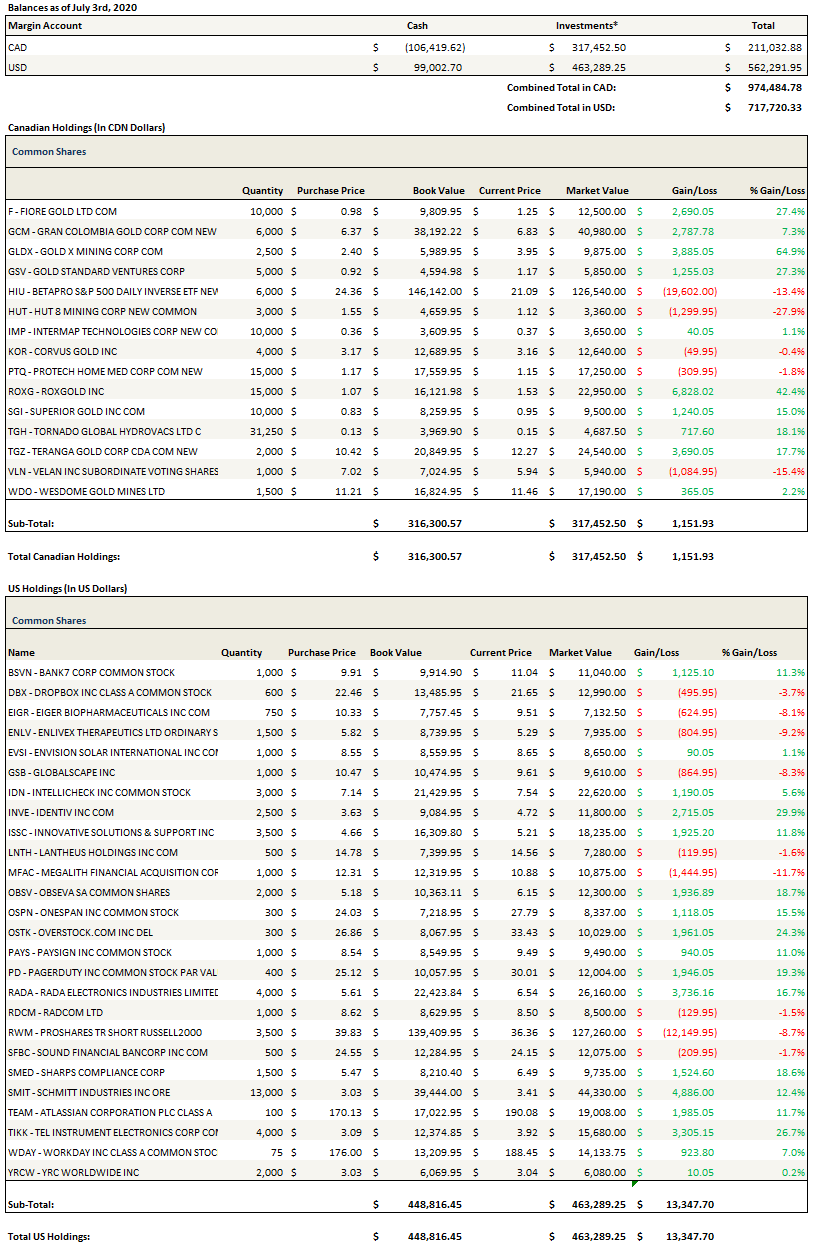
The four large cap names that I own are Atlassian, Workday, Slack and Dropbox.  Of the four, Slack is a very small position (because it is so expensive and they don’t generate free cash), while the other three are about the same size.

I have to say though, I’m not convinced about Dropbox.  Its more of a “value” SaaS play, if there is such a thing.   It doesn’t seem to have the growth outlook that other SaaS names have, and I don’t totally understand how it competes against Microsoft and Google in the long-run.  So it would probably be the first name that I drop in a pinch.

The smaller names I own are more interesting to write about.  I have bought Onespan, PagerDuty and Intellicheck.

Intellicheck has become one of my largest positions.  Honestly, it seems like a no-brainer to me, even after this pop to the mid-$7s.

Intellicheck offers an identity theft/fraud detection platform to banks, which then provide the platform to their retail customers.  It seems like a great customer acquisition model – they sign up banks and for every one they sign up that bank does the legwork to onboard a bunch of their customers.

Last week Intellicheck announced that they had signed up their eleventh bank.  As @RodiGo_ethe dug up, this is likely KeyBank.

Even in this environment, the customer adds seem to be snow-balling for Intellicheck.   They signed up Bank #8 at the beginning of the year, #9 and #10 somewhere in the March to May timeframe, and now #11 here in June.

So 4 banks on a base of 7 in 6 months?  Seems pretty strong…

I could spend a whole post going through each bank.  I’ve spent hours pouring over their conference calls and separating out the comments for Bank #1, #2, #3 and so on.  Maybe I’ll put out a detailed write-up at some point, but for now here’s the Coles notes: they sign up a bank, it stumbles a bit out of the gate getting ramped, then it brings on a few retail clients, then a few more, then a few more, and so on and so on.

It is the ultimate land and expand strategy, but with the banks doing the heavy lifting.

But here’s why this seems like a no-brainer to me. First, this is the year-over-year growth the last 5 quarters:
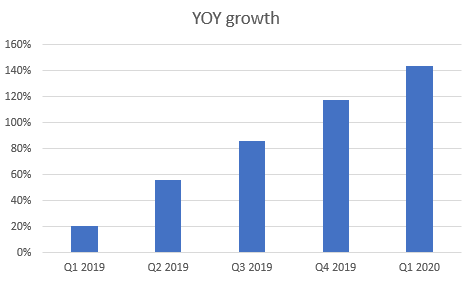
Second, at the price I have been buying it at, which is a little above the recent private placement price of $6.50, Intellicheck trades at ~11x EV/Sales.

In a world where 30-ish% SaaS growers trade at 25x sales or more, this seems mis-priced.  Here we have a company with way higher (and accelerating!) growth, a large runway, a great land-and-expand customer acquisition model and they are free-cash-flow positive (before working capital changes).

I mean quite honestly, the stars are well aligned here.

The only pitfall is that this is a retail driven business.  And retail is not in a good place.  To make matters worse, Intellicheck gets paid on a per-use basis. So even though it is SaaS, this is not a COVID friendly business model.  Intellicheck will gain from e-commerce, but will likely be hurt more by bricks and mortar.

But that’s okay.  It’s a bit like Schmitt and the ice cream business.  A tough go for a while but this too will pass.  I think Intellicheck will be extremely well positioned once we get through this pandemic.

OneSpan is another platform provider to banks.

I don’t know what it is about banks, but I am exceedingly comfortable owning banking related businesses. I like owning community banks, I like owning providers to banks – it just gives me a warm fuzzy feeling to know that the business is tied to banking.  I have no explanation.

OneSpan is not a pure SaaS play.  They are one of these hardware providers turned SaaS providers through acquisitions.  Like Intellicheck, they are in the identity-based security business.

On the hardware side OneSpan sells authenticators, which seems like the sort of thing that will go the way of the dodo (and appears to be doing so).

But on the software side they sell a Trusted Identity platform – consisting of a web-authentication product (basically the verify who you are when you log into your bank and such), an e-signature product and an agreement automation product.
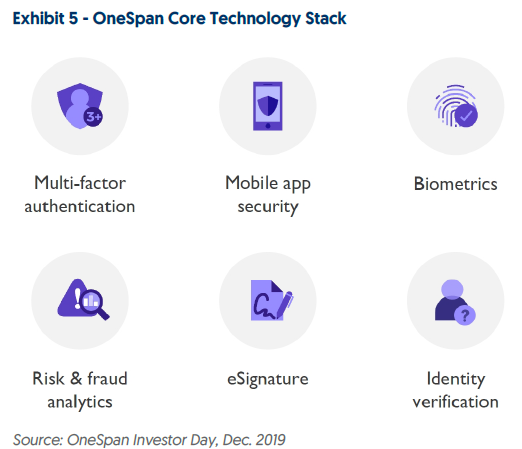
The key here is that these are products designed specifically for banks.  So they aren’t really competing against Docusign for e-signature or Okta for security.

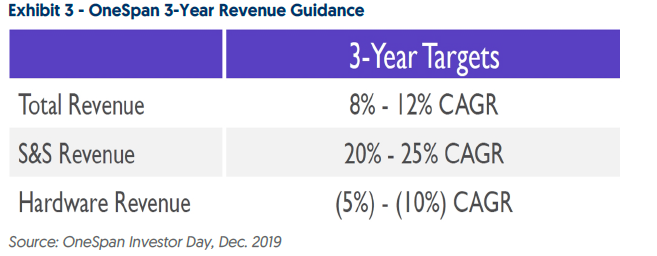
The software/SaaS business is breakeven right now, while the declining hardware business is a cash cow.  The SaaS business is expected to grow 20%+ for the next few years while hardware declines:
When I was buying the stock, at $22 or so, it was trading at ~3x sales.  Now it is a little under 4x.  I’m not sure how much longer I will hold it if it keeps going up.  At some point here I might be inclined to sell.

OneSpan reminds me a bit of Vonage.  They are taking a declining hardware business and trying to lever it into a software platform by acquisition.  The one (important) difference here is that OneSpan is probably more like a leader in the space while Vonage is always playing catch up to Twilio, RingCentral and the like.

But I do suspect that banks, which are probably some of the slowest adopters of the online movement, are going to be playing a lot of catch-up here.  And I think OneSpan could put up some very good numbers as they do.

Gold Stocks

My list of gold stocks is long.  There are four familiar names: Roxgold, Wesdome, Gran Colombia and Fiore Gold.  To that I added two new names relatively recently: Teranga Gold and Superior Gold.

I mentioned Teranga in my last update.  They have mines in Burkina Faso and Senegal.  When I bought them they were trading at ~7x cash flow.

Teranga has plenty of room to grow through its Massawa mine (in Senegal), which they acquired from Barrick earlier this year.  This was one of those acquisitions that is truly strategic – Teranga already owned a mine next door (called Sabodala) and by combining the two they can realize economies of scale including much higher throughput.

Teranga said that Massawa will add around 100koz to their production next year – which is about 30% growth.  Even at $12 I’m inclined to hold on, especially given the gold market we are in.

Superior Gold is a name I have talked about in the past and that was brought to my attention again by @BrownMarubozu.  Unlike Teranga, which is a clean, growth story, Superior is more of a “dumpster dive” situation that I seem to tend towards (and often learn to hate).

The first thing Superior has going for it is that it is cheap:
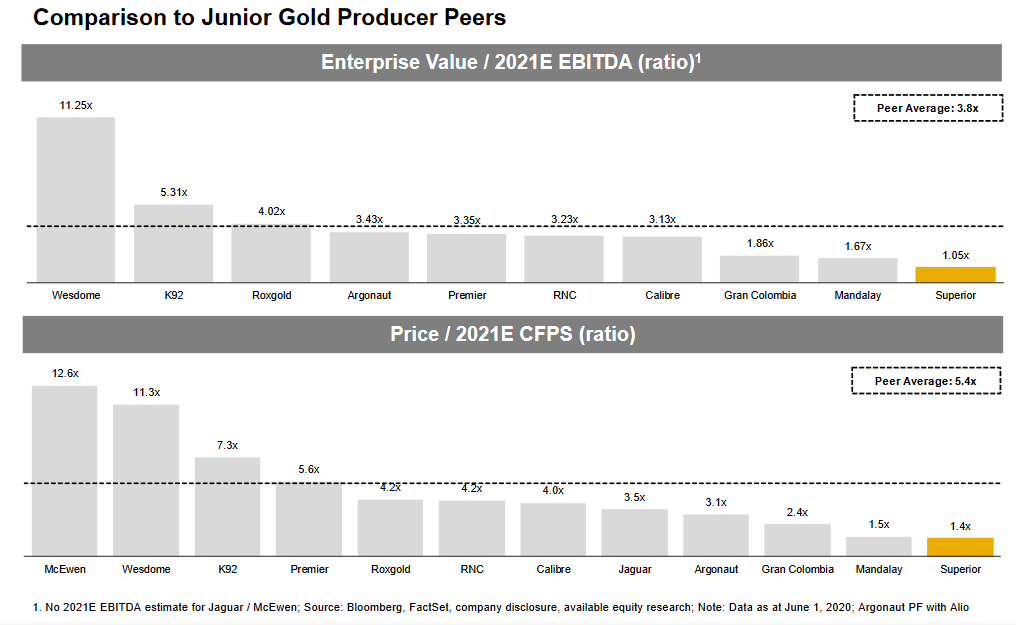
Superior’s single mine asset is the Plutonic mine in Australia.  This is an underground mine that has been around for a long time.

It is not too often that you can sum up the reason why a stock is cheap in a single chart but in this case you kinda can.  While the chart below is a bit old (because Superior stopped including it in their slides, probably realizing that after a while, it is just embarrassing), it illustrates the issue perfectly:

The story is simple – fill the mill with higher grade ore.

Its actually even worse than the chart suggests as Superior is mixing in even lower grade ore from its open-pit sister deposit, Hermes, right now.

If they can find the ore, Superior could be a real winner.  They actually have a second mill nearby, currently on care-and-maintenance, that could add more production – if they could fill it.

What has me interested in the story again is that Superior is finding more ore.   Recent drill results (here and here) are in addition to extensions at other parts of the mine (Indian Northwest and Baltic).

The aggressive drilling and its success means there is the chance they hit on a really nice find – and if that happens, given the unused capacity, the stock will fly.

On the developer side, I continue to go with a basket approach: owning Gold Standard Ventures, Corvus Gold, and recently adding Gold X Mining, with which I replaced Probe Mining.

I bought Gold X on kind of an ill-fated idea that seems to have lucked out for different reasons.  It was ill-fated, because I bought it when Gran Colombia announced their proposed acquisition of both Gold X and Guyana Goldfields.

That acquisition made sense to me – I mean Guyana has a mill that they have never been able to fill with ore while Gold X is a nearby gold deposit.

At the time, Gold X was trading at a discount to Gran Colombia, so why buy Gran Colombia when you could buy equivalent shares of Gold X on the cheap?

Well, that turned out to be a dumb idea.  The acquisition failed, Guyana went to some Chinese bidder for way higher than Gran Colombia was willing to pay, and I was stuck with the Gold X shares.

I didn’t sell those shares because, even though the bid from Gran Colombia failed, the combination of Gold X and Guyana still makes sense.  This Chinese bidder that was so willing to pay top dollar for Guyana – which is basically a disaster of a mine – well you’d think they’d be able to step up and buy Gold X at what would be a cheap price (the stock comps well to other projects) and put the two mines together.  I guess we’ll see.

Stocks with no Theme

I could call these special situations but really, they are just stocks that do not fit into a particular theme.  There are a few new ones that I have found:  Protech Home Medical, Intermap Technologies, Globalscape, and Lantheus.

This is in addition to the list of existing ones that I have owned for a while: Identiv, Innovative Solutions, Overstock, Rada Electronics, Schmitt, Tel-Instrument Electronics, Tornado Hydrovacs and Velan.

Of these new names, the most ridiculous, most speculative, and therefore most interesting (to write about) is Intermap.

I preface this discussion by saying that the stocks I write about are not always the ones that I have the most conviction in, or the biggest positions in.  It is often quite the opposite – the stocks that are most fun to write about are the one’s that are completely speculative flyers.

Intermap fits that bill.  Here is the crazy deal.   On the third of June Intermap announced that they had agreed to settle all of their outstanding Vertex notes (which are now owned by an entity called Pender Funds) for $1 million.

What is crazy about that transaction is this:

Under the terms of the Settlement, all of the outstanding Notes totalling US$33.9 million shall be settled for US$1 million in cash. Upon the delivery of a US$1m cash payment, Vertex/Pender shall release liens, extinguish the Notes, and the parties shall provide for a general release from all claims associated with the Vertex financings.

Wait, what?

In all honesty, it does not make any sense.  Its like going into bankruptcy and having the debt holders wiped out while the equity remains fully intact.

I’ve been intending to call the company but things keep coming up.  I’ll try to find the time next week.  Because I need some sort of explanation.

As far as I can tell, Pender doesn’t even own any shares anymore (they sold what they had last year).  So its not like they are wiping out their debt because the see that they have more to gain from the equity position.  There is no logic to this that makes any sense.

Unless Pender is a benevolent fund, there just has to be more to it.

At the same time as the debt announcement, Intermap announced that they signed a new deal with the NOAA with a potential $40 million of revenue over 5 years and they signed a SaaS agreement for NEXTMap One terrain data with the State of California.

So why would Pender just walk away?  Its bizarre.

I took a very, very small position on the off chance that this is actually a real deal, and I am at peace with the likely probability that my position goes right back to 10c.  Because it is hard to believe that the deal is real.  But it certainly makes for an interesting story to write about.

Protech Medical and Lantheus are pretty straightforward stories.  Protech is quite cheap, even though it has moved up from where I bought it at ~$1.  It trades at under 9x trailing free-cash-flow.  It is growing EBITDA.  And the pandemic is actually a tailwind to the business, which supplies oxygen supplies and ventilator equipment, among other things.
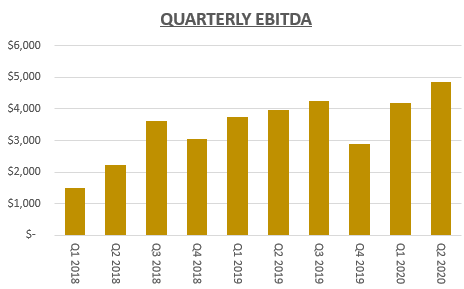
Lantheus I’m less sure about.  Again, this is a business trading at a nice FCF multiple – I calculate about 9x based on last years numbers.  There is some debt here and growth is pretty “meh” apart from acquisitions.  The biggest problem is that the business centers around diagnostic medical imaging agents, which means it is tied to hospital admittance, which puts it at odds with a second wave of the pandemic.  I already sold CRH Medical because I was uncomfortable with their exposure to a second wave, and so I’m pretty waffley on Lantheus for the same reason.

GlobalScape is a new name that I just bought.  I was going through the list of additions to the Russell and I found it.  I’ll write about it more later.

Why I Remain Cautious

As I said at the beginning of the post, I remain skeptical as to how much further stocks can go primarily on two accounts.  These two considerations keep me cautious, while one other consideration: the Fed and global Central Banks, keeps me from going short.

First, I have a hard time believing that this time is different.  That Robinhood retail investors represent a new class of long-term successful investors.  Or to say this another way: I don’t believe that stocks only go up.

Every time we have had large retail investor enthusiasm it has ended poorly.  Being a retail investor myself, I’d love to believe it is different this time.  But I have to ask quite honestly – is there a historical precedent for retail investors leading a new bull market?

Portnoy is observant with his catch phrase, but it is really quite ironic.  Because the concept that stocks only go up is truly the premise of all these episodes of enthusiasm.

At some point there will be a bear market and that premise will fail.

Are we there yet?  Eh, who knows.  But man, when I listen to a PlanetMoney podcasts interviewing a government employee that has made 7x her money in 2 weeks day trading bankrupt Hertz stock in her Robinhood account… well, that sort of stuff makes me uncomfortable.

But all this has already been said by others and I have no axe to grind.  After all, I’m retail, and these are my folks.  My only somewhat original thought is what I debated on twitter on Friday.  This is somewhat off-topic so feel free to skip ahead.

The argument I took contention with went something like this: The Robinhood movement is an attack on the fee-based performance industry.  This industry perpetually under-performs but still takes exorbitant fees – it is ripe for disruption and this is that disruption.

I don’t disagree with much of that statement.  But my response is this:  While I’d love to believe a disruption is upon us, I think there is an important nuance, and that is this: managing your own money through the cycle takes a large mental toll, particularly when the cycle turns south.  And I am skeptical that any more than a small fraction of people have the mental makeup (and maybe the stubbornness) to manage their own money in the face of that.

With that in mind I hypothesize that the fees you pay are not only for performance.  They are also paid in return for the service of not being directly tied to the outcome on a daily basis and for having someone to blame (other then yourself) when things inevitably go south.

The success of the Robinhood movement depends not on the performance (or lack there of) of the fee-based industry, but on the ability of individual investors to deal with the stress of making decisions for themselves throughout the cycle.

IMO that’s the deciding factor of whether the movement succeeds or fails.  And why I am skeptical that the movement lives through the next bear market.

So while I will try to opportunistically “catch the wave” of Robinhood stocks where I can (though I can’t bring myself to buy Hertz), I think the movement is doomed in the long run.

My second point.   As I wrote about a few weeks ago, is that I don’t believe that this pandemic is over.

I still feel like it is a false narrative that the government proactively shut us down.   It seems to me that the truth is more like the government moved re-actively (like it always does) to do what everyone was already about to do anyway.

That differentiation in narrative is relevant now because we may be on the verge of a second wave of hospital overruns.  In a few weeks there could be some cities without enough hospital beds.

In February, when investors did not have this virus on their radar, when they were still running the stock market up to new highs and I was shaking my head in disbelief, I said a shutdown seemed like the inevitable consequence of the dilemma we were in.  Dilemma being the operative word.

Dilemma is a choice between bad options.  While in retrospect we may frame the road not taken as a “good” option, that is only because we didn’t take it.  There was no good option.

Without a shutdown I believe hospital beds would have filled up in a number of cities and then, as a consequence (and not because the government told them to) people would have stopped doing things anyway.

If you know there are literally no hospitals beds available, you think twice before getting in your car for a long drive (the off-chance of a car accident), or going for a hike (what if you fall and break a leg).  And of course, the big one being – if you go out to a restaurant, bar, the beach, even to get groceries and get the virus, there may be no bed for you.

We take for granted how important having the medical system as a backstop is.  Our whole system depends on the knowledge that if something happens to you, the medical system can help you deal with it.  Without that backstop everyone becomes more cautious and some become much more cautious.  So the economy tanks.

The virus skeptics I read are saying the following – what we are seeing right now is partly just increased testing, it is partly just young people, and the beds that are filling up will be vacated quickly.  In the mean time the virus is simply “burning itself out”.  So in their interpretation, there is really nothing to worry about.

Maybe they are right?  But that seems like a big gambit to me, at least to put a significant bet on with the S&P at 3,000+.

Again, this isn’t about deaths rising or what the actual death rate is or any of the other stuff that I see.  Its about one thing – hospitals filling up and what happens when they do.  And it won’t matter if its filled with young people or middle-aged people or old people.  A filled hospital bed is a filled hospital bed.

I don’t know how this plays out.  But it certainly seems like it may be replay of what happened in February.  This is a virus.  It follows a pretty knowable trajectory once that trajectory starts.  The skeptics are basically saying – yes there is a trajectory, but this time it is different.  I hope it is, but I’m not willing to make an actual bet on that.

But as far as the market goes, that is just part of the story.  The call is way more complex now than it was in February, and I’m way less sure of what that call is.  I am simply not sure about how far the market can fall.

Consider that A. the Fed is backstopping everything but equities and B. the odds are that the Fed will backstop equities if equities fall too far.

To put it another way – even though I am skeptical, I do recognize that Portnoy is onto something.  This time is different in one important respect – when you have the kind of liquidity we have, and there is no where in the real economy for that money to go – then stocks really should just go up.

On top of the printing related reasons I add one more.  C. The market does have companies that will go up even if the skeptics are wrong.

There are a whole bunch of companies that are going to do well if the pandemic strings itself along with another wave.  I talked about this in my bifurcated economy post – small businesses die and many big public companies flourish.  Not good for most people, but good for many stocks.

Bottom line – it is best to be careful.  I said last post I could see 2,000 or 4,000 on the S&P.  I am perhaps exaggerating with the numbers, but in terms of symbolizing the chaos, I still feel that way.
Schmitt Buys an Ice Cream Shop

Schmitt was one of the companies that I was comfortable adding to during the pandemic induced sell-off in March.

At its lows, the stock traded into the $2.40s.  I added mostly in the $2.50s and got some at close to the lows as well. I added fairly significantly, for me at least, increasing my position by about one-third.

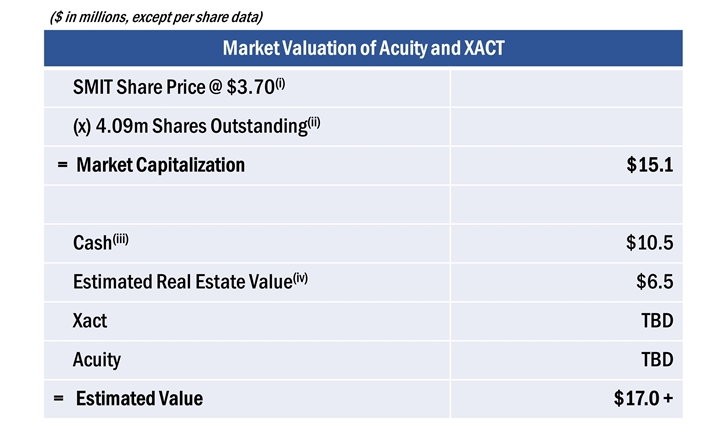
The reason I was so willing to add, even though I wasn’t a very aggressive buyer of stocks at the bottom of the market in general (I never seem to be good at this) is because at that price Schmitt was trading at ~20% below its net cash position.

This gave me some confidence that I wasn’t going to lose my shirt.

When you added to that the value of the company’s Portland real estate, which Schmitt valued at $6.5 million at the annual meeting last year, and the value of the two remaining businesses (Xact and Acuity), it seemed like one of the safer bets out there.

At the time the stock was falling Schmitt was exploring a shareholder opportunity that kept them from buying back stock.  Without the company’s support of its shares the general illiquidity of the market (not to mention the upcoming delisting of shares) there was plenty of room for the stock to fall on fear of the unknown.

I was hopeful that the shareholder opportunity would be a game-changer for the company.  I have some confidence in the decision making of Michael Zapata and his team.  So, I crossed my fingers for some sort of accretive use of their $10+ million cash balance.

Unfortunately that didn’t happen.  We never even found out what the opportunity was.

Schmitt announced at the beginning of June that they had ceased discussions on the opportunity.  They also announced a Dutch auction giving shareholders the ability to sell their shares back to the company at between $3-$3.25, depending on demand.

I have to admit that I was considering participating in the Dutch auction.  Not to sell my entire position, but I toyed with the idea of selling a few shares at a price was a nice, quick return.

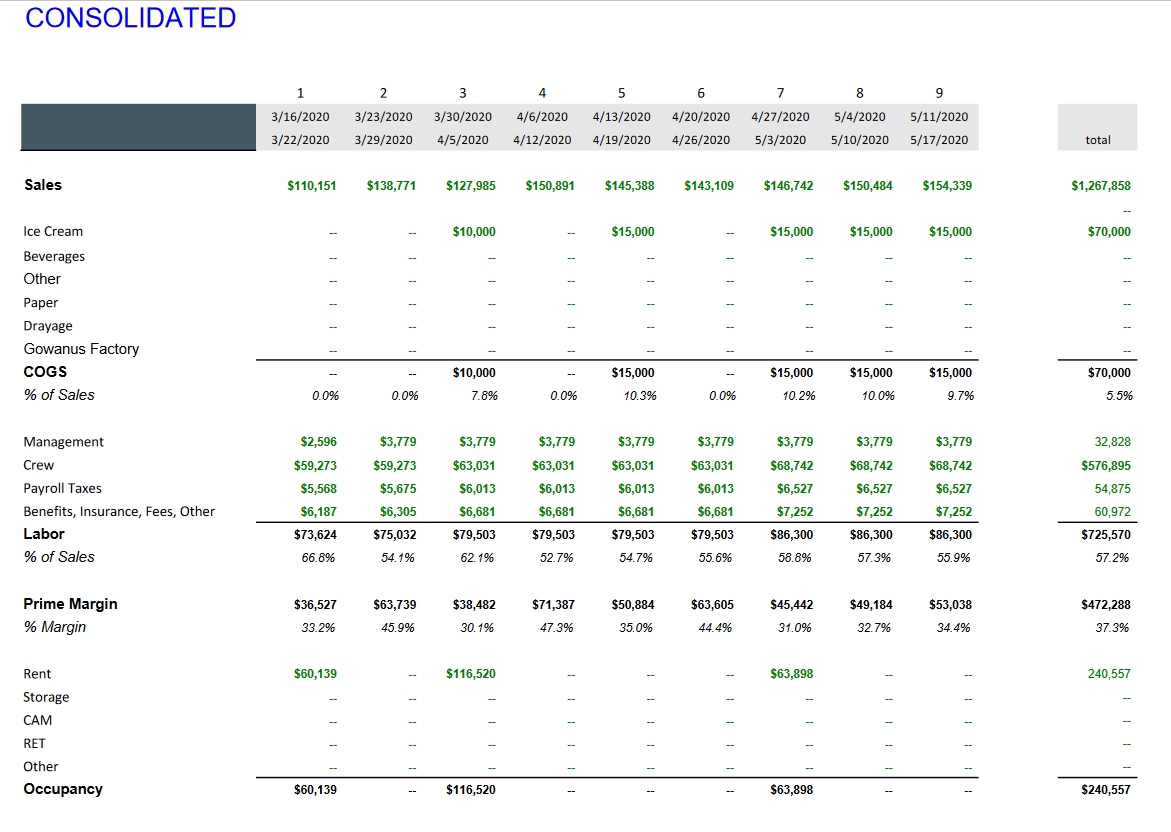
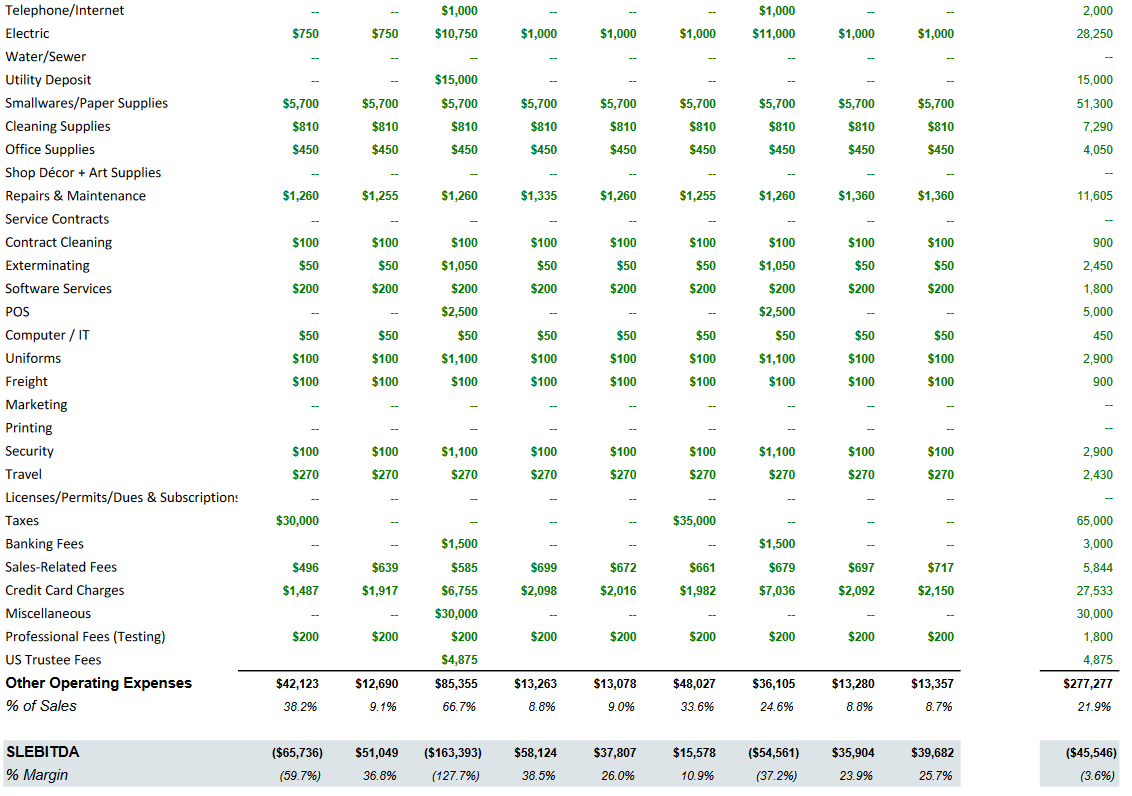
But then, on June 11th, Schmitt announced that they had been the successful bankruptcy bidder for the assets of Ample Hills Holdings.

Talk about out of left field.  It has taken me a while to wrap my head around this deal.  It is a total change in the thesis.  But I’m actually really liking the move, though I recognize the risks have went up a notch or two.

Ample Hills Holdings

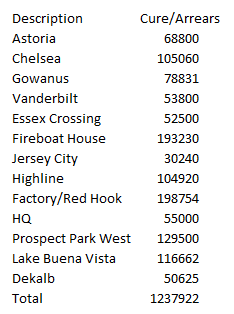
The first thing to understand is what Schmitt is paying for Ample Hills.  The bid they made was $1 million dollars.   In addition they are assuming the cure amounts associated with the assets.  According to Schmitt’s 8-K they have to assume at least 7 of the 10 active leases.  They may assume all 10.

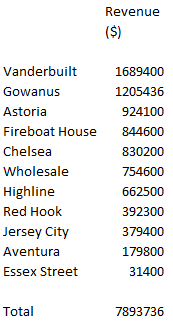
So what are the cure amounts?  Well, there are more than 10 leases listed in the bankruptcy documents, all listed below.  I believe that the last 3 in the list below wouldn’t be part of the 10.  Prospect Park West and Dekalb are not yet open.  The Lake Buena Vista location is on Disney’s boardwalk, which I don’t believe they operate it themselves – they just supply ice cream to it (though I don’t really understand why it is mentioned then?).   Finally, Factory/Red Hook and HQ are all considered one location I think.  The cure amounts for all the leases are:

If Schmitt assumed all 10 remaining lease locations including the headquarters, that would be total cure amounts of ~$925,000.

Add it up and Schmitt is taking Ample Hills Creamery for about $2 million.

Now I’ve read/skimmed through every single one of the bankruptcy filings (ie. I’ve read through all the one’s that are relevant and not just reiterating an objection, listing creditors or introducing a lawyer).

My conclusion is – $2 million bucks doesn’t seem like a lot for this business.

The first thing is, Ample Hills is not just your regular local ice cream shop.  This is not just some no-name local mom and pop shop.

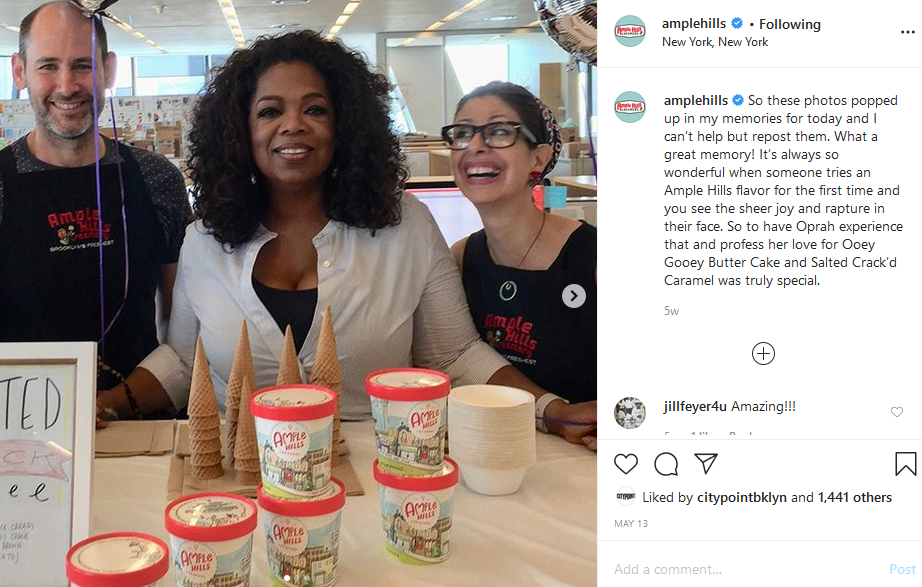
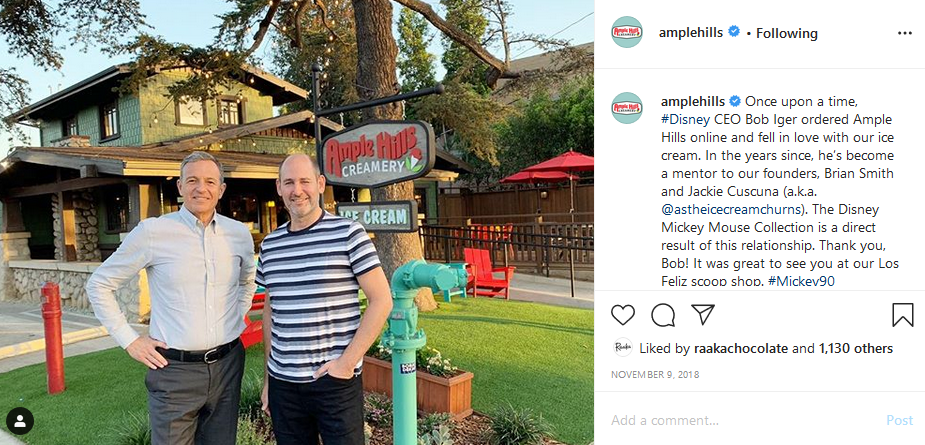
This is a real brand – with notoriety and a following.

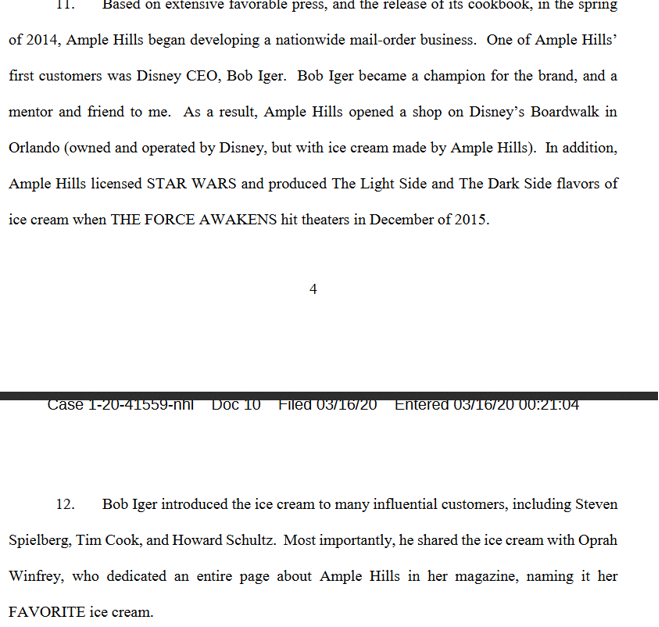
Consider these comments from the bankruptcy filings:

From their Instagram account:

I have a friend whose company has built an app that, among other things, analyzes, compares, and ranks the footprints of businesses on social media.  Before either of us knew about the celebrity of the company, he screened it on his app.   He was scratching his head why this dinky little ice cream shop was punching so far above its weight on the social media scale.  Clearly, now we know.

Honestly, there are a lot of things to worry about with this business acquisition, and I will get to them all, but my over-arching thought is this – how can the Ample Hills brand be worth only a couple million bucks?

The Ample Hills History

The history of what happened to the Ample Hills business is described in this declaration by Brian Smith.

It is worth reading in full.  These are the Coles notes.

Smith and his wife Jackie Cuscuna founded Ample Hills in 2010.  They sold ice cream out of a cart.  They opened a shop in Prospect Park (Brooklyn) in 2011.  In 2012 they opened another, in 2013 another.  All in Brooklyn.

In 2014 they started a nation-wide mail order ice cream business.  Bob Iger became a customer and liked the ice cream so much that he made a deal to open a shop on Disney’s boardwalk.

They expanded even more quickly – raising $4 million in 2015 and taking out an SBA loan at Flushing bank.  They added more locations and – here is where it all went wrong – they built a factory (called the Factory) in Brooklyn in 2017.

The Factory was a cash incinerator.  It cost $6.7 million to build – $2.7 million more than it was supposed to.  It took 18 months longer to build than it was supposed to.  It was supposed to run at full capacity, supporting the wholesale business and new shops, but the shop openings were delayed.

The Factory ran at an annual rate of 200,000 gallons last year versus a capacity of 500,000 gallons.  In the filings Ample Hills says the Factory has resulted in dis-economies of scale.

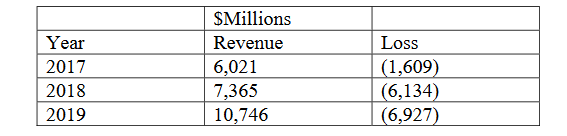
According to the filings, Ample Hills “began to lose money as they started construction of the Factory”.  Here are how those losses evolved beginning in 2017:

But at the same time, at the store level, Ample Hills was actually doing quite well.  In 2019 “on average” the shops generated 15% EBITDA margins.  The combined entity loss of $6.9 million was a result of “depreciation, amortization, interest expense, payroll and other operating costs associated with supporting the Factory” (my underline).

What Schmitt is Buying

So the short answer is – we don’t know for sure.  My guess is that Schmitt will take on the leases of the most profitable stores.  Here are the revenue figures for the remaining 10 leases from last year:

The Essex Crossing location was only open for a short time in 2019.  It looks like a promising location (it’s a farmers market in the Lower-East Side) and they did $55,000 of revenue in the first two months of 2020.

Schmitt appears to be trying to negotiate leases for some of these stores.  After the auction there have been 3 objections, from the Chelsea, Esses and Astoria lease holders, complaining that Schmitt has engaged them to try to sign a new lease rather than just paying the cure costs and taking on the existing lease (it looks like these objections were overruled).

So there is a lot of uncertainty about which leases Schmitt ends up with.  Assuming Schmitt ends up taking the top-7 revenue leases and Essex Street, they probably are looking at $8 million in revenue annually.

Ample Hills did about 7% of its revenue from wholesale and another 3% from e-commerce last year – so there is another $1 million all-in from this side of the business.

That is $9 million dollars of revenue from the existing locations.

But will it be profitable?

One problem, and maybe a reason that Schmitt was the only bidder, is that Ample Hills doesn’t appear to have provided corporate financial statements from the last few years.

I don’t have a lot of experience with bankruptcies, but I kinda thought this would be a requirement.  But I have gone through every document and unless I fell asleep skimming through (which is possible), I don’t think last years financials are there.

So, all we really have to go on are A. the numbers I have already presented and B. The Ample Hills post-petition forecast.  This was before COVID-19, at least before the lockdown, so I am assuming its roughly the run rate of the business.

They expected to be slightly EBITDA negative.  Given that this is a very seasonal business – for example Ample Hills said that their labor costs are roughly double in the summer of what they are the rest of the year, that they are close to EBITDA breakeven from March to May seems pretty decent.

The other thing I could do is add up all the cost disclosures from Ample Hills and see what that sums up to.  As part of the filings Ample Hills has provided utility costs, lease costs, labor costs usually at a granular lease by lease basis (including phone, internet, gas, electric – its pretty detailed).   They’ve probably covered a lot of the operating costs.  I haven’t gone through this exercise yet, but I have it on my list of things to do.  It is going to be time consuming though.

The biggest issue I think is how does Schmitt either A. get this Factory up to its utilization rate or B. reduce the Factory costs to a point where it is not such a big drag on the business.

So there is a lot that is unclear here.  We don’t know

  1. What Ample Hills looks like post-bankruptcy
  2. What assets Schmitt is taking on
  3. What they are planning to do with the Factory

On top of this there is also this whole pandemic thing, which it kind of goes without saying is a bit of a fly in the ointment (though maybe the worst is over for New York?).

Nevertheless, I can’t help but think that a couple million bucks for a business with this kind of social media presence, a strong following in one of the trendiest cities and a history (pre-Factory) of doing pretty well on a store basis, is a pretty cheap price.

As an aside I talked with Zapata literally the morning of the same day (June 9th) that the bankruptcy court awarded them the business.  I talked to him because I wanted to better understand the go-ahead plan before deciding on what to do with the Dutch auction.

He did not so much as hint at Ample Hills.   Like not even a vague comment about good things being in the works.

I really respect that.  He is very forthright that he will only disclose to you what he has disclosed for everyone.  I think that is a very good sign.

Schmitt has the cash to turn this business around.  To wait out the pandemic.  It is going to eat into the “value” story, but it also adds a whole other layer of upside.

Of course, it is also total thesis creep.  But we always figured they would do something with their money.  We knew they were going to burn some of it trying to right the Xact and Acuity business.

Schmitt can now focus their attention on a well-established ice cream business – that seems preferable to me.  It is probably riskier than it was when this was just a cash and asset play.   But I think the upside has grown quite a bit as well.