Skip to content

New Position in Evolus

Two biotechs in a row.  I’m out of my comfort zone.

But in a way ,picking biotechs right now is in its own sort of comfort zone.  I remain suspicious about the economy (though the market keeps going up, so what do I know!) and companies with newly commercialized drugs are less economically sensitive then your run-of-the-mill S&P stock.

Of course in this case I picked a plastic surgery toxin, which probably isn’t the best place to be if there is a recession.  So there’s that.

Anyway.

Evolus just received approval for a new neurotoxin called Jeuveau on Friday.  I didn’t hear about it until Monday night.  I took a position Tuesday morning, first at $20 and then at $25.

Its been a big move over the last two days but I am hoping we are just getting stated.

Jeuveau will compete with Botox in the cosmetic neurotoxin market.  Botox has an 70% market share right now.

The cosmetics neurotoxin market is about a $2 billion market worldwide.  Half of that is in the United States.
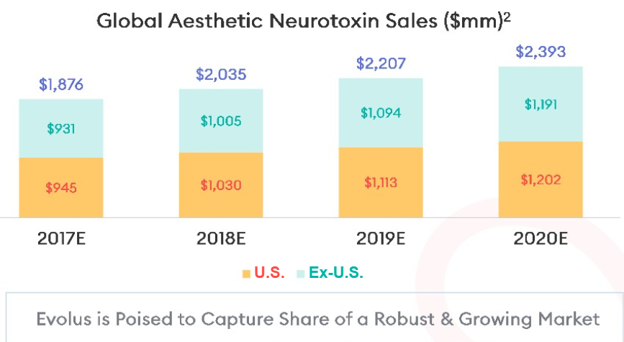
The market is growing at almost 10% a year.

Apart from Botox, the other competitors to Jeuveau are Dysport (with around 20% market share) and Xeomin (with about 9% market share).

Dysport and Xeomin were the first wave of competition for Botox.  They largely failed in their attempt.  Why?

A few reasons: The drugs didn’t show a real benefit to Botox.  They had different dosing language (called conversion ratios) than botox.  Physicians trained to administer Botox didn’t find it simple to switch over.  In the case of Dysport the conversion ratio changed after the drug was used.  Finally, they didn’t come out of the gate with a marketing push that differentiated them to patients and physicians. They never developed the momentum to unseat the champ.

Evolus is addressing these issues, both with its trials and launch.

Evolus did head-to-head trials with Botox in Canada and Europe.  Patients in those trials preferred Jeuveau to Botox.  No one has done a head-to-head with Botox before.
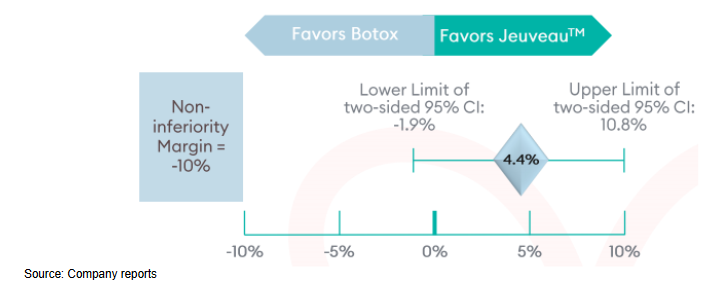
Evolus plans to use that head-to-head data in their marketing of Jeuveau.

In the marketing push Evolus will focus on brand and on new patients.  They are targeting millennials.  There appears to be more acceptance among millennials for enhancement products like neurotoxins (they say its a consequence of the selfie culture).

Evolus decided to make Jeuveau a cosmetic indication only.  If you look at Botox, more than half the revenue comes from therapeutic indications.  Jeuveau won’t be competing in that market, at least for now.  Limiting the drug to cosmetic means that Evolus has more leeway around pricing and that they don’t have the same constraints on their marketing.

Botox is by far the market share leader but it’s not loved by physicians.  Allergen has jacked up prices on a number of occasions.  The price per unit has increased 50% in the last 15 years.  There is an expectation that physicians will switch if given a better option.

Evolus is owned in part by a group of physicians and plastic surgeons.  The parent company, Alphaeon, which still owns over 75% of the stock, has over 200 dermatologists and plastic surgeons as investors.  I read one place that these investors make up more than 2% of procedures on their own. The top management of Evolus mostly have come from Allergen: CEO, CFO, CMO, Chief Medical Officer.

Evolus said in the conference call Monday that their goal is to be #2 in the cosmetic neurotoxin market.  That implies that they are anticipating at least 20% of the US market.  So $200 million.  That’s only the United States.

Even after this run the stock is trading at $750 million market cap.  My bet is that it can roughly double that if they look like this goal is within reach and get approval for Jeuveau in Europe.

Here’s the risks I see:

  •  Allergan, who owns Botox is “seeking to block U.S. imports of a new rival to the wrinkle-treatment Botox” because they allege that Daewoong Pharmaceuticals stole trade secrets around Botox which led to the development of Jeuveau.  These accusations have been going on for a while but are back in the headlines now that Jeuveau is approved.
  • Botox is a pretty entrenched leader.  Evolus has talked about how their focus are the millennials, which is not in small part because they realize second-generation clients that have had a Botox treatment are less likely to switch over
  • Botox and the other two brands will push back, they will reduce the price of their drugs and step up marketing efforts
  • The stock is basically controlled by the executive team and other owners of Alphaeon.  Hopefully all interests are aligned but you never know for sure.


New Position in MYnd Analytics

Well we are less than a month into the new year and I am already breaking a rule.  Rule #2, stay away from illiquid stocks.  So what do I do?  Two days later I buy a stock that trades 20,000 shares most days.

That said the stock has had a lot of volume the last few days.  So it’s not illiquid at the moment.  And I am keeping my promise to write more. So there’s that.

Here’s the scoop.

Mynd Analytics (MYND) has a not-so-interesting legacy business of providing psychiatric help via video conference to patients in remote areas.  They have a second not-so-interesting business of offering a platform (called PEER) that helps doctors prescribe for psychiatric conditions.

Two not-so-interesting businesses are not a good reason to buy a stock.  What is interesting here is a merger that was announced a few weeks ago.  Mynd Analytics is merging with a private biotech firm called Emmaus.

Emmaus has a much more interesting business than anything Mynd has, so this is more of a reverse takeover kind of merger where the new company is going to be Emmaus, not Mynd.  In fact, exiting Mynd shareholders are going to get about 5.9% of Emmaus.  They are also going to get a spin-out of the two not-so-interesting businesseses into a separate company.

So while those businesses are not very interesting to me, the market was still saying they were worth up to $1.50 a few months ago.  So basically as a shareholder I get what I already had, plus now I get a piece of Emmaus.

Getting a piece of Emmaus is interesting.  Emmaus is in the early stages of marketing a drug called Endari.  Endari is approved to treat sickle cell disease.

Sickle cell disease (SCD) is an awful sounding inherited disease where your blood hardens, which can cause stroke.  There are 100,000 patients in the U.S, another 80,000 in Europe, and over 400,000 in Africa and the Mideast.

There is only one treatment on the market for SCD.  It’s called hydroxyurea and its been on the market for over 20 years.  It helps in most cases but it’s not a cure and it produces a lot of adverse side effects in patients.

Endari has went through FDA approval trials and its efficacy has been demonstrated.  It provides improvement in adverse events over the placebo, both on its own and when used with hydroxurea.   Importantly it is well tolerated by patients.

That last clause in the sentence is important, because physicians can prescribe hydroxurea and Endari together.

While it’s expensive to prescribe, insurance companies have been very willing to add Endari to their list.   Why?  Because adverse events for sickle cell patients are severe.  They require ambulances, hospital stays and are extremely expensive.  Endari comes at an ASP of $30,000 ($20,000 net to Emmaus after rebates and coupons).  All it takes is a couple less hospital visits and Endari pays for itself.

Okay, so the drug is effective.  What’s the stock worth?

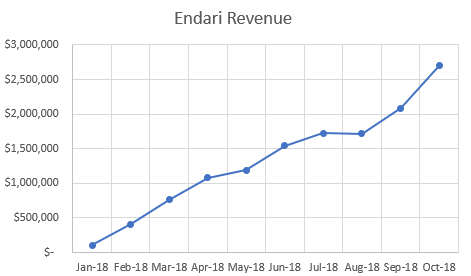
Well Emmaus just started their ramp with Endari in January.  The CEO, Dr. Niihara, who is also the founder and inventor of the drug, gave us an indication of the sales ramp in a PiperJaffrey presentation they gave in November.  This is gross revenue.

They also said there was about 1,200 patients on Endari at the time (so November).  That roughly lines up with the gross ASP of $30,000/year.

Niihara also forecasted 10,000 patients on Endari by the end of 2019.

So the math on that is 10,000 patients at $20,000 net ASP is $200 million of annual revenue.

The math on the post merger valuation is that there will be about 160 million shares of Mynd Analytics outstanding.  I bought the stock at $1.40 so that gave it a market cap of about $225 million.  Now the market cap is around $280 million.  I actually added a little at the open this morning after I wrote this up because it made more sense to me once I put it down on paper.  Sometimes writing clarifies the mind.

Somehow under 2x revenue for a biotech with a new drug ramping and an orphan drug designation seems too low to me.

Endari is on patent in the US for another 6 years.  There is a 10+2 patent in Europe that doesn’t begin until its approved.  There is another patent in Japan.

The  $200 million should be just a start.  It’s basically a 10% market share in the US, but market share isn’t really the right term here because it can be used at the same time as its competition.  Europe has a TAM of another $1.2 billion (the ASP is Europe is expected to be a bit lower).  ROW TAM is another $3.4 billion.

So the TAM is reasonably big.  It’s not like Endari is going to top out in a few months and stop growing its market.

Given that I think the stock isn’t pricing this in.

On the risk side, I have lot’s of questions.  First, why is Emmaus doing this?  They said they don’t need capital and its cheaper to merge than an IPO, which is fair.  They also get the $60 million or so of net operating losses, so that’s a reason.  But I have to think that after the lock-up (120 days) some of these early investors will want out.

Second is the risk that Endari falls flat.  I have no reason to think that from what I’ve read, but the drug is an improvement, not a cure.  I am also no biotech expert.  There are also a bunch of drugs in the pipeline that are a few years from approval and will be competition.

Third, I’m not sure how far off that competition is.  Both Global Blood Therapeutics and Novartis have recently received fast track designation for their drugs.  It’s not completely clear to me what that means for approval.

Fourth, the spin-off of the psychiatric business is likely to get sold hard when it happens.  Everyone now is buying for the interesting business and the not-so-interesting business is an afterthought.

Fifth, I don’t know much about Emmaus beyond what is on their website and what is in the disclosure documents.

Sixth, if the government shuts down again god knows when this will close.  I’ve been waiting on Eclipse and Blue Ridge to close for like 8 months now.

Seventh, prior to the merger it seems like there was quite a bit of management deals on shares and related party transactions from the not-so-interesting businesses they operated.

There are others, but that’s a few to ponder.

Nevertheless it seem like a decent speculation at this price.  And it let’s me write something up quickly and keep new years resolution #4.

Week 394: New Years Resolutions

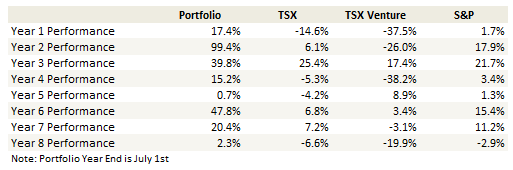
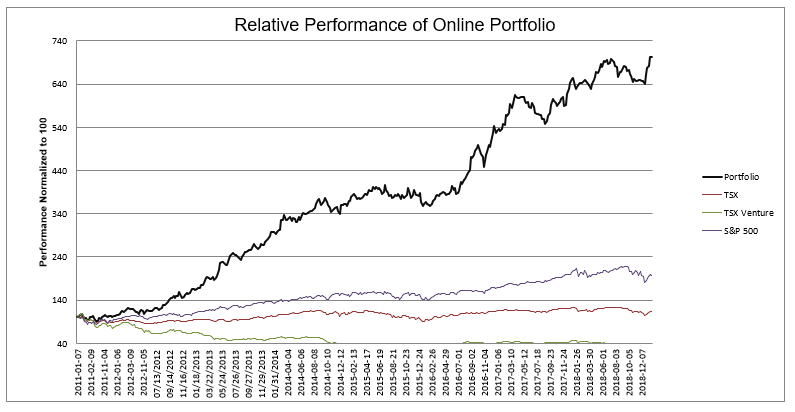
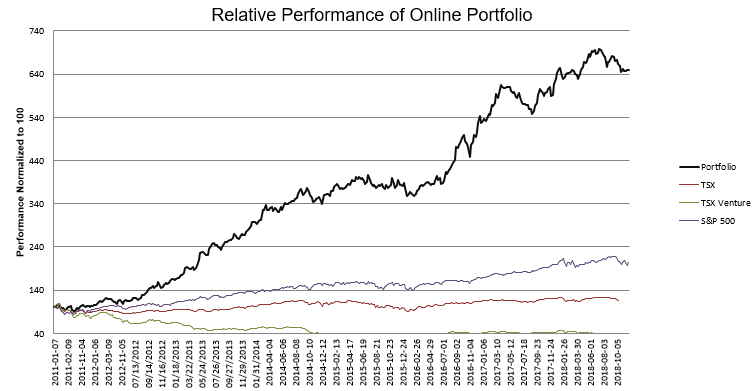
Portfolio Performance

Thoughts and Review

Here are a few investment resolutions for the new year:

  1. After a stock has a good run, I will sell a decent amount of it, no matter how much I like it.
  2. I’ll stay away from illiquid stocks that will be hard to get out of in a bad market
  3. I will stay away from stocks with high levels of debt
  4. I will be very thoughtful before purchasing any stock not generating free cash flow
  5. Be selective
  6. Post more!

These resolutions could also be described as Lane Sigurd’s investment strategy for a bear market.

Some of them are at odds to how I have invested over the long bull market we’ve been in.  Over that time I held my winners and watched them turn into two, three or five baggers.  I didn’t worry about debt.  In fact I coveted levered stocks that would really run if the tide turned.  I didn’t give a second thought to liquidity because I was always able to get out.

I think we are still in a bear market.  Maybe we’ll top out soon, maybe we’ll run back up near the highs, I don’t know.  But I am positioning myself based on the expectation that in the next few months there will be another leg down.

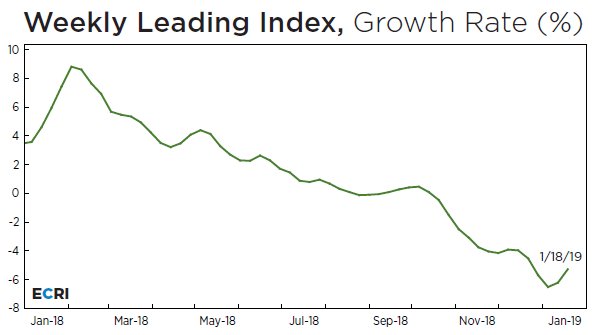
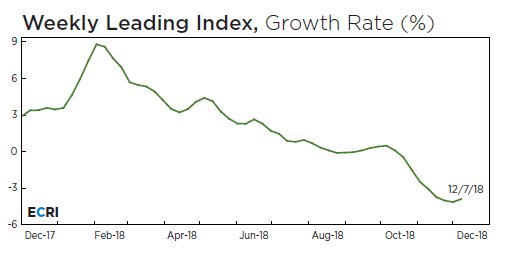
Having said that, there is a bit of good news.  The Weekly Leading Index looks like it might be putting in a bottom.

Is it possible this is just another 2016-like blip?  Possibly but I’m still going with the bear market view.  Maybe I’ll have to change my mind on it.  But not yet.

Looking back, December was a tough month, but I had a lot of cash and that helped cushion the blow.  And while I was not lucky enough to go all in at the bottom I did pick at a few positions in December, and the positions I held onto had big runs in January.  So I sit here now at (somewhat shockingly) new portfolio highs.

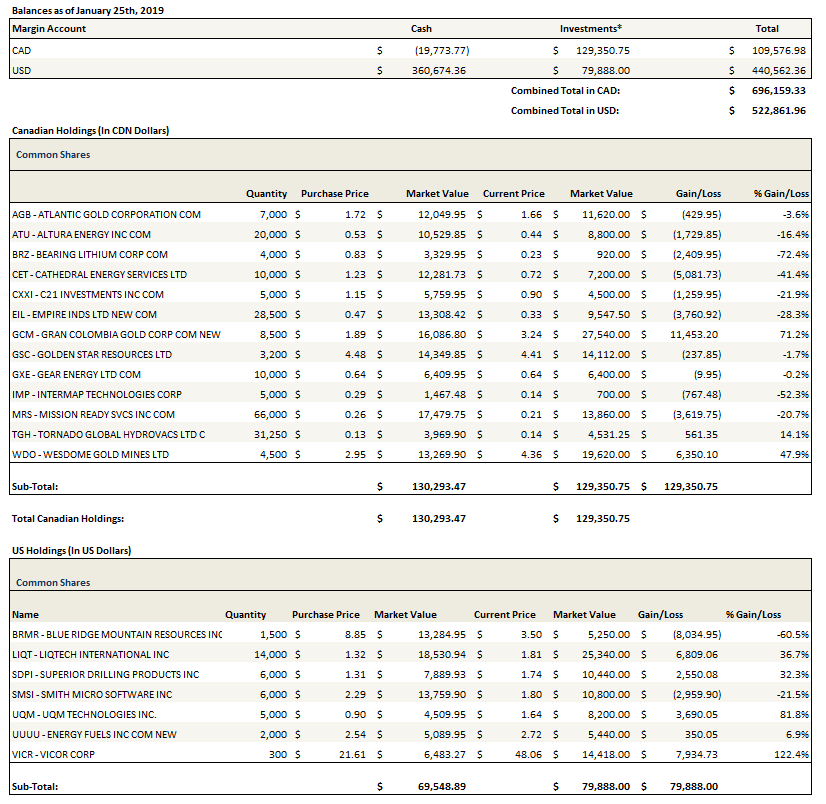
I’m a bit surprised by that.  My portfolio still has some 70% cash after all.  The market still isn’t great.  It’s really just a bit of luck and timing really.  A number of my remaining positions had big runs.  Liqtech took off.  Gran Colombia took off. Vicor, Golden Star and Wesdome all had nice moves.  UQM Technologies got taken over.  I bottom fed on a few small positions (Identiv, UQM and a few oil names) that all had really nice bounces off the bottom.  Meanwhile I went a few weeks where none of my positions went down.

Having had good performance while not owning very many stocks makes me think that in this market I would be better off being selective than to go with my more usual shot-gun like approach.   In the past I’ve taken small positions in a bunch of stocks, even if I wasn’t completely sold on them all, and watched whether they would develop.  A few would become big winners and I’d add to those as they went up.

I’m not going to do that in this market.  Instead I’ll hold cash and wait for stocks that I have a lot of conviction with.  We’ll see how it works.

So it was a pretty good month.  But I am not overstaying my welcome.

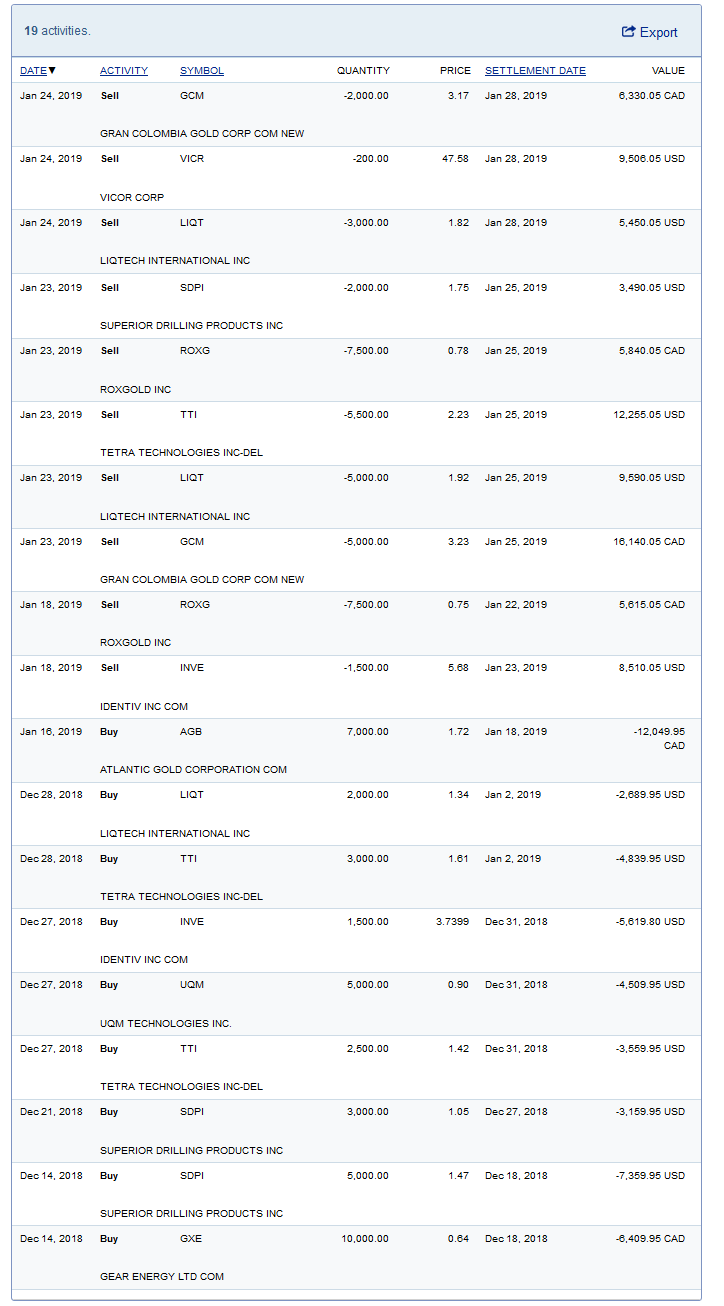
True to my first resolution, I have been selling my winners.  I sold out of three of my trades entirely already (Identiv, Tetra Technologies and Lone Star).  I reduced my Liqtech position by half.  I reduced Gran Colombia and Vicor as well.

I sold some losers too.  I got rid of Roxgold, Gear Energy and reduced my position in Empire Industries.

One stock I’m not selling is Wesdome.  As much as I love my other gold names, the more I dig into what Wesdome is onto at Kiena, the more I love it the best.  It’s not cheap I know, but its got so much going for it.  It’s in Canada and not in an area with questionable politics.  There are two mines with great potential for expansion.  But what I really love about the story is just how cheap the growth from Kiena will come for.  Something I had overlooked in the past were comments by Wesdome management that the mill at Kiena is worth $100 million.  That is basically a $100 million asset that was useless that is now an integral piece of their development plans.  That they can bring Kiena on-stream (and I’m seeing estimates from anywhere between 90,000 oz to 130,000 oz from brokerage for the project) for $50 million is about the most efficient gold development project I’ve seen.

As for my last resolution, I have been lax about posting.  It’s harder to post in a bear market.  Even when I get up the courage to buy a stock, I have weak conviction because of the market.  I find that it takes a lot of conviction to write about something because mentally it kind of ties you to the idea.  That makes me reluctant to lay out a thesis when I might get scared and sell a week or two later.  Or worse, I might hold it because I wrote about when I really should be selling.

UQM Technologies is a good example.  I bought it in November, sold it, then bought it again in December.  I didn’t write about it either time, even though it was a great story.  I was just worried the market might keep falling and I would be doing another round of selling if it did. UQM would be a stock I would cut.  Fortunately the market turned around and I didn’t.

I’ll try to put aside those fears in the new year and write about my positions more.  Even if I look at all of them right now as having the time frame of a pin-pulled hand grenade.

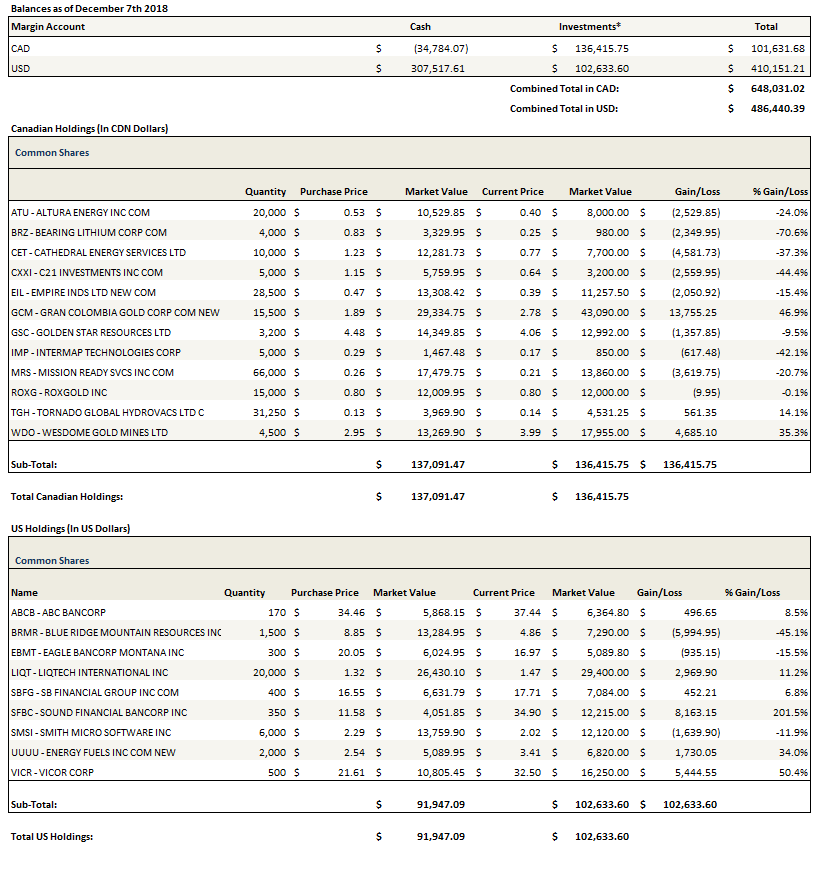
Portfolio Composition

Click here for the last seven weeks of trades.


Week 387: My Recessionary Portfolio

Portfolio Performance


Thoughts and Review

I haven’t written in a while.  I don’t have much to say, the markets are brutal and I am in no hurry to start picking new stocks.  So its not a lot of fun writing.

I have continued to sell stocks in the last two months.  My already high cash position is even higher.  I’ve hunkered down.

I see no choice but to continue to sell.  The problem is that with the small and speculative stocks in a bear market the only safe place is cash.  So even as I went into the fall with a very high cash level, over the last 8 weeks I made it even higher.  As of this weekend the online portfolio I track with this blog is at 75% cash.  That trails my actual portfolio, which is now up to 85% and my RRSP is basically now a GIC.

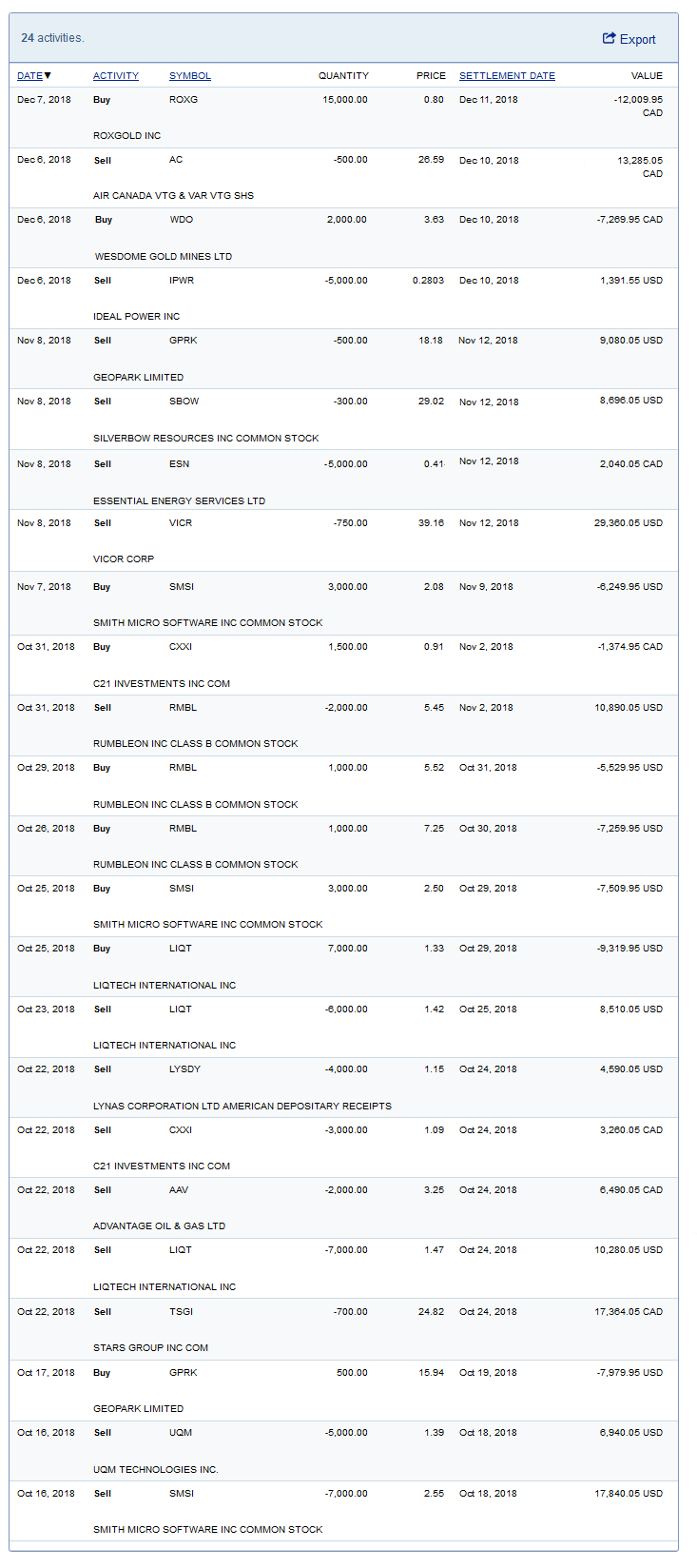
I even sold my long-held bank stocks this week (not reflected in the portfolio below, which I updated for December 7th).  It’s a bit of a personal watershed for the portfolio and the blog.

I rarely have talked about these stocks since they are boring, but they have been great performers for the last 6 years.  I’ve held them through pretty much the entirety that I have been writing this blog.  Which is to say some tough times!  Yet with the yield curve inverting and leading indicators rolling over I decided to finally exit the trade.  I sold Sound Financial, SB Financial, Eagle Bancorp, and ABC Bancorp (they were the firm that took over Atlantic Coast Financial).  It was the end of a era!

That I am selling these stocks, which I held through some crummy times in 2015 and 2016, should tell you something.  I’m pretty bearish on where the economy is at.

The weekly leading indicators put out by the ECRI were at 144 week lows before a slight uptick this week.

The pH report recently said (also in a Real Vision interview which I’m not sure I can reproduce here so I won’t) that they thought we were on the cusp, if not in, a global recession.

Chemicals are the best leading indicator for the global economy. Data for both Chinese and global chemical production are warning that we may now be headed into recession.

On top of that we have the Fed raising interest rates and quantitative tightening, which are reducing the availability of credit.

And then there’s the trade war.

If this isn’t the tide going out, I don’t know what it.

Look, I’m not the smartest guy in the room.  All of the funds and firms and experts undoubtedly know more than I do.  So I might be wrong and maybe this is another pause, another correction, before takeoff.

What I do know is to respect my limitations.  And trying to guess the bottom in a market that is in a downtrend on top of a bunch of negative economic data just seems like a foolish exercise to me.

No one is paying me to take risk.  So when the environment isn’t conducive, why should I?

The last time I did something like this was January 2016.  That period turned out to be a false alarm.  This one might too.

This is what I wrote in my February 2016 blog post.

The point of existence of a hedge fund is to risk money in order to make more of it. You can argue the particulars of that statement, that risk reduction can occur through various hedges, diversification, concentration, whatever your flavor is, but the bottom line is that the money should be at risk somewhere or why is the fund even there?

But that’s not my job. While part of what I am trying to do is of course maximize my profit line, my first mandate is also very clearly and in capital letters, TO NOT BLOW MYSELF UP.

What I guard against with absolute vigilance, is insuring that my capital doesn’t permanently disappear.

You can look back on these comments and say they were poorly timed.  February marked the bottom, the market started to recover, in the fall when Trump was elected it really took off.

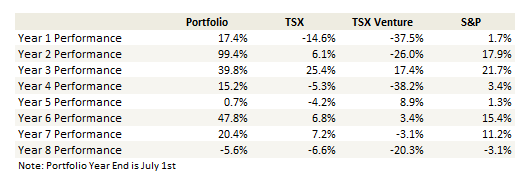
But the reality is that I greatly benefited from that rally.  My Year 6 performance (the table at the beginning of this post) from June 2016 to June 2017 was one of my best 12 month periods.  The market turned and so did I.  If that happens again I’ll turn on a dime just like I did then.

But I’m not going to sit around and wait for that turn while the market grinds lower.

You can look through my portfolio and look at what I sold.  I’m not going to go through the whole lot.  What I’ve held, I’ve done so for two reasons.

First, most of these stocks aren’t terribly economically sensitive.  Liqtech isn’t go to sell less scrubber filters because the economy is slowing (in fact a lower oil price probably means they sell more).

Second, the TSX Venture has already gotten creamed.  The few Canadian stocks I hold there have not done great, but they’ve done okay.  This seems like a bad time to throw in the towel there, especially since the positions are small.

And then of course there is Mission Ready which apparently isn’t going to trade again until the next decade.  Not that I’m complaining.  If I had the option to put all my stocks on a trading halt for the next 12 months I think I’d have to consider that.

(As an aside there was a piece of bullish news out of Mission Ready just released on Friday.  One of the company insiders exercised their 15c warrants that expire in a week.  One would think that an insider would not exercise warrants if they thought the Unifire deal was going to fall through).

So I don’t know.  Maybe I will find another compelling recession proof stock that will compel me.  That might be a hard proposition.  If not, and if this is more than your run of the mill correction, then this blog might be a bit boring for a while.

I’ll tell you though that when I see the turn, I’ll be in the middle of it.

So I did take a small Canadian oil position this week.  I don’t know how long I will hold it so take this for what its worth.

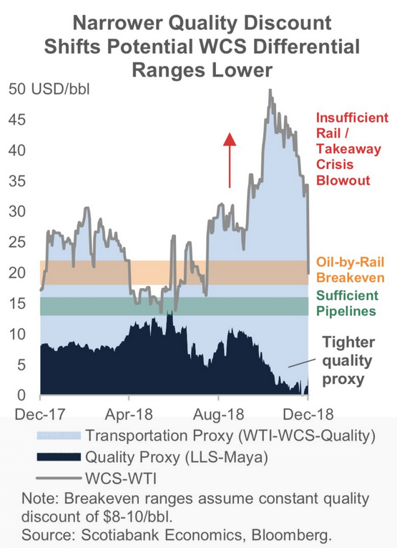
Gear Energy.  I owned it before and sold it after Western Canada Select spreads blew out.  The stock fell apart like I thought it would.  But in the last week and a bit the mandatory production cuts implemented by the Alberta government have worked wonders on Western Canadian Select differentials.

Part of the mandatory cut is that companies producing under 10,000 bbl/d are exempt.  In fact companies under 10,000 bbl/d can actually produce up to that level before being affected by the cut.  I was surprised to find this to be the case.

Before being forced to shut-in production in November Gear was guiding to 7,500 boe/d.  They have an acquisition that will bring that up to nearly 10,000 boe/d but those assets are in Saskatchewan and so they shouldn’t count toward the ceiling.

Small companies like Gear (and Altura Energy, which I continue to own) are in the unique position of benefiting from the spreads and having the ability to grow.  I don’t know if the market will see it that way.  I have heard the argument that capital just won’t come back to small-caps period. Maybe so.

I haven’t run the numbers for Gear but I did a detailed type curve model of corporate production for Altura and found that at C$40/bbl realized prices they can drill 5 wells next year, stay within cash flow and grow production slightly.  Right now WCS prices have risen to over $50 (the latest PSAC quote has them at $54).  At those prices Altura can grow production significantly (10-20% I think) while staying within cash flow.  I’ll maybe do a post of my model there shortly.

These companies aren’t in a terrible position any more.

No guarantees I keep any of my positions.  All comments in this market have the life expectancy of a hand grenade.

Portfolio Composition

Click here for the last eight weeks of trades.  Note that this update is of December 8th, so it is a week old and doesn’t have my small purchase of Gear, my bank sales or my sale of Smith-Micro.