Skip to content

Posts from the ‘Uncategorized’ Category

Sonoma Pharmaceuticals

These last few weeks have resulted in only a few changes to my portfolio.  All of these changes are at the margin.  I added back part of the tanker position (Ardmore Shipping) and the refiner position (Marathon Petroleum and PBF Energy).  I subtracted and then added back some oil stocks as I waffle in my view on whether we are headed into a recession or not.  I added back some Overstock.  I reduced positions in the gold miners, mainly because its been a good run.  I sold my position in BRF SA as I struggle to understand whether African Swine Flu is a big deal or not.  Nothing major.

I haven’t been adding many new positions.  I mentioned Evolent and Moneygram in previous posts.  One other that I added just last Friday was Sonoma Pharmaceuticals.

Those of you that have followed this blog for a while may remember an ill-fated post I wrote last April about Sonoma.

The idea back then was that Sonoma was a relatively cheap ($24 million market capitalization) pharmaceutical company that had a growth business (a U.S dermatological segment comprised of 6 products) that was obscured by other slow growing businesses and divestitures.  I argued that the market was not correctly pricing the dermatology business.

It seemed like a reasonable thesis at the time, but it didn’t work out very well.  In fact, only a month later the company reported their fiscal year end results and the story unwound completely.

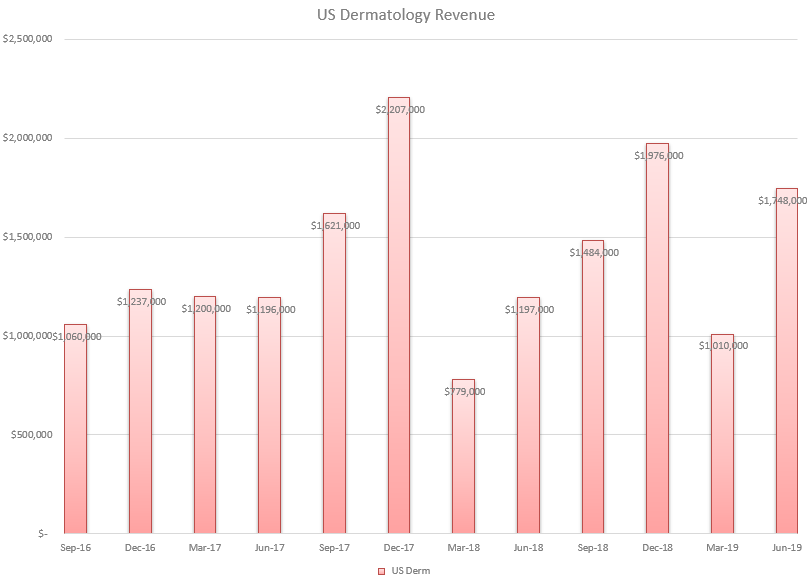
In the first quarter of 208 growth in the US dermatology segment stopped abruptly.  Revenue for the March 2018 quarter was $780,000, down from $1.2 million the previous year.

Needless to say, I put my head down, took my loss (which if I remember right was substantial) and went home.

It was lucky I did.  The stock continued to fall through to the end of the year.  I got into the stock at a split-adjusted price of about $36.  I exited in the low $20’s.

It traded down to $10 in November when the company did an equity offering (at $9 with half warrants at the same price).  It fell further to the $7’s as Sonoma replaced their CEO and CFO in mid-December.  It is bottoming (maybe?) now at a little over $5.

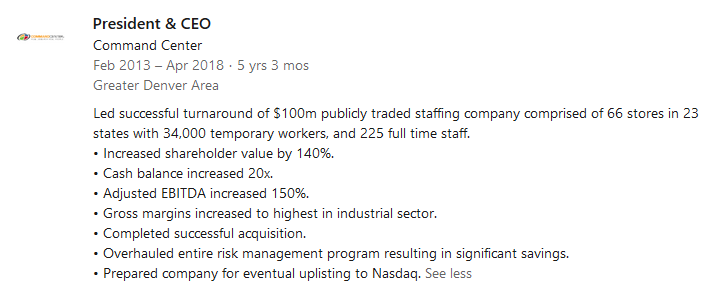
The new CEO is Bubba Sandford.  Sandford’s previous gig was with Command Center (CCNI), which is a publicly traded temporary staffing company.

His track record at CCNI is mixed.  The stock price treaded water for a number of years but it is worth noting that shortly after Sandford came onboard in 2013 there was a noticeable rise in the share price from $2.50 to $8+.  It seems like he did the job cutting costs but was never able to follow through with growth.  Things went south for a while in 2016 after a restatement of results.  There are some vocally displeased shareholders on this call in particular.

Sandford describes his role with Command Center as a turnaround on Linkedin:

New CEO or not, this year the share price of Sonoma has continued to fall, albeit at a somewhat slower pace.  It was trading at pretty much the low of $5.50 when I bought stock on Friday.  It popped after that, but I have no idea why.  It wasn’t me buying it up.

So what is the story now?

I’m almost embarrassed to say.  It’s basically the same as it was.  But with a better breakeven and bigger discount.

In March Sandford announced that there would be cost-cutting measures to bring the business closer to profitability.  In the press release Sandford said:

“Our chief goal is to allocate our resources in a manner that maximizes shareholder value.   While we are pleased with the direction of the 3rd quarterly results, we are not yet finished with the process of accessing ways to grow revenues, reduce expenses, and improve gross margins. This process takes time and can be painful, and we recognize that personnel reductions are difficult for our employees, their families and the community. We value the dedicated team at Sonoma for working hard towards this goal.”

This was followed shortly after with the sale of their animal health business in May for $2.7 million.  The sale gives them a bit more cash which means a bit more runway which is something they need because they are not breakeven yet.

Their fiscal fourth quarter, which is for the quarter ended June 30th, was announced this week and it looked to me like the company made progress.  Operating expense for the quarter was $4.1 million.  This is the lowest operating expense I’ve seen for the company since I started watching them back in 2016.  The reduction in SG&A for the quarter was $1.2 million year over year.

Equally positive was that U.S dermatology sales were up 46% year over year.

In fact, apart from that disastrous first quarter of 2018, dermatology sales in the US have been doing pretty well.

But the second quarter was a blow-out.  If it continues the company may be closer to cash flow breakeven than you think.  It’s a seasonal business with sales typically being highest in the fourth quarter which will be a wind at their back for the rest of the year.

With better sales and improved costs, I calculate that operating cash flow before working capital changes was still a drain of $1.4 million.  While this isn’t great, it is much improved over the $2.5 to $3 million burn they were doing a year ago.

While operations appear to be moving in the right direction, what really got me interested here is the price tag.  At $5.50 and with a little over 1.3 million shares outstanding the market cap is only $7 million.  There are another 446,000 warrants and options, but these are priced significantly higher at $10 and above, so I’m not considering them.

While I realize the cash on hand is fleeting given the cash burn, this means the enterprise is trading at under $3 million as of the end of June.

That seems pretty cheap given what is a legitimate product line that is demonstrating growing sales.

Of course, unless they have more cost-cuts up their sleeve or another big bump in revenue, they will have to raise cash one more time.  An ill-priced predatory offering and all that potential value could be out the window.

On the other hand, a fair offering and another good quarter could represent a turn in the stock.

So there is unquestionably a lot of the risk here.  We’ll see.  Bubba Sandford seems to have them on the right track here.  If the next quarter can bring another uptick in sales and/or further cost reductions, we may see the cash burn contract further.  Or some other positive event may occur.  Sandford is acting in what appears to be shareholder interests.  Given the price and the recent trends, that is reason enough for me to take a small stake.

A Change in the Oil Narrative (and I bought Moneygram)

With the market finally correcting as I had hoped I am sitting in the fortunate position of having large index shorts (via RWM and SH), a few individual stock shorts, a large position in gold stocks and lots of cash.

I am looking for names to add though I won’t rush into it.  I don’t really understand the significance of what is occurring in Hong Kong.  Until I do, I feel like I am best suited sitting pat.

I did add one name that I spent the weekend reviewing.  Moneygram.  Unfortunately, the stock is up today even as the market is down, but I decided to take that as a positive sign and bought a starter position anyway.  Moneygram fits the bill as being a bombed-out stock with an intriguing upside.  In particular, their partnership with Ripple: if Ripple is truly a faster settlement technology it could be quite meaningful to Moneygram.

I will talk more about Moneygram later.  What I wanted to write about here was something totally different.  Oil stocks.

Its been a while since I’ve taken a meaningful position in an oil producer as anything more than a trade.  I took positions in a couple of oil service stocks back toward the December lows that I thought I would hold for the long-run but didn’t (Tetra Technologies and Superior Drilling, both of which worked out temporarily but which I skedaddled from when it became clear the rig count was going to keep falling).  And of course, there are the forever fledgling positions in Cathedral Energy Services and Energy Services of America, which I basically don’t look at anymore and just hope for a takeover at some point.

But I have for the most part stayed away from buying oil producers.

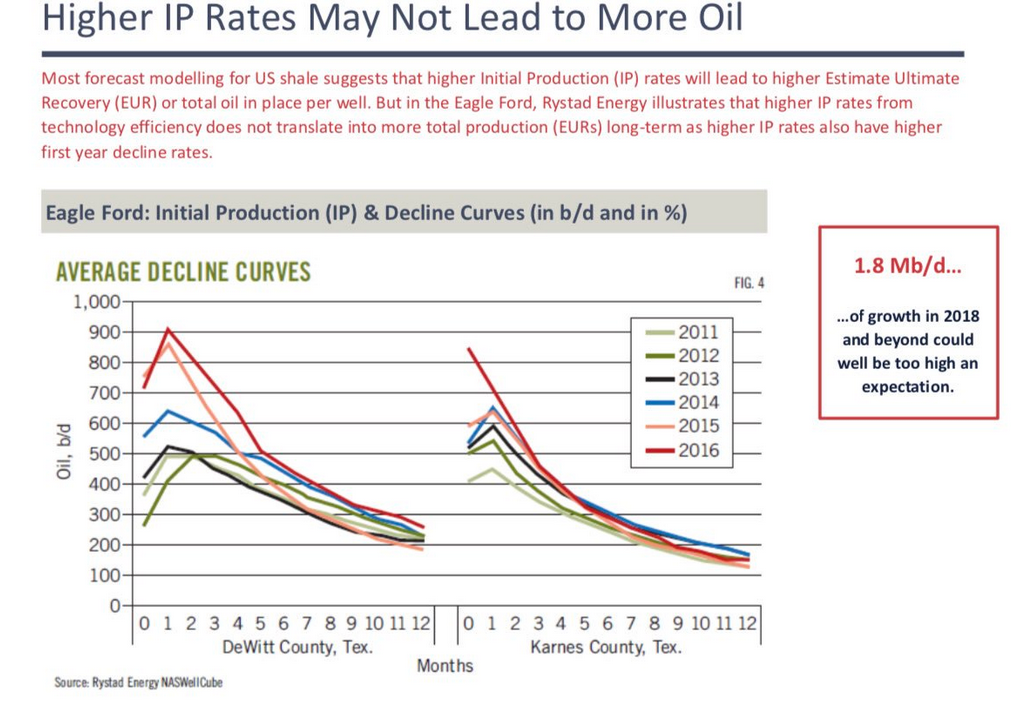
The ones in the United States have not made much sense to me as they continue to outspend their cash flow and I remain suspicious about the long-term productivity of the high IP wells from the US shale plays.

The oil stocks in Canada are far more interesting.   I’ve watched them all year and they just keep getting cheaper.  Recently, I decided to take positions in a couple.

It seems to me that, rather ironically, the Canadian producers are ahead of the curve.  They have been forced by pipeline constraints to change their business model from growth to one with a focus on free cash generation.  While for the last few years this has led to dismal performance by Canadian oil stocks, I believe that it could soon start to bear fruit.

Why?  Well there seems to be a change in narrative taking place in the oil market.  If it takes hold it could usher in a new perspective for investors of energy equities and in particular for Canadian equities.

The oil market is complicated, and data is incomplete.  As a consequence, the market is usually dominated by one or two narratives that determine the sentiment of investors in the sector.  As long as the data is not too much at odds with that narrative, the narrative will determine the trajectory of the commodity and industry that supports it.

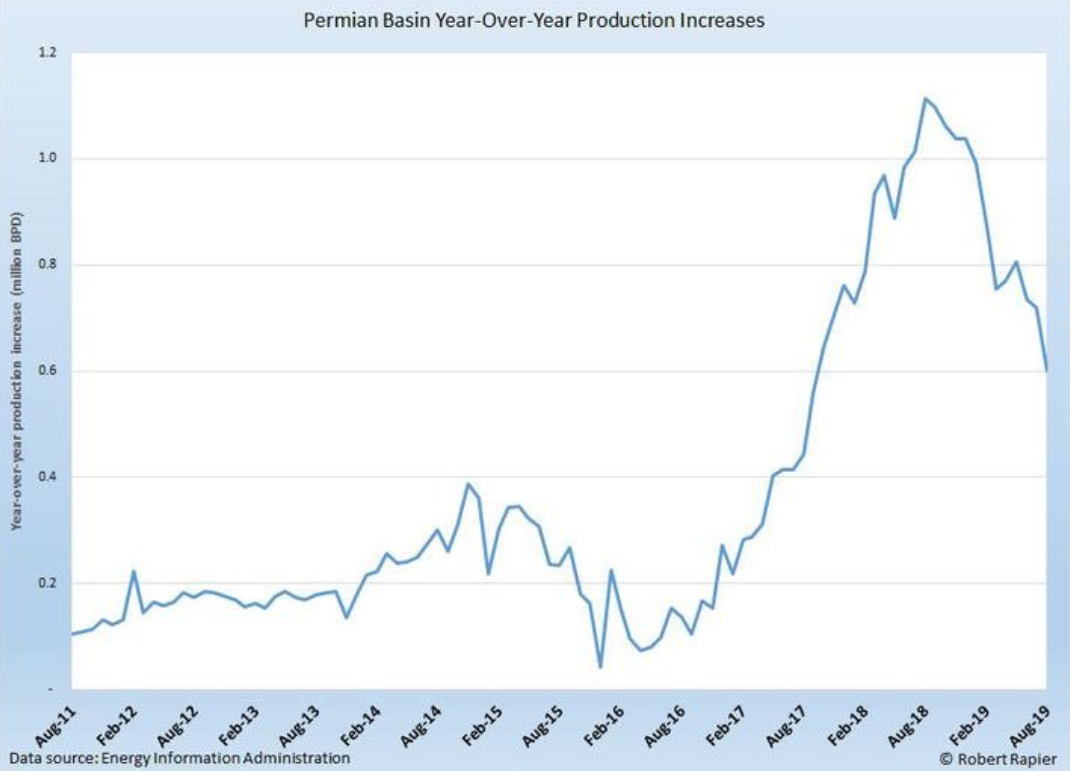
The dominant narrative for some time has been that US shale growth will sop up any demand growth the world requires.  Maybe even more negatively, the belief has been that the Permian is so productive, so unstoppable, that producers will continue to increase production unless oil prices are so low that oil stocks are basically worthless.

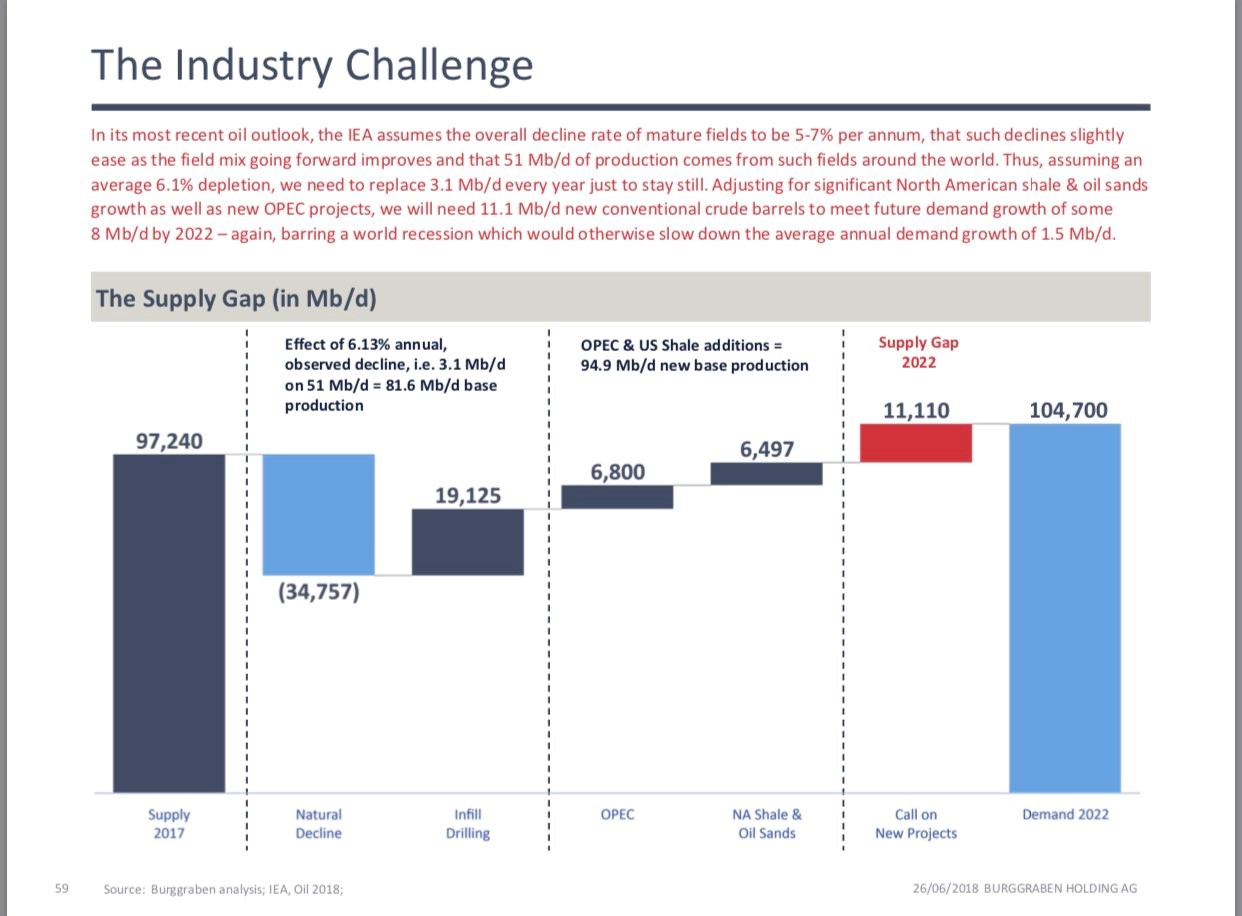
Thus, it has been that even though the medium term supply gap looks fairly constructive, the believe has been that shale and in particular Permian production will make up any short fall.

While there are several reasons that oil equity prices have been terrible for the last few years, the big one is simply the corollary of this narrative: there is no upside in the price of oil.

The reason that any of us invest in commodities is for the possibility of a big “pop” in the commodity. I sat in gold for nearly a year waiting for the “pop” that we are now experiencing.  If there was no opportunity for such a surge, I wouldn’t have bothered.

That is where we are with oil equities.

So that has been part of the story that has gotten us to this.  And you can see how important shale additions are and the thought has been that shale will adjust to fill any of the supply gap.

That is the narrative and I think it might be changing.  I’m starting to see articles and comments that question shale.  Articles that ask whether the “technology” that is supposedly so productive has just been pushing production forward and that the wells drilled are not what was expected once you get past the first 12, 24 or 36 months, particularly in acreage that is not of the highest tier.

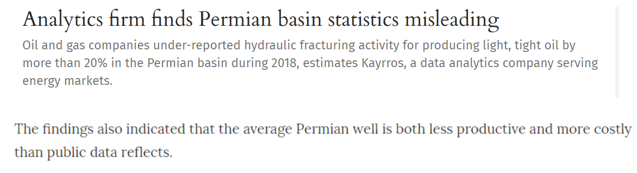
There has also been news that the Permian statistics aren’t quite as compelling as thought, that a lot more wells have been drilled then originally thought, and therefore that the efficiency of the overall field is not as strong as maybe it was originally thought to be.

At the front lines what we are seeing are questions about the long-term production of shale basins.

Other articles suggest that the “inventory” of wells is not the vast sea that it was thought to be, that more wells may be producing than originally thought, and that therefore the productivity of basins like the Permian are not as strong as originally thought.

Of course, take all of this with a grain of salt.  The Permian remains an extremely productive field and holds many years of growing oil production in the ground.  Also, the Permian is pipeline constrained right now so we need to see what happens when those constraints are removed in the second half of this year before drawing too firm a conclusion.

Nevertheless, there is some reason to believe that at the margins, shale is not the panacea it was thought to be.

On top of that US oil companies are beginning to be forced to follow their Canadian cousins and cut back on their unconstrained growth model.  Production continues to grow, but that growth rate may have peaked.

The rethinking of growth seems to be happening because A. the results of non-Tier 1 acreage aren’t as strong as had been hoped and B. because capital is drying up.

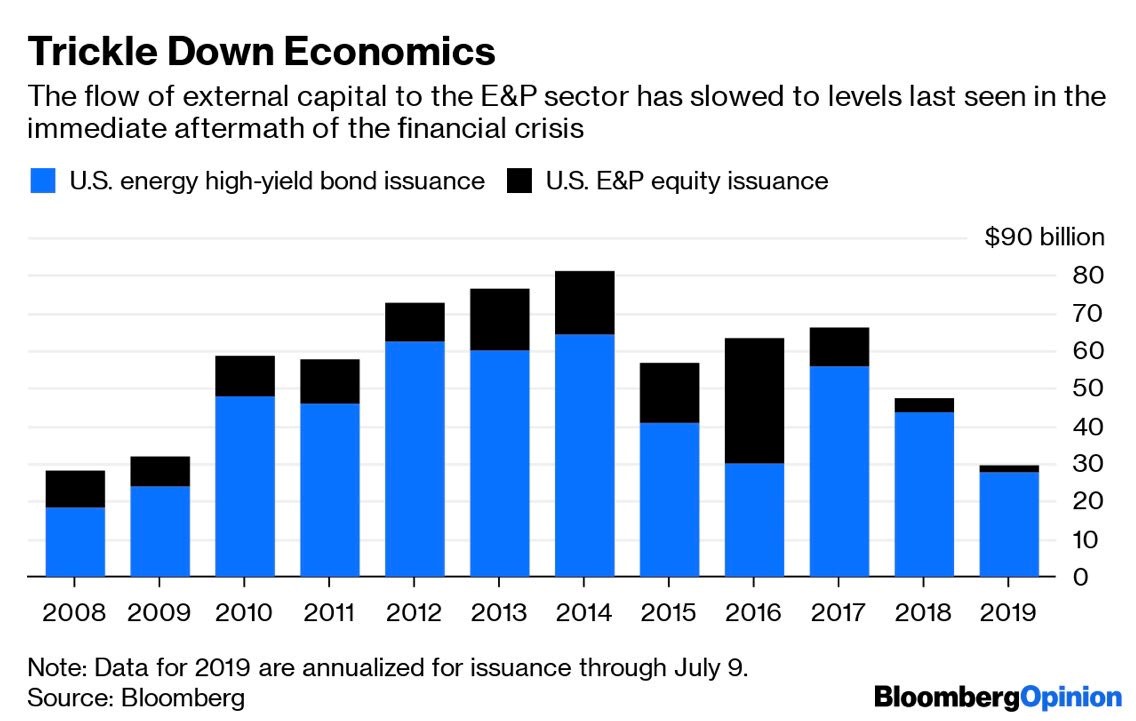
Both equity and high yield bond issuance of E&Ps continues to shrink.  Private equity, which has been going into the secondary basins and buying up fringe lands, appears to be stepping back and in some cases looking to sell.

The fly in the ointment is of course the global economy. If demand fails to grow all of these signs could turn out to be moot.

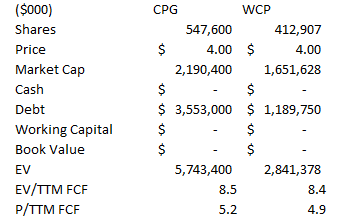
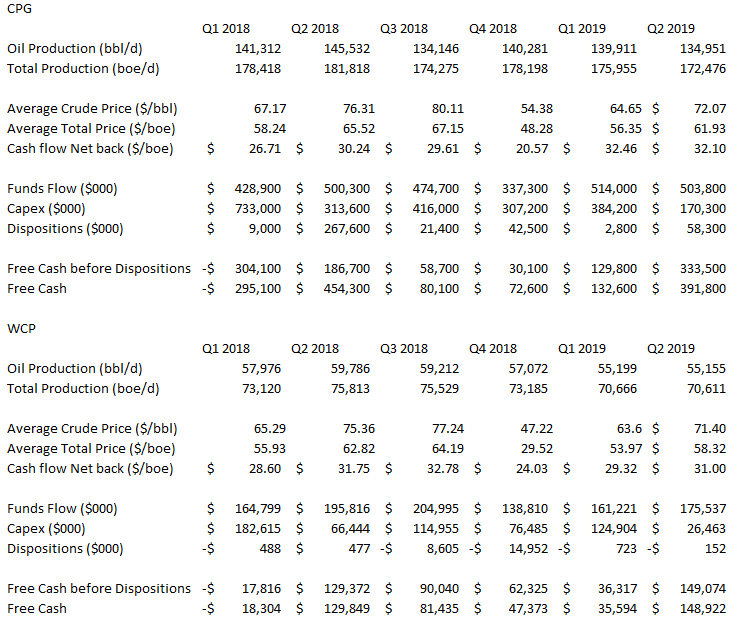
I understand that and will keep this position, like all my positions right now, small.  But Canadian oil equities are compelling from a value point of view.  Consider the tables of two that I decided to wade into, Crescent Point and Whitecap.

To be sure, there is very little growth here and in Crescent Points case they have been selling off production. But both companies have figured out how to generate free cash (not operating cash, free cash) quarter after quarter for the last year.

While it may seem totally unrelated at first, I was looking at the quarter of Texas Instruments (mainly because it is a stock I am short) a couple of weeks ago.

I was struck by the similarities of the business model of Texas Instruments to the business model of Crescent Point in particular over the last 4 quarters.

Texas Instruments trades at a 4.8% free cash flow yield, so basically 21x free cash flow.   They don’t get the valuation because their business is growing at leaps and bounds.  In fact, revenue is expected to decline from $15.8 billion to $14.7 billion in 2019.   Even looking longer-term, revenue was close to $14 billion back in 2010, which means growth since that time has been minimal.  At best this looks like a 5% growth business over the long-run.

But Texas Instruments gets a reasonably strong valuation because the company has been very good at returning cash to shareholders.  In particular, Texas Instruments is excellent at repurchasing stock.

I realize that the comparison is far from perfect.  Oil is not technology.  But see my point. The Canadian oil producers have transitioned to a business model that emphasizes free cash flow.  Now they are beginning to return that free cash back to shareholders by buying up their shares.

This combined with a change in narrative to one where shale is not going to produce unlimited oil, and it could be enough to change the fortunes of Canadian oil stocks.

We are still very early in the narrative change, and as I said it could be totally derailed by a global recession or some other trade induced calamity.  So hold your breath.

But if this change in narrative has legs, it, in combination with the newly found free cash flow generation of Canadian oil equities, is worth a bet. I’ve made a small bet and will be watching closely to see how it evolves to determine whether it warrants a larger one.


New Position in Evolent Health

I have a couple of resolutions for my new portfolio year:

  1. More concentration in the few names I really believe in
  2. More bottom-picking for lows

I think back to the years where I put in the best performance.  The winners those years were primarily less-than-stellar stocks that had been out of favor.

MGIC and Radian. YRC Worldwide.  Pacific Ethanol. Impac Mortgage.  IDT.  Yellow Media.  Heck, even very recent winners like Digital Turbine and Smith-Micro were scrap heap pick-ups when I started looking at them.

These were all stocks I bottom-fished on.  They were not picked from a list of 52-week highs.  They all gave me some pain before working out.  They all were big winners eventually.

Thus, a goal of mine this year is to spend more time looking for bombed out stocks and less time looking at 52-week highs.

I’ve taken a couple very small positions in struggling consumer products businesses in that regard (Big Five Sports and Dean Foods).  I’ve also bottom fished a couple Canadian oil stocks (Crescent Point and Whitecap).  But my largest endeavor by far into the world of beaten down tickers is Evolent Health.  The chart is a poster-boy for such a move.
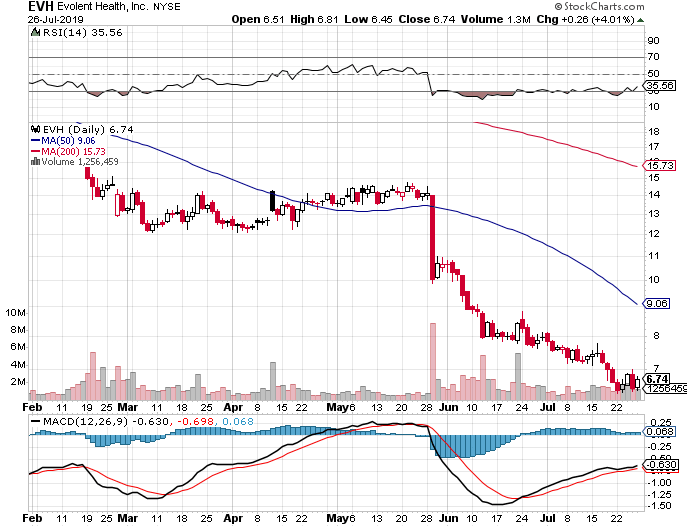
From what I can tell, the collapse of the stock can be attributed to three things:

  1. Revenue growth from the platform business has stalled
  2. Distressed conditions of a few customers have raised alarm bells
  3. Evolent has taken on an operational role and staked capital into its largest customer (Passport)

Let’s examine each.

The Platform Business

Evolent Health provides a platform that helps health plan providers manage the clinical and administration side of the business.  The platform specifically is geared at providers looking to take advantage of Medicare and Medicaid value-based care programs.

Value-based care are a series of relatively new initiatives created by state and federal governments in an attempt to better align the interests of health care providers with outcomes.

What is driving the change is the recognition that government needs to be more effective in their health care spending because the funding dollars aren’t there.

There is a long-term funding shortfall in health care.

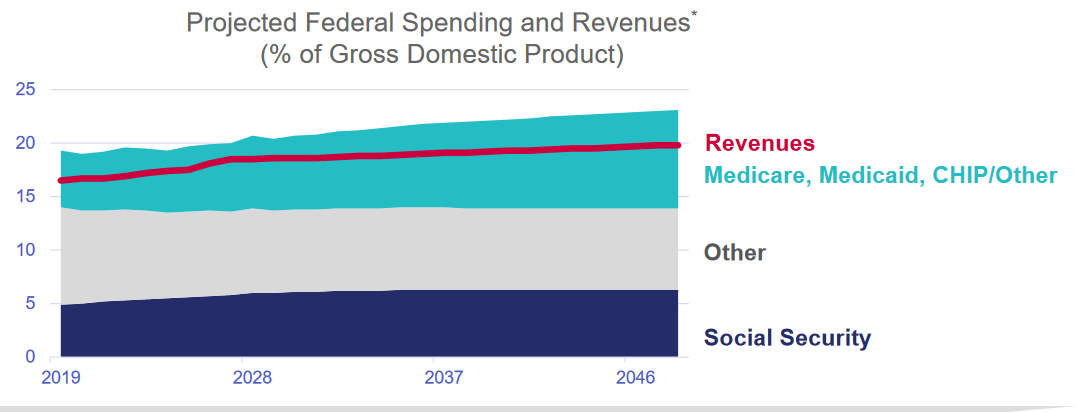
Evolent provides the following slide in their Investor day.  It illustrates the relatively flat revenue available from the Federal government (from taxes) and the increasing costs of Medicaid, Medicare and other government health programs.
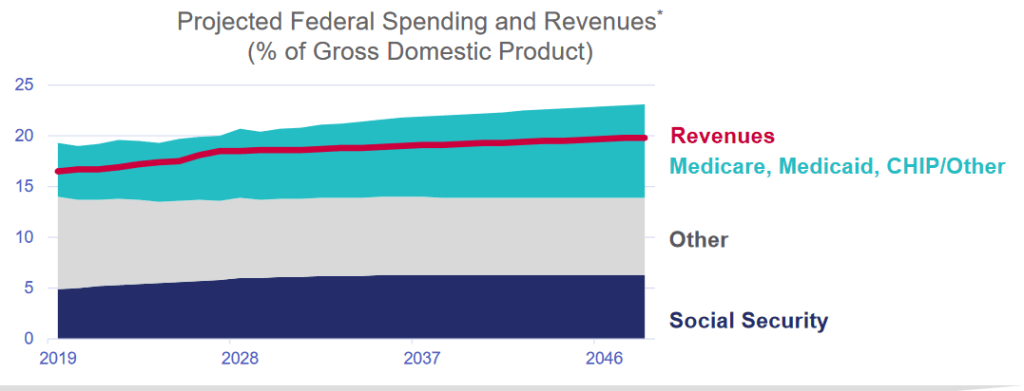
This disconnect has led government to look at different reimbursement models than just simply paying fees for services.

It is a priority.  In fact, value-based health care is considered one of the three top priorities by the Trump administration’s HHS secretary Azar.

The problem is that value-based health solutions are complicated. They require that hospitals incorporate data analytics, automation and a level of administrative, clinical, and financial risk assessment that they are not equipped to handle.

Evolent provides the platform to bridge that gap.

Where Evolent Sits

The Evolent platforms handle the clinical, administrative and financial side of the business   They integrate all available data to assess risk and provide a course of action for each life covered by providers and payers.

There are really two connected platforms.   The first, called Identifi, handles the clinical side , while the Aldera platform handles the administrative side.  The platforms can be integrated and customers that use either or both.
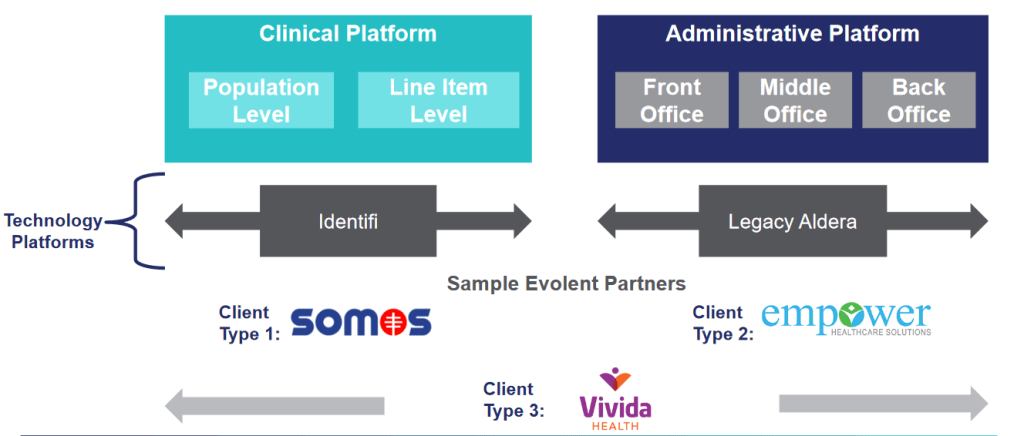
The valuation proposition behind the platform is simple:

  1. Medicare and Medicaid programs are available that can allow providers to improve their compensation from these programs.
  2. To capture that margin providers need to be armed with better data and tools.
  3. Evolent can be the middle-man to provide the data and tools.

What adds value to providers?

With each client Evolent asks the following questions:

  • how do we drive clinical value working with very engaged providers, leveraging all the tools that you need?
  • how do you help to monetize that?
  • how do we get paid for it?

One of the focuses of the Evolent platform is prevention. Engage the patient before they even get sick, engage the provider, and provide resources around the provider to help predict the outcomes before they happen. They call themselves “the best in the industry at determining who is going to get sick”.

Evolent has measured their performance against control groups and estimated that they kept their patients out of the hospital for 41,000 days in 2018.

When you think about the cost of a hospital stay, that is significant for a payer.  They reduce total medical expenses by 24% per life covered.

Another value proposition is as a single touch connection between providers and payers – rather than each provider having to handle 5 different platforms from 5 different payers, they can use the Evolent platform and handle one that has portals that integrate with all the payers they deal with.

What happened to the business?

The first reason Evolent has sunk is because revenue from the platform business has stopped growing.

Looking at the financials is a little misleading because Evolent completed an acquisition in the fourth quarter of 2018 – New Century Health. The acquisition added about $50 million of quarterly revenue and makes things look a bit rosier than they actually are.

Without it, we see a decline in platform revenue the last couple of quarters.
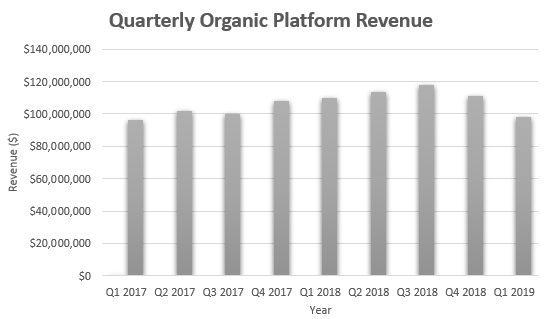
The company outlined the reason for the decline on the fourth quarter call.

First of all, the wind down of our early provider-sponsored Medicare plans combined with McLaren’s decision to in-source MDWise’s health plan operations will drive lower same-store revenues in the first and second quarter.

The decline will likely continue into the second quarter.  The provider-sponsored Medicare plans were high revenue per patient, which hurt margins as well.

The loss of the MDWise business is because they were acquired by McLaren, which now is integrating them into their own system.  MDWise is significant, with 360,000 Medicaid patients.

Together MDWise and the provider-sponsored Medicare plan losses are about $55 million of annual revenue.  A significant hit to a $450 million business.

Is this a read-through into Evolent’s performance going forward?  Here is what William Blair thinks:

Making up for the revenue loss, Evolent has signed 3 significant new deals (with RCMG, Premera and Empower).  These will begin to ramp up but not until the second half of 2019.

While we have one of the most robust pipelines in our history, our new expected deal start dates are more back weighted to the second half of this year. This is largely the result of CMS’s July start date for its Pathway to Success program, which impacted our Medicare line of business as well as New Century’s sales cycle relative to our October close date. The good news is we start the year with 2 closed deals in California and Arkansas, which we expect to fully ramp midyear and several late-stage deals, which are consummated would drive growth in the second half of 2019.

Concern #2: The Customers

The second concern is customer solvency.  Evolent Health has a short list of customers.  While they cover 3.1 million lives (after removing MDWise) they only have 30 or so partner organizations.

A few of these customers are experiencing a degree of financial duress.  Most notably is Passport Health, which made up 17% of Evolent’s revenue in 2018 and is expected to make up 10% of revenue in 2019.  Passport has been on the verge of insolvency this year.

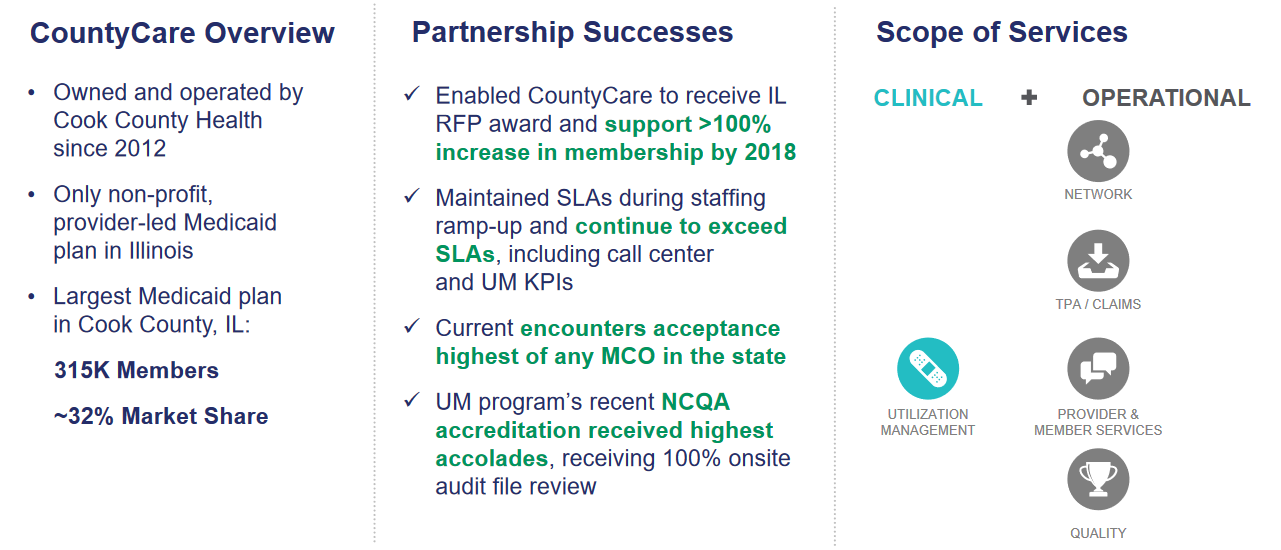
A second Evolent client that has been in the news (negatively) is Cook County’s CountyCare.  They were highlighted as a partner in Evolent’s May investor day.
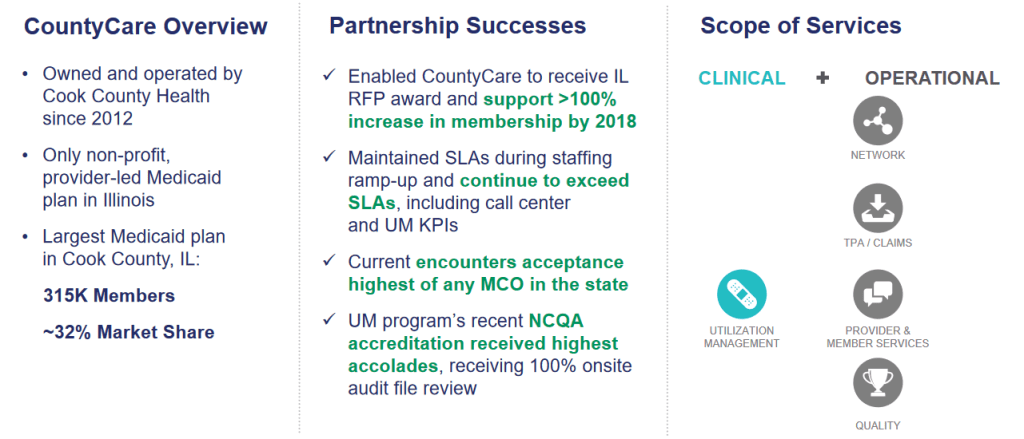
According to this article, CountyCare is far behind on payments and owes $700 million to providers.

Cook County’s Medicaid health insurance plan is so behind on paying vendors that there’s a shortage of pacemakers and anesthesia for surgeries – and some doctors even refuse to treat patients covered by the plan, according to a watchdog report released Friday.

CountyCare, however, refutes the claims.

The Passport Situation

Of the distressed customers, Passport is the immediate worry and the source of the third investor concern – Evolent’s ownership stake in Passport.

Passport is the second largest provider of Medicaid plans in the state of Kentucky. They have 315,000 lives under their coverage.  They are a non-profit.

Passport has run into trouble because of rate changes in Kentucky and inefficient operations.

There was a retroactive rate reduction last year that squeezed revenue.

Second, as a non-profit Passport is not as efficiently run as they could be.  Evolent described Passport as having “less urgency” than a for-profit company may have.

This combination of factors put Passport on the brink of insolvency this year.  They began looking for a partner that could help them both run the plan and be a capital partner.

Making the urgency of situation more immediate, Passport is up for renewal on their Medicaid license in Kentucky.

While the new Kentucky Medicaid contract, which runs through 2025, won’t take effect until next summer, bids are due on July 5.

In all likelihood Evolent was not keen to be a part owner in a health plan.  They implied that it was, at the very least, a process on their investor day call.

But Passport represents a lot of revenue to Evolent – over $100 million.  That revenue has a significant contribution margin.

Evolent probably felt they couldn’t afford not to take the risk.  This comes at a time where Evolent is already facing revenue losses from MDWise and some Medicare Advantage accounts.

The Market Reaction

The market didn’t like the decision to take ownership in Passport.  The stock fell 30% on the announcement.

A few reasons for the response.  The market does not like that Evolent is getting into the plan operations business.  It does not like that the business they are getting into is a money-losing plan.  It probably doesn’t love that they are essentially providing financing to one of their customers.

The market is looking at this as risk – to the existing revenue stream that Passport represents and to the $70 million that Evolent sunk into Passport for the ownership stake.

Evolent is supposed to be a platform provider, collecting fees and maybe performance incentives from plan providers.  Investors bought the stock to participate in that.  Not to see them run a plan themselves!

All fair points.  But when I dig into what they are doing with Passport, what seems to be missed is that there is an upside here.

The Upside

Passport is, rather obviously, a money-losing business right now.  They have lost $164 million in the last three years, including $60 million last year.

It’s a health plan in need of a turn around.  If Evolent really is what they say they are, they should be the ideal partner to create that turnaround.  This is a showcase for the power of their platform.

Not to mention a potential windfall if the business turns.

Consider the following:

  • Passport’s premium revenue from the 315,000 members is about $1.95 billion right now
  • Evolent believes they can take Passport’s medical expenses down to 90-91%
  • They also believe they can take Passport’s administrative expenses down to 8-9%
  • Together they see operating margins stabilizing at 1-2%
  • They also believe they can drive the base revenue of the services they provide to Passport (so essentially the platform services) by 50-75%

Let’s just entertain the crazy idea that Evolent can actually accomplish what it wants to do.  In such a scenario Passport would deliver $20-$40 million of annual operating income.

If that happens, Evolent’s 70% stake in the health plan is worth a lot.  Wellcare, which is albeit a large plan provider of Medicaid as well as Medicare plans, trades at 20x earnings.  Humana trades at 16x earnings.  UnitedHealth trades at 17x earnings. Molina Healthcare, which is the smallest of the group at $8.8 billion, trades at 13x earnings.

It’s easy to see how this could explode. If Evolent succeeds, let’s take the high end just for blue sky, is it absurd to think that Passport is worth 10x operating income or $400 million?   That would put Evolent’s stake at $280 million, or nearly half the market capitalization right now.

On top of that there is the benefit to the base services business.  Platform revenue increases by $50-$75 million as a result of increased integration with Passport.

The Risks

There is, of course, a lot that could go wrong.

In the short-run, there is a reasonable chance that the second quarter is bad.  The stock may still have another leg down.

Looking longer-term, the Passport experience may fail miserably and Evolent may end up losing not only its $70 million investment but the $100 million of revenue they currently get from Passport.

Maybe even worse, Evolent’s focus on Passport distracts management team and deals elsewhere fall through.

The other risk here, and it’s a legitimate one, is that the platform business slowdown is not just a one-time hit caused by MDWise and a few other customers.

The cynical view is that the acquisition of True Health New Mexico, the acquisition of New Century and now the ownership stake in Passport are really just smoke and mirrors – intended to obscure the revenue decline of the platform.

I, of course, cannot rule that out.

What I can say is that if the negative assumptions don’t play out and the platform business returns to low-double digit growth (management did a soft-guide to “teens growth” at the analyst day in May), there is really no reason the stock should be in single digits.  If they execute successfully on Passport, it could be much higher.

Evolent trades at under 1x EV/Sales.  Margins aren’t as high as most platform plays at around 40% (this is something I have to admit I haven’t quite wrapped my head around why) so they shouldn’t get the sky-high multiples that you see with some.  But under 1x has to be too low if the business isn’t on the verge of an implosion.

So that’s the opportunity.  I think it’s miss-priced.  I understand why its miss-priced.  I also understand that how it could be fairly reflecting what is to come.  But I think the risk is worth the reward.  I’ve made Evolent a pretty big position but I will double down if it tanks on earnings, but my thesis is intact.  I’m willing to take some risk here.
Week 419: Picking my spots

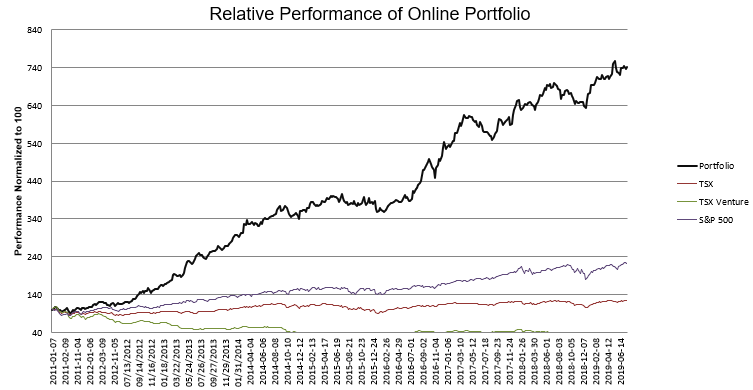
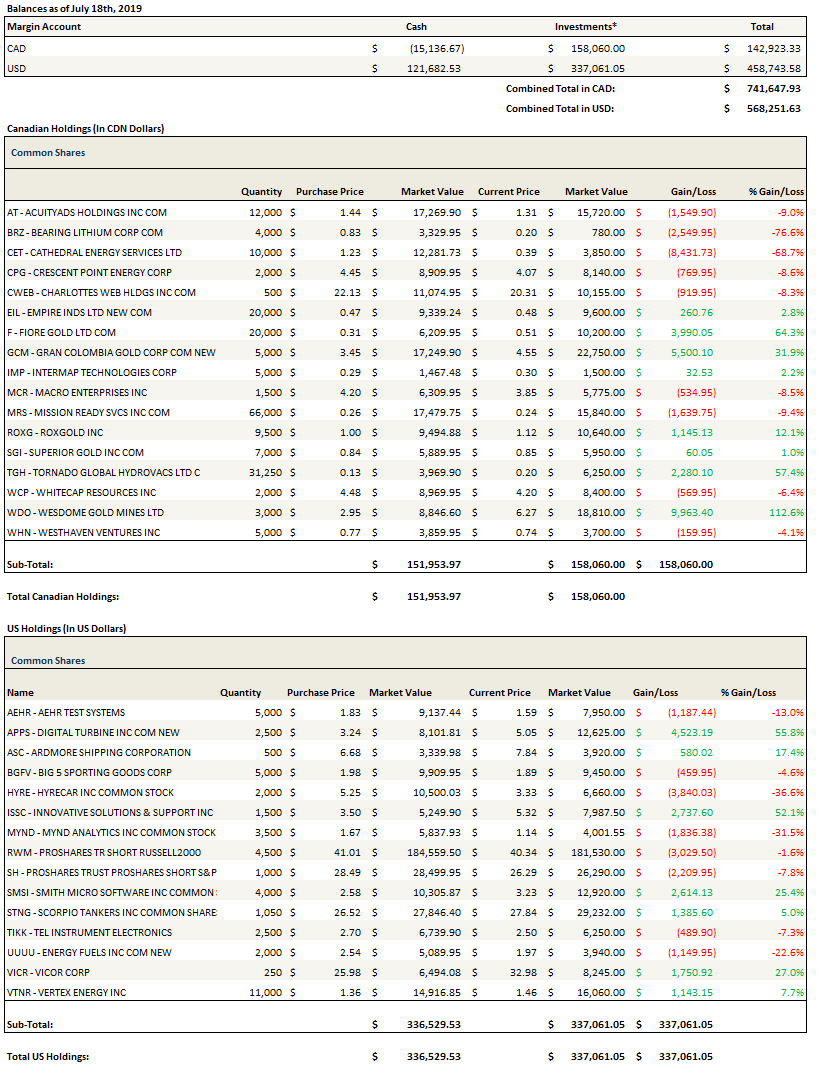
Portfolio Performance

Thoughts and Review

While the prior few months were characterized by performance that was better than it should have been because of the fall in the Canadian dollar, the last month and a half has seen the opposite.  My portfolio has done reasonably well, particularly the gold stocks, but I am about flat because of Canadian dollar strength.

Be that as it may, I suppose you could argue that gold stocks would not be performing so well if the Canadian dollar weren’t strong, as the two both move in tandem with the US dollar and that either way I would be standing still.  So I might be better to think of it as a hedge than a missed opportunity.

The rest of my portfolio, the non-gold side, is quite dull.  I expect that to continue until we get a correction.  I have a high level of cash in my account.  That cash level is even higher after taking into account the sizable hedges I have in place via a Russell index short and an S&P 500 short.

With flat or down being my tentative conviction, I expect to continue to under-perform the market if it moves higher unless one of the small, strategic positions comes through as a big win.

There are a few signs that maybe I am wrong to be so hedged.  The leading indicators have stopped falling, though they are still kind of flat-lining.  The Baltic dry freight index has experienced a big bump, though that may just be due to iron ore exports from Brazil coming back.  It is tough for me to make a call here, and tough for me to be terribly long when so many stocks seem to trade at valuations that I can’t make sense of.

The easiest thing for me to own have been gold stocks.  I don’t feel like they have recovered to reflect the current move in the price of gold.  Many of the juniors I am in still look very cheap on $1,300 gold.  I added a couple of gold names in the last few weeks: Superior Gold, Westhaven Ventures and Argonaut Gold (I seem to have forgotten to add Argonaut to the practive portfolio though).

I did sell a little Gran Colombia Gold and Fiore Gold this week just to get my overall exposure down.  The one thing that worries me with gold (in the short run at least) is the Fed.  Gold has a terrible tendency to be smacked on Fed days, and we have one of those coming up.  Is gold assuming a 50 bps cut or a 25 bps cut?  What Fed speak is gold pricing in?  Does any of it matter and will gold simply be sold by shorts because it can?  All questions that lead me to not want too much gold heading into next week.

I sold out of most of my IMO 2020 trade for the time being (I sold some STNG this week so that isn’t reflected in the portfolio update data).  I expect to re-enter the trade.  A couple of things led to my departure.

Regarding the refiners, I just feel they are so volatile, and as I said when I wrote about them, there are a lot of elements in addition to IMO rule changes that will lead to spreads.  PBF Energy and Marathon both had nice pops after I bought them (after the obligatory post-purchase slide of course) and I thought I would get another opportunity at some point.

As for the product tankers, I was surprised to see that spot MR and LR tanker rates had fallen below $10,000/day.  This simply didn’t make sense to me.  These rates held up through the height of refinery maintenance season and I just don’t understand why they are as weak as they are now, with most refineries coming back online.  I don’t profess any knowledge here other than simply “not getting it”, so I decided to exit these stocks until I understand what is going on.

With all that in mind I kept all of my Vertex Energy.  This is probably my highest conviction name, as they seem so perfectly situated to take advantage of what has to a surplus of high sulphur fuel oil with nowhere to go.

The only other real change to my portfolio is that I added to HyreCar when the company was offering stock.  I don’t know why they are offering stock.  There are folks that say they are in discussions with large OEMs that want to see more cash on the balance sheet and that may be the case.  It would align with their comments last quarter.  But it seems to me that doing a raise here, especially one without a warrant overhang or any other gotchas, makes this a reasonable place to take a position.

Finally I’m starting to add a couple of oil stocks.  I see the start of a change in narrative.  The neverending shale growth narrative appears to be wobbling.  If it topples, it would be good for Canadian energy stocks.

Portfolio Composition

Click here for the last seven weeks of trades.