Skip to content

Posts from the ‘Uncategorized’ Category

What To Do With Gold Now?

Gold had a big move last week.  We had a similar move in gold stocks.  A number of the names I owned moved quite a bit.   As is usually the case, I own a lot of gold stocks.  I am left with the question: what do I do with them now?

On the weekend I went back to look at the big picture.  After looking at gold supply and demand trends I am left drawing the conclusion that it is a mixed bag.   It really comes down to this: the direction of gold will be determined by investment demand for gold, which is largely speculative.

What I do with that – I’m still not sure.

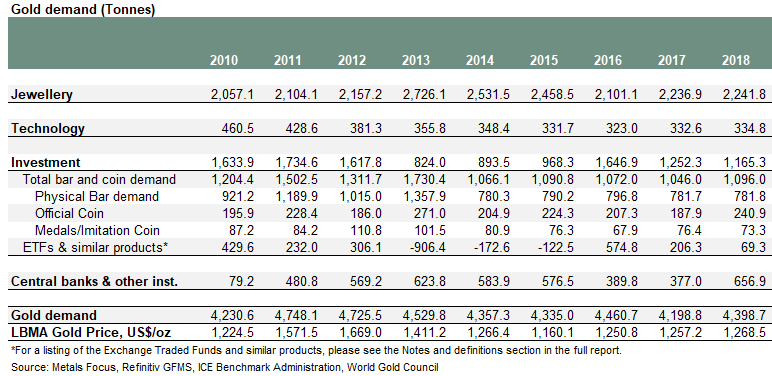
Here is the breakdown of gold demand from its major sources over the last 9 years.

The largest source of demand for gold is from jewelry demand.  It makes up a little over 50% of overall demand at 2,241 tonnes last year.

Within that tonnage, China and India make up a large chunk – 743 tonnes and 598 tonnes respectively.

That means that over 30% of gold demand comes from consumers in China and India that are buying it as jewelry.

I would contend that these consumers are most influenced by the price of gold in their local currency.

I suspect that when Chinese or Indian consumers purchse a gold piece, they have in mind a fixed monetary-value they are will to spend, not a specific amount of gold.

So for these buyer what matters is the price of gold in their currency.  Thus the US dollar price movements with respect to gold and with respect to their currency are the big drivers of how much volume they purchase.

The second consideration is going to be the economy.  Clearly, in better years there will be more money to buy gold jewelry.  In this regard, the trade wars and the slump of the Chinese stock market may not bode well for Chinese jewelry demand.

I think this is something that is often overlooked.  It is why gold is not quite the counter-cyclical trade it is made out to be.  Too much demand comes from jewelry, which is really the ultimate discretionary purchase, one that is correlated with the strength of the economy.

More generally, emerging markets are the big buyers of gold as jewelry, much more so than developed nations.  The United States only bought 25 tonnes of gold in the quarter while Europe was only 13 tonnes.  These developed regions have a fraction of the demand of China and India.

That makes me wonder about the long-term – will demand in India and China face headwinds as these countries continue to develop?

The US dollar performance is important.  Something we already knew.  But thinking through how local purchase volumes will rise and fall with the relative strength of the US dollar, it makes sense that gold prices fluctuate with this as well.  It doesn’t necessarily have anything to do with the relative faith or lack of faith in the monetary system.  It is likely just the anticipated fluctuations in gold jewelry demand.

Overall, I’m left feeling that jewelry demand is going to depend on how well the emerging market fairs economically, and how well their currencies fair compared to the US dollar.  That tells me that jewelry demand is not likely going to be a tailwind.

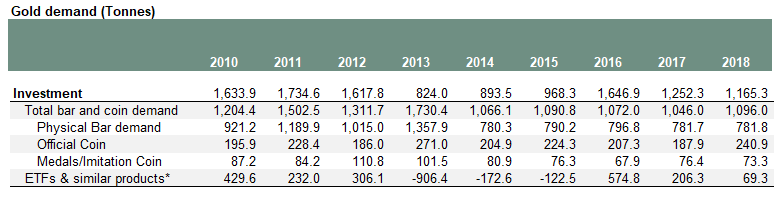
I’m going to ignore technology demand, which has flattened in recent years and I don’t see as a big influence to the upside or downside, and move onto investment demand.  Investment demand was 1,165 tonnes in 2018, which is down 7% year over year, up quite a bit from the trough years of 2014 to 2016, but down significantly from its peak.

I’ve broken out investment demand with more granularity because I think its interesting to see how different physical demand and ETF demand behave.

Clearly all types of investment demand can fluctuate wildly.  Just looking at it peak to trough, it moved 800 tonnes.  That is nearly 20% of gold demand.

But ETF demand is particularly volatile.  Between 2013 and 2016 it fluctuated almost 1,500 tonnes.  That is just a massive amount.

It is a wonder to me that the price of gold doesn’t change more dramatically.  Consider that oil can go down $20-$30 a barrel on a ~1-2 mmbbl/d change in supply/demand in a market of 100 mmbbl/d!

Investment demand is really what gold is all about right now.  Its a wildcard for the reason that unlike other sources of demand, it is self-reinforcing.  Generally, demand self-corrects with price.   Investment demand doesn’t.  It can actually increase with price, particularly if we get a speculative bubble.

Probably the most important point with this regard is simply that investment demand makes up 30% of overall demand.  That is a lot.  It means that gold is unique to other assets were so much of underlying demand is made on the basis of price expectations.

If you are betting on gold to go higher, you are betting that investment demand takes off.  Considering what seems to be happening with monetary policy, that we are moving back towards something like quantitative easing, and that an active currency war doesn’t seem impossible, maybe this isn’t that farfetched?

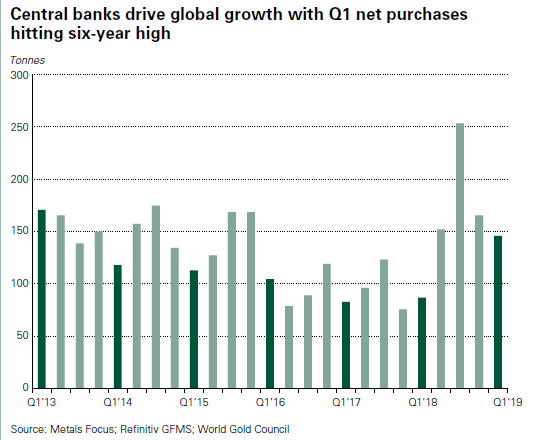
Related to this thesis would be that Central banks step up their purchases.  Central banks purchased 145 tonnes in the first quarter.  They account for roughly 15% of purchases.


Central bank purchases have been bouncing around without much of trend until recently.  But maybe, if you squint enough, you can see that purchases have ticked up over the last year and a half.

It makes sense.  A consequence of Trumps trade war should be that Central banks look to diversify currency holdings outside of US dollars.  At least at the margin.  That should add incrementally to gold demand.

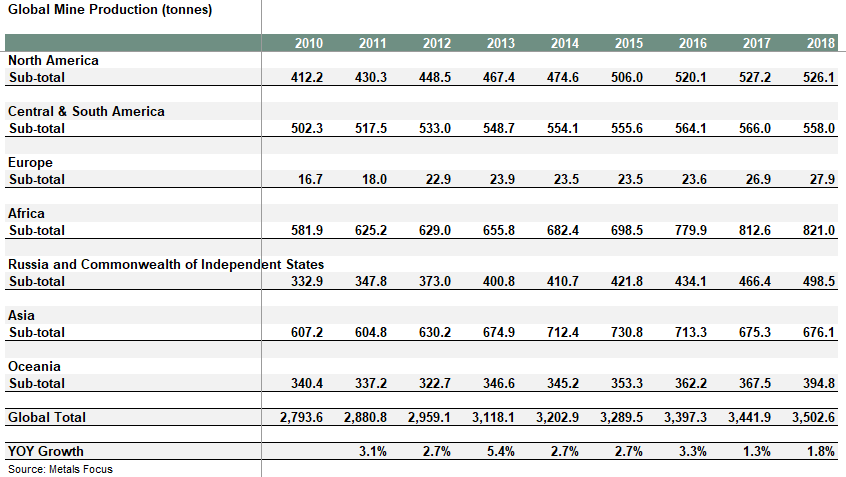
So that’s it for demand.  On the supply side, I read lots of talk about peak gold.  But to be honest, I don’t see it in the numbers yet.

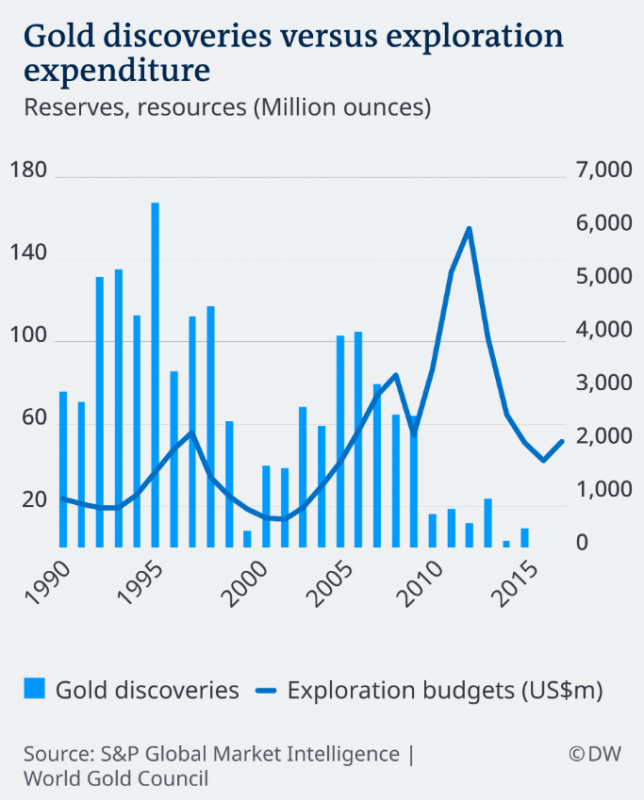
There is a good basis for peak gold as an idea.  Gold discoveries have seen a significant slide over the last few years.

The natural consequence is that we should see a drop in gold supply.  There are analysts forecasting this to begin this year.

The problem is I don’t see it yet.  Here is a closer look at gold production over the past 5 years.  Gold production may be slowing, but its to early to say that its definitively rolling over.

In the first quarter of this year, gold production was up about 1%.

The last piece of the equation is the gold stocks themselves.  Where are they in comparison to the price of gold?

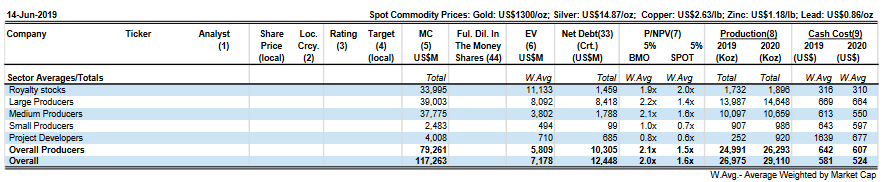
It looks to me like there is a big variation between the larger cap stocks and the smaller ones.  Take the following table from BMO, which is looking at that net present value (NPV) of large, medium, small producers and developers at $1,300/oz gold.

Small miners are trading at half the multiple of the larger ones.

I can pick out small miners I own that are even less than that.  Argonaut Gold is at about 0.5x NPV.  Superior Gold is at 0.3x NPV.  Even Wesdome, which would be considered the darling of the junior gold stocks, is only at 1.1x NPV.  I haven’t done the NPV math on Gran Colombia, Roxgold, or my most recent purchase, Fiore Gold, but I am pretty sure these names are all well below the average.

A last consideration is that Australian traded producers get a premium to those listed in Canada.  BMO did a piece on this recently.  They pointed out that the average Australian name trades at 10x cash flow at $1,300 gold, whereas the average Canadian name trades at only 6x cash flow.  Again, the junior companies that I am invested in are even cheaper.

This combination, both relative value compared to larger producers and relative value compared to their Australian counterparts, should set the table for trans-ocean M&A.  We already saw the first arrow across the bough with the acquisition of a name I owned, Atlantic Gold.  Even as I have reservations about what drives the price of gold higher, and how sustainable that is, I’m inclined to hold on for now.


Another way I’m Playing IMO 2020

I’ve spent a lot of time digging into IMO 2020 over the last couple weeks.  This is on top of all the time I spent late last year and early this year.  So sum total its been a lot of digging.

The conclusion I’ve come to is that its complicated.  Its not really clear how many elements of the crude complex (a catch-all name for every producing, storage, transportation and refining piece that plays a part in getting crude and refined oil products to customers) are impacted.

The two things that seem most certain to me are:

  1. Heavy sulphur fuel oil spreads are going to widen
  2. Demand for distillates will increase

So how do you invest in those most likely outcomes?  The best I can come up with is to A. buy product tankers that will ship the distillate from one place to another and B. buy refiners that can take high sulphur oil and convert it to light products like gasoline and diesel, and to.

I’ve talked about product tankers before.  So let’s focus on the refiners.

I actually feel more confident that heavy sulphur fuel oil spreads will widen then any other outcome from IMO.

Why?

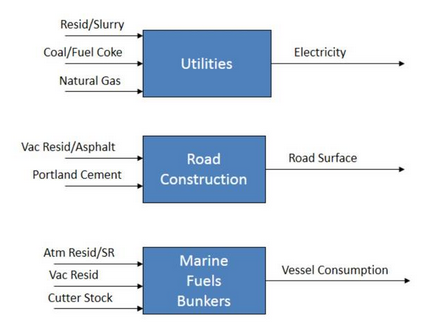
With IMO 2020 sulphur becomes the enemy.  In the past, refiners would use high-sulphur fuel as feedstock, make money off the light products and sell the bottom of the tank high-sulphur dregs into the bunker market.

Apart from ships with scrubbers and some non-compliance that will no longer be the case.  The only remaining markets are asphalt and low-end power generation.  Those markets aren’t big enough to take over the nearly 1 million barrels a day of HSFO that will need to find a home.

The price just has to come down.

I’ve listened to a lot of conference calls from refiners.  The most interesting comments came from PBF Energy CEO Tom Nimbley.  He answered a number of questions on the topic on PBF’s fourth quarter call. I’ve put those comments together here to form the narrative.

First, he frames the issue at hand that we are all aware of.   If a refiner doesn’t have complexity (cokers or hydro-crackers), they can’t turn HSFO into light products.  Thus they are producing high-sulphur fuel as a product:

There’s over 4 million barrels a day of distillation capacity that  has low complexity and significantly more than that doesn’t have coking capacity.  So on paper, if you lose the outlet for your high sulfur fuel oil bunker market and that stream is still there…

The “…” is the trailing off of the thought “what happens to all that high sulphur product?”

Second he puts some numbers to the problem.  HSFO prices are going to fall.  Spreads will rise.

If indeed, you’re on the margin going to the power sector [because there is no bunker market], then you are going to end up with these $30, $40, $50 clean/dirty spreads, which will push coking economics to be very attractive

Third, he explains what refiners with complexity (ie. cokers and crackers), are going to do if spreads get to that point.

Personally I think you’re going to see an opportunity or a shift, a wave of perhaps going from a filling your cokers on the margin from crude to filling your cokers on the margin from somebody else’s stranded feed stream [HSFO].

we’ve got to be ready to be able to have the catcher’s mitt to take somebody stranded oil and not necessarily just fill the cokers with crude.

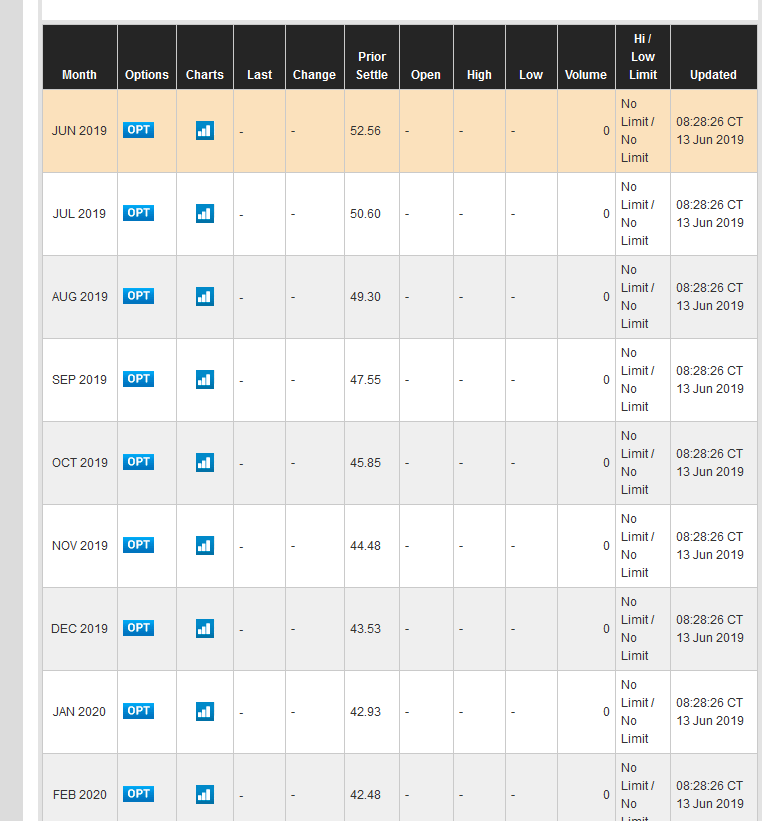
We are starting to see the market price in some, but not all, of this in the futures.   HSFO futures are up to a $10 spread between now and January 2020.  That is up about $3 from a few weeks ago.

The tough part with buying refiners here is that there are a lot of other variables that determine the share price.  I’m still waffling because they are anything but recession proof.  Crack spreads are volatile.  This isn’t as clear cut as product tankers.

A weak economy is going to hurt them.  Increased gasoline exports out of emerging markets are going to hurt them.  Tight heavy oil supply out of Venezuela, Saudi Arabia, Iran and Alberta is going to hurt them.

These are all considerations that (I believe) are responsible for their dreadful performance this year.  These stocks are way down even with the prospects of IMO on the horizon.  It’s my (albeit tentative) conclusion that the downside risks are priced in whereas the upside one’s are not.

My biggest refiner position is Marathon Petroleum.  It seems relatively safe because of its size.  It has complex refineries that can take advantage of high sulphur crude, in fact it has the largest capacity of coking and hydro-cracking capacity of any independent refiner.  It has two very large refineries in the Gulf and a bunch in the North that are destinations for Canadian heavy crude.

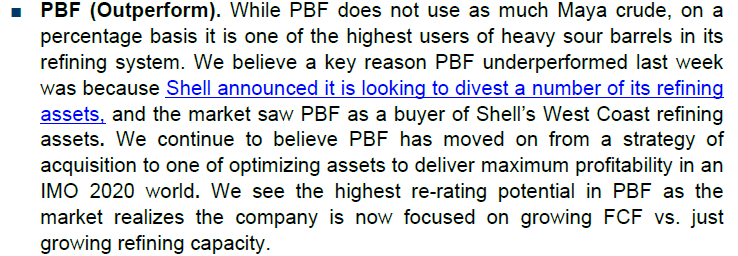
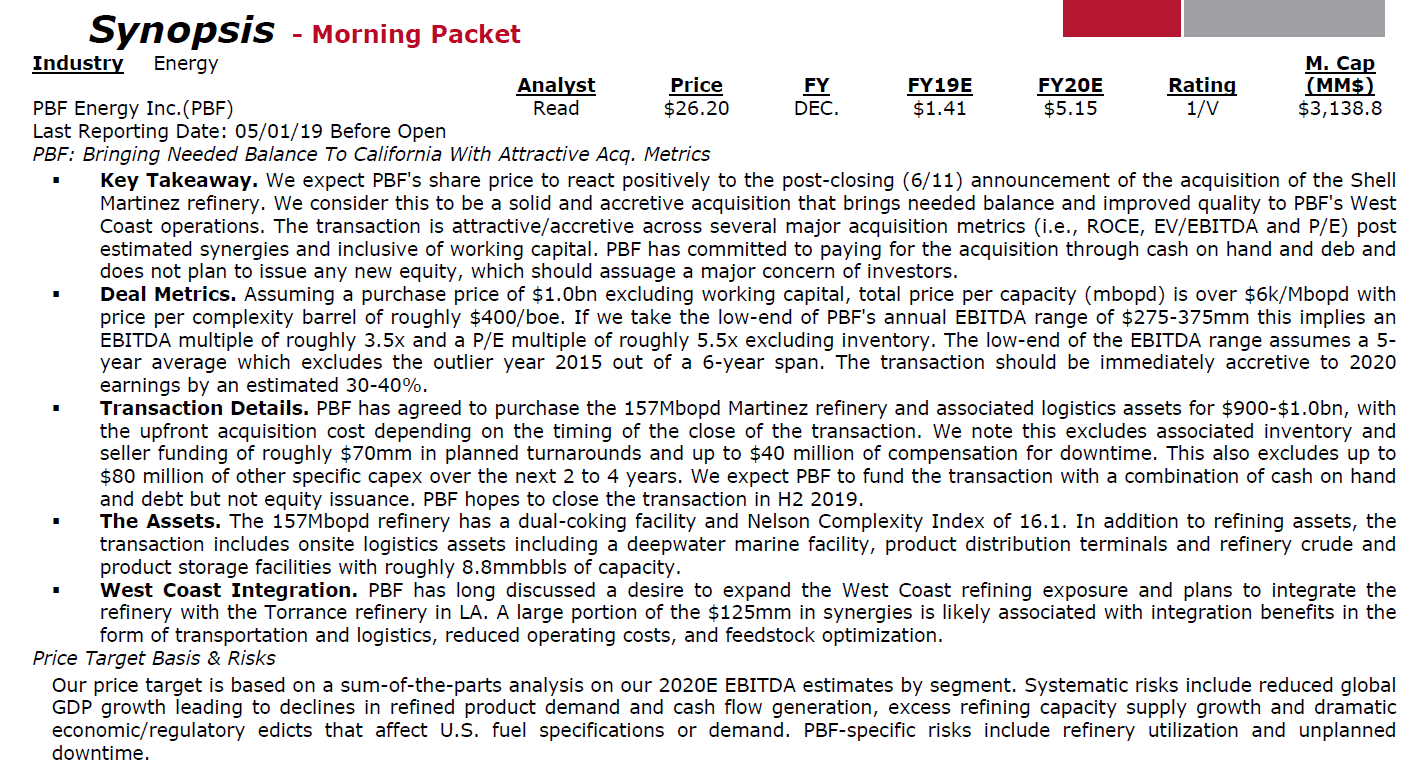
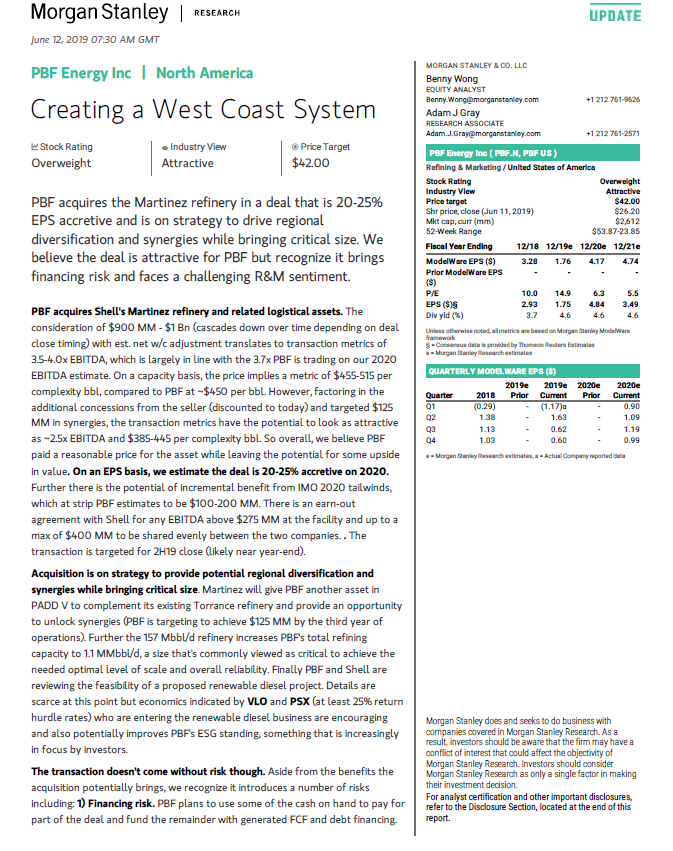
The second position I’ve taken is PBF Energy.  I bought a little of this one a week ago but added to it after the stock swooned on news of an acquisition.

PBF announced on Tuesday that they were buying the Martinez refinery from Shell.  I guess the stock slid because of worries about debt.  Some analysts were also taken by surprise, having not expected PBF to make an acquisition.  Consider this piece from Credit Suisse a few weeks prior:

I believe that PBF got a fair deal and the upside from IMO 2020 is significant (I have pieces on the deal from Wells Fargo and Morgan Stanley).  On the call the analysts seemed to want to discount the IMO upside.  In an RBC note they said that their discussions with long investors gave “feedback on PBF’s Martinez acquisition [that] was exclusively negative.”

That’s fine.  If I’m right then it will be an upside surprise.

PBF Energy has some of the most complex refineries in North America.  They will benefit if HSFO spreads rise significantly.  As I quoted above, Tom Nimbley, their CEO, is ready to switch their cokers to HSFO if prices dictate the move.

But PBF is also one of, if not the, most levered refiners to spreads and that goes for the downside as well.  I have to be careful with this position.  A recession will send the stock tumbling.

The third position I’ve taken is a much smaller refiner called Vertex Energy.  Vertex has some hair.  They have debt that needs to be refinanced.  They have a messy share structure with convertible preferreds.

But they are perfectly positioned for IMO.  Vertex runs odd little refineries that take in used motor oil (UMO) as feedstock.  It just so happens that UMO is benchmarked off of HSFO prices (#6 fuel oil).  The discount for UMO is typically between 70% and 90% of HSFO.

Vertex laid out the scenario in this white paper last summer.  The numbers seem legit to me.  For every $10 move in HSFO, all else being equal, Vertex adds around $12 million of EBITDA.

Vertex is a play that things get silly on the HSFO side of things.  The $10 drop we see in the curve is nice, and it will help Vertex, but it isn’t what I’m looking for.

I think there is a chance where there is simply too much HSFO and no where for it to go.  In that case the price change is more like the chart in the white paper.  Or better.

In addition to its existing capacity, Vertex is expected to re-open their TCEP refinery in anticipation of IMO.  The company said they have been working on developing products from their TCEP refinery that will be blend stocks for IMO compliant fuels.  The Marrero refinery, which is operating, already produces a compliant low-sulphur (~0.1%) fuel.

The product slate from these refineries means there is some chance of upside pricing on that end as well.  But we’ll see.  I’m less certain that there is a significant pricing change on the low-sulphur fuels.  It’s the drop in high-sulphur fuel that seems most likely.

Week 412: Round Trip

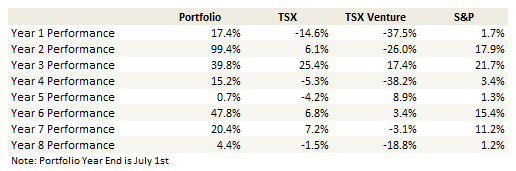
Portfolio Performance

Thoughts and Review

First and unfortunately I was stopped out of Intelligent Solutions this week.   It was not a hard stop, but I had set in my mind that if the shorts continued to attack the name that I wouldn’t fight it.  So when the second report came out on Thursday, I didn’t hesitate and sold.

That meant a full round trip on the name, which was painful.  My reasoning had nothing to do with the content.  In all honesty I didn’t even read the second report.  The point here is the spirit; the intent is clearly to be sustained, and in the face of that pressure how can I own the stock?

The shorts always have uncertainty at their back.  They always have the 5,000 other stocks out there that are relatively unblemished alternatives for investors.  There is probably a level where I am willing to own Intelligent Systems again, but it is lower than $27, as the risk premium I would tag to this short attack is unusually large.

That is in part because of the shorts, which are very good at what they do, well known, and generally respected.  Each report seems to carry weight and I’m not sure if the content is really that relevant to that.

In part it is because of Intelligent Systems.  Look, I was naive. I knew about Parker Petite but I thought the business and the modeling I did of its prospects, mattered more than his likely limited role on the board.   I knew about the related party transactions, I mean they are right there on the conference calls, but I didn’t think of them negatively because they seemed small and the company seemed up front about them. I actually thought the shorts would look at Intelligent Systems and think not to bother.

I see Intelligent Systems is fighting back with a conference call on Wednesday.  I wish them well and, at the right price or if there is evidence the shorts are backing off, I will look at it again.  But for now I simply don’t have the desire to wait and see if there is another shoe to drop.

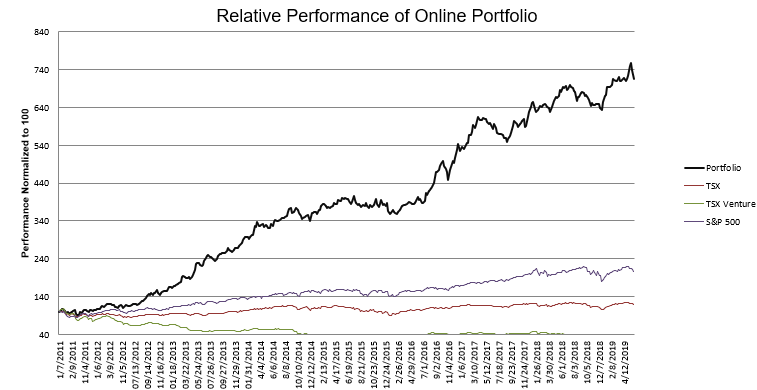
The round trip in the name meant a round trip in my portfolio.  While I could cry over this spilled milk, a quick look at the chart of my portfolio reminds me this is just a blip.  I used the example of Bellatrix when I wrote about Intelligent Systems a few weeks ago – that occurred in October 2014.  You can see a similar blip with my portfolio then.  But I didn’t let it derail me, and I kept on going then like I will again now.

Apart from that I’ve done okay, but my performance has again been skewed (positively) by the weak Canadian dollar.  I mentioned this last update – again these last 8 weeks I gained a full 1% of performance from the Canadian dollar weakness.  Unfortunately in my actual portfolio I am hedged on currency to a large degree so this is misleading.

My primary position changes apart from Intelligent Systems have been large index shorts (RWM, HIX, SH and such) including a short on the newly release marijuana ETF (I also remain short Canadian banks and a number of tech names), a few small long positions which I may or may not keep, a long product tanker trade and a long protein producer trade.

My tanker trade is expanding again to being long IMO 2020.  I listened to Ardmore Shipping’s Investor Day.  They had Andrew Lipow on as their expert.  He painted a very interesting picture – one of increased refinery runs, expanding crack spreads, and large discounts for heavy oil.  By coincidence I talked to an oil trader at a large refiner this weekend and he mostly agreed with the assessment.

So while I didn’t have any refiners in my portfolio as of Friday (the snapshot I’ve included here), that changed Monday.  The ideal refiner would have ready access to high sulphur fuel oil spreads, being able to run increasing heavy crude loads if prices dictate.  I added Marathon Petroleum on Monday, which is not ideal but should benefit.  I also added a second refiner, which is much closer to ideal, but which I am still adding to, so I won’t name that name yet.

The protein producer trade I’m still working on, and I’m not sure I’m right about it, but it seems like African Swine fever is going to eliminate a significant amount of China’s pork supply.  While this should help all protein producers (Tyson and Sanderson Farms are two charts that have been very positive this year) – I think the one it could help the most is BRF SA.  They are a maligned, restructuring producer in South America.  As such the stock is still well off last year’s highs.  But they are not in the middle of the trade war, which means they should benefit more than their American competition, and they seem to be turning their business around, though that might be too early to say.  I bought the stock too high and it has come off, but I will give it room to work because I am of the mind this plays out positively in the next year or so.

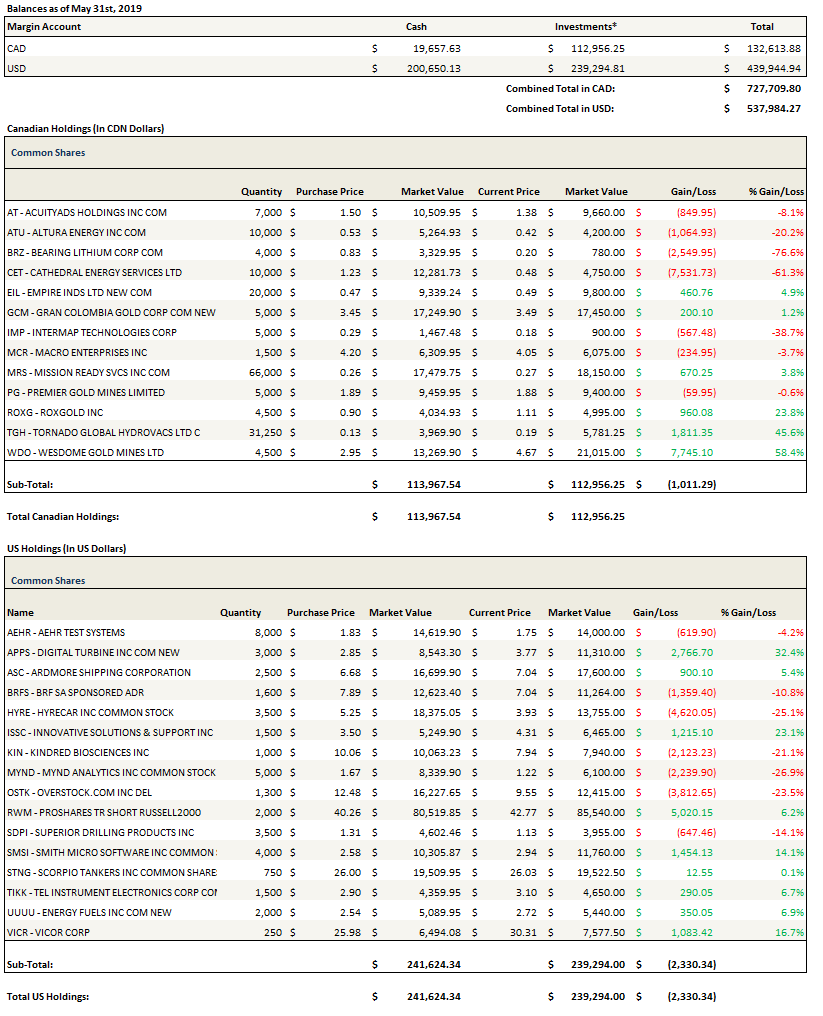
Every so often I dedicate a post to some of the small-nano cap positions that I hold on my books.  These positions are generally too small to hurt me much but likewise they are unlikely to help unless they become moonshots.  Which is really why I keep them around.   There have been some interesting developments with a few, so here it goes.

Empire Industries

I have no idea what is going on with Empire Industries.

To put it bluntly, the fourth quarter was a disaster.  Here are some highlights:

  • Lost $48 million in the fourth quarter
  • Reported a whopping -50% gross margin on the quarter
  • Posted -$15 million of EBITDA

It is really no exaggeration to call it a disaster.  Keep in mind that Empire had a market capitalization of about $40 million at the time.  They lost more than their market cap in a quarter!

The company did provide a reasonably positive update.  But I can’t imagine that alone is moving the stock.  The team here should have very little credibility after having said last year at this time that the losses from first-generation products were behind us.

Honestly, when I saw the results released over night I thought the stock was going to open sub-30c the next day.  When it didn’t I was surprised but thought there had to be a delayed reaction coming.  None did.  Instead the stock steadily climbed higher.

I can think of one possible reason that the stock is climbing like this.  And that has to do with the debt.

The Group just closed a $38.5 million debt financing with what they called “a wholly owned subsidiary of a Fortune 500 company”.  The rate on the debt is prime plus 9.5%.  It’s not free money.

I went through the Fortune 500 list of companies.  This isn’t a big bank.  If they were getting money from a big bank it would have come from Canada.

There are a total of 4 companies that have some tie to the industry Empire is in: Disney, MGM, Discovery, and Wynn Resorts.

Of those 4, there is 1 that I could see moving the stock like this.  Disney.

So that’s my guess.  A total blind guess.  But its the only thing that could explain the price action.  Somebody found out that the lender is Disney.  Which would mean Disney is willing to backstop the business.  If that is the case, it’s a very big vote of confidence.  But again, I’m guessing.

Empire has since then announced its first quarter results. They were better.  Positive EBITDA at least.  But nothing to write home about.

Yet the stock holds up.  I have to think that something is going on.

Tornado Hydrovacs

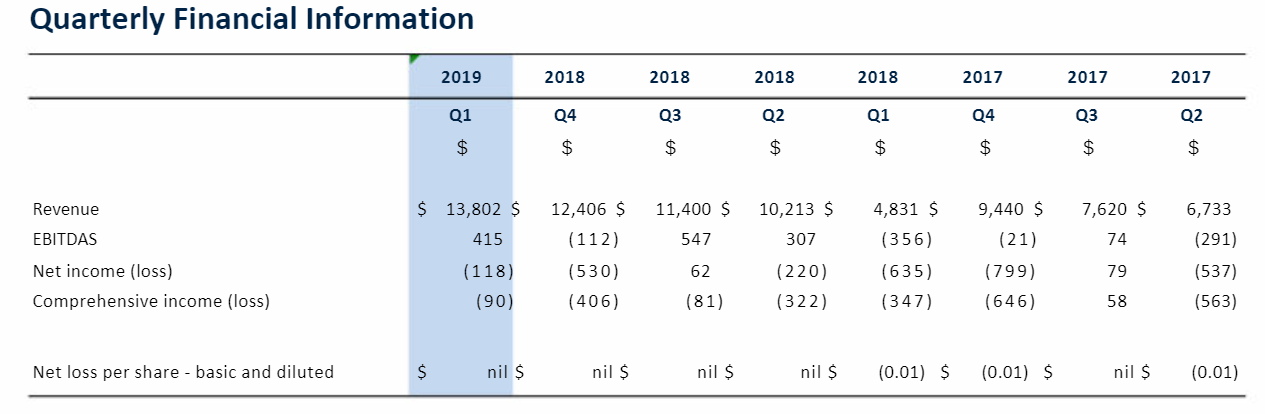
Tornado has been the much better performing sister company of Empire since they were spun out a couple of years ago.  They announced their own first quarter results this last week and again they were very good.

Revenue has been flying at Tornado for the past year.  Year over year it was up from $4.8 million to $13.8 million.

Its still a very low margin business though, which means even with the revenues they aren’t seeing a big return to the bottom line.  Gross margins for the quarter were 14.4%, which is lower than the 16-18% margins they’ve had in the past.  They attributed this to too much business – outsourcing some parts to other vendors that had to ramp their production to accommodate it.  Tornado said this will come back down in the next few quarters.

The China business remains a work in progress.   Tornado said they were still focused on “developing business” in China – rentals and educating market – which probably means that they don’t have a big sales pipeline yet.

Tornado generated nearly $1.5 million of cash from operations in the quarter.  But $1.2 million of that came from working capital adjustments.

With 126 million shares outstanding, at 21c the market cap is around $25 million.  That seems close to fair given where we are with the business but maybe cheap if China gets going.  They need to put some more of that revenue onto the bottom line, and show some revenue from China, before the market is going to pay much more.

Cathedral Energy Services

I continue to be surprised by just how crappy this business is doing.

I know the oil services business is hard and how right now it is very hard.  But I keep thinking that Cathedral will figure out a way to squeak in some profits here at some point.  But that has yet to happen.

Revenue in the first quarter was okay – it came in at $37 million versus $40 million the previous year.  But gross margins were not very good – 7% versus an already low 12% the year before.

The company blamed the poor results on the management of the US business and not a sector-wide slowdown.  To that end they reorganized the US business and let go of the man in charge and replaced him with the former head of Canadian Operations – Clayton Lagore.

It does look like something was wrong on the US side – they noted in the MD&A that the average day rate was up from $11,662 per day to $12,969 per day year over year.  You would think that with a little bit of pricing power that Cathedral would have been able to expand margins, not shrink them.

I’m sitting on this stock as dead money, just waiting for something to happen.  While I clearly should have sold a year and some ago when the stock was $1.50, it seems too late to do that now.  Tangible book value sits at $81 million while at 61 cents the market capitalization is around $30 million.  Of course the argument can be made is that these are not terribly good earnings producing assets, which is a fair comment.  Nevertheless it is a point of consideration that makes me willing to sit on my small position and wait.

Innovative Solutions and Support

This is one of a couple of my most recent nano-cap pick-ups.  I’ll try to get to a more full write-up, but just briefly here is the thrust of it (pun intended):

ISSC produces aviation products: Flight Management Systems, auto-throttles, cockpit displays and air data equipment.

The opportunity here is two-fold. ISSC is experiencing an up-tick in demand because their utility management system is being sole-sourced for the new PC-24 aircraft from Pilatus and increased demand for cockpit retrofits of 757 and 767 aircraft. B.

But its their ThrustSense Auto-throttle that is the big opportunity here.  The auto-throttle provides engine safety and protection – it is intended to be an upgrade component on smaller aircraft like the twin-engine turbo-prop.

The market for this upgrade is extremely large.  Management estimated that over 5,000 King-Air aircraft are addressable and that overall 10,000 aircraft are addressable.  ISSC has received FAA Supplemental Type Certification for retrofit on the King Air aircraft and the PC-12 aircraft.

ThrustSense sells at ~$50,000 or it can be paired with a retrofit cockpit for $300,000.

That puts the TAM on the low-end at $500 million.

ISSC has a $60 million market cap with $20 million of cash.

I will write more later but that’s the punchline.

Mission Ready Services

Since the close of the Unifire deal Mission Ready has made two contract announcements (here and here).  It’s not a bad start, and if it is representative of a typical month then we might actually be onto something.

The stock seems to have a huge overhang of shares however, which I don’t really understand.  It is odd to me that there was far less selling and far less on the level 2 during months of uncertainty where we didn’t know if there would even be a business when it all was said and done.  Now that Unifire is in the mix and contracts at the ready, the shares seem to have accumulated on the ask.  Does that not seem a little bit odd?

At any rate it appears that Mission Ready will sit here at this level until we get a data point that compels some big bids to come in.  What could that be?  Well an investor presentation, one that actually gives some indication of the profitability of Unifire’s business, would be a start.  And keep the monthly contract updates coming.

Overstock

Yeah okay so this isn’t a nano-cap or even really that small of a position for me at the moment.  But I like to tuck it in here so I can talk about it without getting anonymous emails about the stock.

It’s a battleground.

Yeah so its true.  I bought Overstock again.  I think this is time #4?  The first two worked, the first actually worked very well.  The third, and most recent, worked not so great – I believe I sold it around $17 after buying it at $20.

So now we are on #4.  This time I feel like I might stick around for the denouement.  Unfortunately I bought some before Byrne disclosed that he sold shares.  After he did, I doubled down in the $10’s and promised myself I wouldn’t buy it again!

So why buy Overstock?  It was really all about the retail quarter for me.  It looks like its turning around.  The Google SEO results continue to improve and that is the driver – free customers.  I think I said it in an earlier update – the fact that the e-comm business didn’t collapse even more given what was going on with their SEO customer acquisition is really quite something.  I mean how can you lose all those free eye-balls and still make a go of it.   I still think the whole growth initiative last year was a smokescreen to invest in figuring out SEO before the entire business became too far gone to repair.

So what did we get?  Byrne sold shares.  Then told off the shareholders for asking him why.  What else is new?  I’m not sure if anyone noticed but in his letter lambasting shareholders he did point out that there were comments of interest made at the General Meeting of Shareholders.  I listened to that.  It was worth the listen – though as with anything said by Patrick Byrne take it with salt.

I think its a pretty simple bet here.  If e-comm isn’t on its way to oblivion then at some point the stock trades back to at least the high-teens.  Maybe higher.  The tZero business may be huge and may be nothing – its same as it ever was.  This Medici Land Governance is landing some large deals (again listen to the Meeting of Shareholders for some more details on that) but who knows what those are worth.

One last consideration for me is that if e-comm is not hemorrhaging money any more (and as it has been quite rightly pointed out to me, we don’t actually know that this will be the case – it could be a lull in the downward spiral that is the Overstock e-commerce brand), then it should be a lot easier to sell the business.  Again I think I pointed this out once or twice before – I can’t imagine Overstock was getting anything but low-balled at best, turned away at worst, when the e-comm business was losing $50 million a quarter and showing a precipitous decline in their free traffic.  Who wants to buy into that?  If the business is stable, maybe someone might actually be interested in it.

Anyway, its a little under $10.  We’ll see.

Blog Update

I have locked my blog for the time being.  It made me uncomfortable to find myself linked by a short report and see traffic from that short report clicking the link and visiting my blog.  I don’t see a lot of good coming of that.  So I prefer to limit the visitors for the time being.

Portfolio Composition

Click here for the last eight weeks of trades.

A Little Update on my Payment Processor Position

I’ve had family commitments the last couple of weeks and that has led to a longer than usual radio silence.  I am due for a portfolio update, and I plan to get to that next week.

In the mean time I wanted to talk about one change I’ve made to my portfolio since I last wrote a month ago.

While my rule is generally is to not add to positions until they show a profit, I paradoxically only seem to accumulate larger positions in the stocks that go down.   I guess that once I break the rule, I might as well go whole hog.  As much as I try to add to my stocks that are working, I rarely do it meaningfully.  As such, my biggest winners have always been the stocks that have gone down significantly after I bought.

It doesn’t always work.  One name that comes to mind is Bellatrix, which in 2014 I bought and bought and it fell and fell.  My timing was terrible, and whether I was right about the Spirit River potential at the time or not, it was irrelevant – any upside was lost in the commodity collapse.  I eventually gave up and sold the lot of it for a loss, wiping out much of the gains I had earlier in the year in the ethanol trade.

I mention this as a warning.  Just because I have decided to break my rule it does not mean I am right.  It just means that I have an unusual amount of conviction.

Intelligent Systems

I had that unusual amount of conviction in Intelligent Systems as I added to it a few weeks ago.  I mentioned the stock in my last update and at the time it was my usual starter size.  In late April, as it dipped to the low $30s and high $20s I decided to increase the position.

Since then the stock has done well.  It reached the mid-$40s before appearing to take a breather.  In full disclosure I did take a few shares off the table, but only because my position was getting a little bigger than I was comfortable with, and it remains a fair bit larger now than when I first talked about it last month.

This move is the latest in a number of “steps” that the stock has taken to higher levels over the past 6 months.  The chart of Intelligent Systems is not typical for one of my investments.  It is clearly up and to the right.  I usually find stocks that are either down and to the right or just plain down.  I enjoy misery.

The valuation of Intelligent Systems is not typical for me either.  The stock trades at 16x trailing price to sales.  Twelve month trailing earnings are 70c, which puts the stock at a rather nose-bleed trailing PE.

So this isn’t the usual “cheap” story that compels me to take a larger than usual position.  At least on the surface.

But this is a company that has had a big inflection point.  I suspect we are still fairly early on along that road.

The reason the stock ran so far in the early part of the year is because the company “won” business from Goldman Sachs to create their back-end processing software that will drive the new Apple Card.

Of course with such a ridiculous move higher, the bearish point to be made would be that this is more than priced in.

I’m not so sure about that.  As well, I think there are reasons to believe that wins with other names are imminent.

More on that in a bit, but first lets talk about Goldman Sachs/Apple.  The win is a licensing contact for the Intelligent Systems software.  Intelligent Systems is delivering the processing software that Goldman Sachs will use to be the processor of the new Apple Card.  Goldman Sachs will be the processor of that card.  Intelligent Systems will be paid with license revenue, professional services for the work they are completing on the software development (much of this has been recognized) and maintenance revenue that will be a function of the number of licenses.

What is that worth to Intelligent Systems?  Potentially quite a bit.  Intelligent Systems licenses their processing tools by the user.  So what matters is how many Apple customers apply for a card.  While few brokerages have provided their estimates (so far Apple hasn’t really given any guidance – at least none that I can see), one that has is HSBC.

If HSBC is correct, Apple will onboard 14.6 million users to their card each year beginning in 2020.

Corroboration that this estimate is in the ballpark comes from the Intelligent Systems first quarter conference call where they said:

We’re working and helping a licensee build a world-class processing environment. It’s one that will process 5 million, 10 million, 20 million or more accounts.

We don’t know for sure what Intelligent Systems gets on a per user basis for their licenses.  It’s a bit of a theme with the company – they are light on investor relations and therefore light on details.  We do know that the license revenue they charge varies based on the complexity of the card.  The Apple Card, a supposedly revolutionary card, is likely to be fairly complex.

On one call the CEO of Intelligent Systems, Leyland Strange, gave a theoretical example that used a $1/license number.  So perhaps that is a good place to start.  There is some scuttle that has an existing licensing company with a very simple platform being charged in this range.

So if the Apple Card is more complicated maybe it would be a bit higher.  The number seems likely to be somewhere between $1-$2.  That would mean anywhere from $15 million to $30 million of annual revenue from licenses, at least over the next few years, if HSBC is correct.

Could I be wrong?  For sure.  The only other reference to what the Apple Card uptake might be is from this article, which suggests that Goldman is expecting 21 million accounts in 2020.  This is quite a bit higher than HSBC.  I don’t have access to Goldman research however, so I can’t verify the number directly.

On the calls the Intelligent Systems management, in particular Strange, has stated that license revenue is essentially 100% gross margin.  It is technically true, though they do a ton of professional services work upfront to develop the software, customize to the clients specifications, etc.  But that work is at its own profit and already done it is independent of license revenue, which means the important thing for investors is that the license revenue does fall in whole to the bottom-line.

On top of license revenue Intelligent Systems will continue to generate maintenance revenue and professional services revenue from Goldman Sachs.

The professional services revenue will come as Goldman or Apple ask for tweaks, new functionality or an expansion of what the software does.

On the last call management clarified that the maintenance revenue piece was tiered and based on the number of licenses.  While again I do not have enough information to equate a hard number to maintenance revenue, it seems that it will increase as Apple Card licenses are on-boarded.  Overall it is safe to assume there will be material recurring revenue from the relationship separate from the one-time license revenue.

While I don’t believe that it has ever been stated by anyone, I also think it is quite likely that the relationship between Intelligent Systems and Goldman is about more than just the Apple Card.  It seems likely that it began as work on Goldman’s new consumer platform called Marcus.

Goldman launched Marcus a couple of years ago.  It started off as a consumer digital deposit platform in the United States and last year expanded into loans.  They launched a similar digital deposit platform in the United Kingdom in September.  That platform in the UK has taken in $5 billion of deposits since then.  In the US and UK combined Marcus has taken $46 billion of deposits.

Consumer deposits and unsecured loans were just the first step of Goldman’s vision with Marcus.  The following is from a presentation Goldman gave in early-2018:
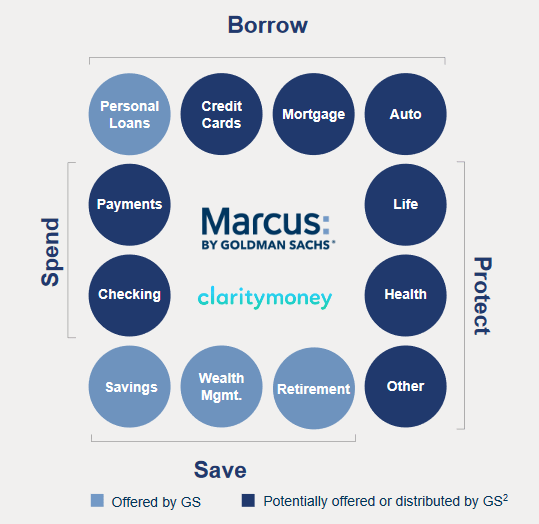
The credit card piece has perhaps been clarified with the Apple Card.

Here is what Goldman has said about the Marcus platform.  This is from their second quarter conference call:

Importantly, I want to turn your attention to the key elements of this project as they represent the same drivers that underscore a range of major strategic growth initiatives underway at the firm. These elements include: re-imagined projects that address pain points for corporations, institutions and consumers; new technology unburdened by legacy systems that often slow down innovation; digital delivery mechanisms that produce scale and efficiency; and access to large customer populations. These elements are critical to our key growth platforms, including: Marcus and mass affluent wealth, where we will pursue partnerships to access large numbers of consumers; Marquee, our digital institutional platform with the ability to innovate can help us engage its other institutional client base; and corporate cash management, where we can serve existing clients for the firm and offer differentiated products on a digital platform.

In my opinion, the key points as they might relate to Intelligent Systems role, is the excerpt I highlighted.  It gives an idea of what Intelligent Systems is delivering.

But this is just me guessing.  I don’t know what role Intelligent Systems has in Marcus.  I assume that Marcus is the engine driving the Apple Card processing.  I also assume that Goldman’s vision with Marcus is not going to stop with Apple.  On Intelligent Systems first quarter call, in a comment where he was referring to their “world-class licensee”, Leyland Strange said that Intelligent Systems was a “key contributor to the main system of record that requires a highly scalable and high availability infrastructure”.

With all that in mind, it is important to note that on completion of the Goldman platform Intelligent Systems will retain the IP.

It surprises me a little that Goldman is so willing to let the IP of one of their next, big growth engines to remain in a relatively small company in Atlanta.  But maybe I don’t understand the risks and they are less than I think.

At any rate that IP will be a key to future growth at Intelligent Systems as it will be the basis of their own processing business.  On the last conference call:

The fact is that we cannot take on a new 5 million account client in our own infrastructure and environment at this point in time.  So it’s better for we ourselves to say not ready rather than customer due diligence come back with, you’re not ready…

We’re working and helping a licensee build a world-class processing environment. It’s one that will process 5 million, 10 million, 20 million or more accounts. We’re the key contributors to the main system of record that requires a highly scalable and high availability infrastructure.

 We will then add the elements that we have brought to them as well as lessons learned from their smart people to our own environment and have a good, valid reason to then claim we are a world-class processor. I hope we do it by the end of this year. It could drag on if we are tied up with them a whole lot longer.

Intelligent Systems has a processing business already, but not one of the scale they are describing above (processing and maintenance revenue was about $1.8 million last quarter).

Where are these (large) processing clients going to come from?  There is reason to believe that Intelligent Systems is working with a few large operators already.

The one that is likely closest to launch is Sallie Mae.

No one has said that Intelligent Systems is working with Sallie Mae.  Yet I think they are.  Here is my reasoning.  We know that Sallie Mae is working with a company called Deserve on the new credit card they are about to launch.  Sallie Mae has mentioned Deserve by name on a number of their conference calls.  This reference is from their third quarter call (SLM CEO Raymond Quinlan talking):

Deserve is a west coast, very modern, integrated native app purveyor of credit cards. And when we looked at our entry into the card business, several things guided us: One is that the card business is filled with very capable competitors, many of whom have excess capacity, while we’re sitting here; two is that we did not want to build an infrastructure that had high fixed costs associated with it; three is that we wanted to be modern and we thought that we would have an advantage over existing players who frequently are bound by their old unintegrated and not fair consumer-friendly systems. And so as we surveyed who would be a potential partner, we looked at multiple potential capabilities. We hit upon the Deserve folks because they are modern, they are dedicated to us and — but they are a relatively new company, and so we made a small investment in them.

A little bit of digging turns up that the Deserve platform is powered by Corecard, which is the brand that Intelligent Systems markets their processing solution under.  From the Deserve Privacy Policy (a h/t to Hiddensmallcaps for finding this link):

There are a few other indications of the Sallie Mae connection that I’ve discovered but won’t get into here.

What is the Sallie Mae business worth?  Well first of all, this is a different model than what Intelligent Systems is delivering to Goldman/Apple.  Sallie Mae (if I am right and it is indeed them that Intelligent Systems is working with) is almost certainly the processing client that was delayed last year and it now being ramped up.  This is something Intelligent Systems has discussed a number of times on the last few calls.

As a processing customer, the revenue model is more traditionally recurring.  Intelligent Systems will generate revenue on a monthly basis as a function of the number of accounts processed for the card holders.  So again it’s a function of accounts – but this time it is not a one-time fee and maintenance.

How much is that fee?  I can only make an intelligent guess.  I dug up some information from First Data that is very old (2003) that suggested at the time they generated $4/year/card holder on processing.  I can also infer from 3Pea International disclosures (they are now called Paysign) that they generate $8/year/card holder for their processing platform, though they also provide a more end-to-end solution than Intelligent Systems.

How many users will take up a Sallie Mae card?  Again, tough to say with any certainty.  Sallie Mae has over 1 million customers and originated almost $6 billion in loans last year (I had previously written 25 million customers but I didn’t realize that came from a disclosure before the spin-off of Navient).  How many of those customers take a card?  Your guess is as good as mine here.

Now again, nothing has been officially announced with Sallie Mae. This is my speculation based on the information I have dug up.

What lies beyond Goldman and Sallie Mae?  Another big question. We know there are two processing customers they are working with.  We have talked about the first likely being Sallie Mae.

I can’t say for sure who the second is.  My only guess is that it may be Greensky.  Greensky partners with merchants to provide point of sale credit.  They primarily derive their business from home improvement stores (Home Depot makes up 5% of sales while Renewel by Anderson is a sponsor for another 19%).

Why Greensky?  Well its more of a stretch than Sallie Mae so take this with a grain of salt: First and circumstantially Leyland Strange has made point-of-sale credit comments on the conference calls a couple of times (there is a long example of POS credit scenario at Bass Pro Shops that he says only Intelligent Systems could handle on the fourth quarter call).  Second, there is a striking similarity between the credit card service portal of Final, which is a Corecard client, and Greensky (though I have to say I am comparing the screens second hand as my IP is in Canada and I am blocked when I try to access this Greensky portal – a h/t again to @hiddensmallcaps here).  Third, if you do a Google search with the terms ‘mygreensky.com corecard’, oddly this is the only result that appears.

So those are my guesses at the immediate two processors that are in the wings.  There is reason to believe that they have another large processing customer that is still a year or more away.  There is scuttle on this that truly is scuttle and so I’m not going to speculate on who.  There was mention of this on the last call, though Strange was quick to say that this customer is not in any “pipeline” – so take that for what its worth.  Either its not a done deal or Strange is being his usual understated self.

More broadly, I believe that Intelligent Systems had a unique processing platform and through Goldman/Apple has been paid to develop an even better one.  I suspect the platform is geared towards real-time processing, which from what I gather from listening to panel discussions and the calls of larger processing players, is really the shift that is beginning to take place – replacing ACH batch processing with immediate transfers has many use cases.  Real-time processing offers speed, transparency and 24/7/365 capabilities that give it advantages to merchants and consumers.

It is my sense that the processing industry is quite a hodge-podge of solutions.  Companies like Fiserv, Total System Services and First Data have a number of different brands and versions of payment solutions that they have acquired over the years and from what I can tell they are all quite distinct from one another and are difficult to combine.  Case and point is that as Fiserv has made a bid to acquire First Data, they listed a host of synergies between the two companies but were clear that the product lines would see limited or no integration.

It’s an industry that is ripe for disruption.

So that’s story and why I was willing to add to the stock as it dipped, rather than following my usual strategy where I do not add until I see begin to see a profit.

Going forward I think the stock can move higher, but the time frame is less certain.  This company does very little to promote itself (there is no corporate presentation and no IR to speak of), so there almost assuredly will be no press releases between now and the second quarter results.  Those second quarter results might be a catalyst; there may be an uptick in license revenue from Apple/Goldman – but there also may not.  I can only guess when the licenses will begin to be recognized or how fast it will be recognized.  The Apple Card is not launching until the summer.

The two processing customers will begin to generate revenue in the second half of the year.  But this will likely be a small base at the beginning.

Could the company be taken over?  I think that is a possibility.  On more than one occasion Leyland Strange has said that they are a “very opportunistic” company.  He said this specifically in response to questions about being acquired.  He is also 76 years old and owns over 25% of the company (two holders, Strange and Weitz Investment Management, own over 50%).

As well, Goldman themselves said on their own third quarter call that while they did not plan to make any large acquisitions, they were looking at ways to “consolidate their technology”, particularly on the consumer (Marcus) platform.  They said that such acquisitions would be small for Goldman and not require share issuance.

The short interest in the stock has risen, which is interesting.  I imagine there is a simple thesis around valuation.  On a trailing basis the company looks very expensive.  I also wonder whether the inclusion on the board of a prominent executive that has been in the cross-hairs of short sellers (I will not mention his name because I have no interest in this blog being listed in Google searches with respect to this individual – I have come to dislike publicity in general and specifically of this nature!) who you can look up easily enough in their filings.  My thoughts on this board member are – it is what it is.  He’s been there forever, there is a relationship there and if you want to make something of it that is yours to do.  I have seen no reason to myself.

That short interest could be negative but could also be positive.  The float is actually quite small here as between Strange, Weitz and a few other individuals and funds own over 60% of the shares.

Either way I don’t care much about that.  I plan to stick with this name as long as it continues to execute.  I’m hoping that, barring a takeover, that will be a very long time.